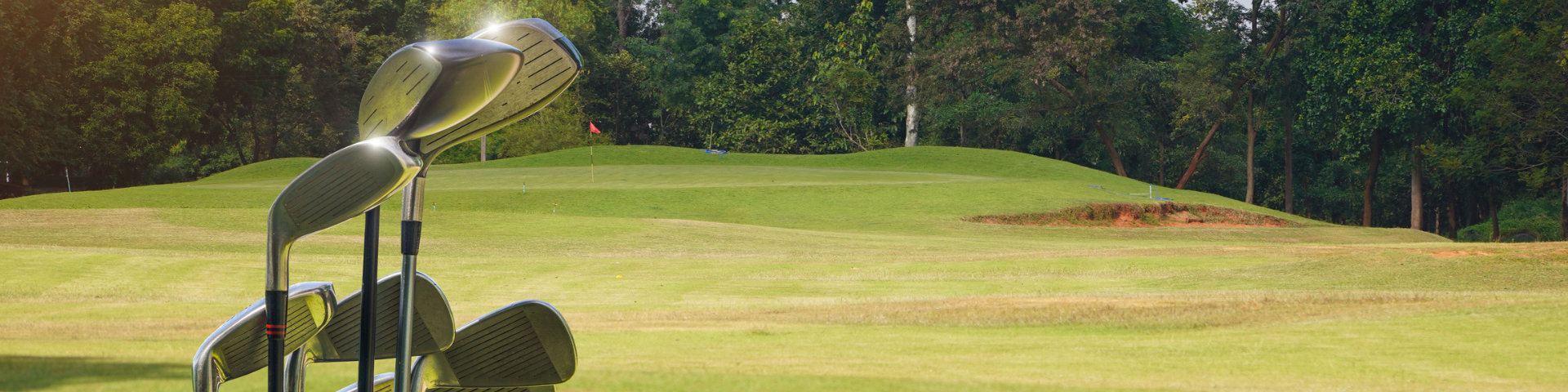
The Long Game: Research, Resilience, and Finding Rhythm on the Golf Course
At first glance, research and golf live in completely different worlds. One unfolds in code, models, and hypotheses. The other plays out across green fairways under open skies. But for Samuel Maina, one of our Senior Researchers at Microsoft ADC, the two are quietly intertwined; linked by patience, discipline, and an ongoing pursuit of improvement.
Interestingly, golf wasn’t exactly a personal calling at the start.
What began as a firm “executive decision” from his wife slowly unfolded into a lasting pursuit. This was after a work trip, where she gave clear instructions not to return without a set of golf clubs, compliance felt like the wiser choice. Somewhere between that first swing and many rounds later, the game quietly took hold.
What keeps it going is simple but powerful: golf is less about competing with others and more about competing with yourself. It’s a constant invitation to improve, one swing at a time.
That journey, however, is far from easy.
“Everything about the game is hard,” Sam admits. "Golf demands an almost meditative level of focus. Staying mentally locked in for four hours straight, knowing that every shot counts, is no small feat. It’s this mental endurance that makes the game as challenging as it is rewarding."
Yet, beyond the challenge, golf offers something else entirely; a reset.
Stepping onto the course creates space to disconnect from the intensity of research work. It’s not just about the game itself, but also the rhythm of walking the course, the conversations along the way, and the simple act of being present. A few kilometers in, both mind and body begin to recalibrate.
And while research and golf may seem like distinct pursuits, the parallels between them are hard to ignore.
"Progress in both is rarely linear. There are days when everything clicks, and improvement feels tangible. But there are also stretches where effort seems to lead nowhere. A golfer can practice for weeks and still have a round where nothing works. Similarly, a researcher can invest months into an idea that doesn’t pan out. Both experiences can be frustrating but they are also where the learning happens." Sam admits.
One lesson stands out above the rest: "Focus on the next move."
On the golf course, overthinking a bad shot usually leads to another mistake. The real shift comes when you accept it, let it go, and focus on the next shot. That’s the one that counts. Progress in golf isn’t about perfection, it’s about recovery.
The same applies to research. Whether something works or doesn’t, what matters is what you do next: adjust, refine, and keep moving. Every outcome, good or bad, adds to your understanding and sharpens your next decision.
This is the mindset Sam brings to research challenges. Instead of seeing things as simply “right” or “wrong,” he breaks them down and looks at how the pieces connect. It becomes less about reacting and more about understanding approaching each problem with curiosity, structure, and a steady focus on what comes next.
Preparation, too, plays a quiet but powerful role in both. In golf, sometimes you have the luxury of a proper warm-up time at the range, a few putts to find your rhythm. Other times, you step onto the first tee and figure it out as you go.
Research works much the same way. There are moments of deep preparation, reviewing literature, designing approaches, and setting up experiments. And then there are moments where things don’t go as planned, and you have to think on your feet. Preparation, in this sense, becomes less about control and more about equipping yourself to respond well when things shift.
For those navigating demanding careers, especially in research, finding time for hobbies can often feel like a luxury. But this story is a reminder that stepping away can actually sharpen perspective. Growth doesn’t only happen in front of a screen or within a dataset—it also happens in the spaces where we challenge ourselves differently.
Because whether it’s refining a model or perfecting a swing, the principle holds:
progress is built in moments—one iteration, one lesson, one shot at a time.
Connect with Samuel Maina on LinkedIn.