In the news | LinkedIn Article
When Minutes Matter: Advancing Wildfire Early Detection with ALERTCalifornia
Strengthening wildfire response takes more than any single institution, any single technology, or any single moment of heroism. It takes sustained collaboration between the people building new tools and the first responders relying on them under the harshest conditions.
UniRG: Scaling medical imaging report generation with multimodal reinforcement learning
| Sheng Zhang, Flora Liu, Guanghui Qin, Mu Wei, and Hoifung Poon
AI can help generate medical image reports, but today’s models struggle with varying reporting schemes. Learn how UniRG uses reinforcement learning to boost performance of medical vision-language models.
In the news | Microsoft Unlocked
Stewards of their environment
In the arid expanse of northwestern Kenya, the Kakuma refugee camp has grown into a sprawling community of more than 300,000 displaced individuals from over 20 countries. Originally established in 1992 to shelter young people fleeing the war in Sudan,…
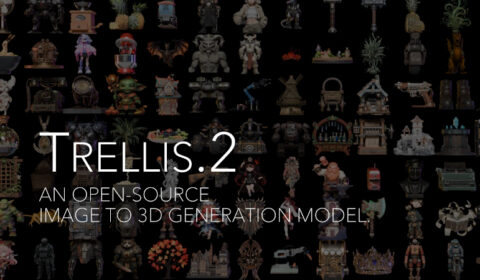
从“实心泥塑”到“高精度资产”,TRELLIS.2重构3D生成规则
在 AI 时代,当文生图早已是秒出“大片”,文生视频也能复刻好莱坞级特效时,3D 生成却仍停留在难以令人满意的阶段——细节模糊、结构失真,缺乏立体感。 当你满怀期待地输入“一个透明的玻璃瓶”,AI 却只给出了一个实心的“泥疙瘩”。当你想要一座椰林摇曳、白沙碧海的海滨小镇,得到的却是橡皮泥捏成的模糊雕塑。你希望生成一棵枝叶轻盈飘逸的枫树,AI 却无法完整还原枝叶的自然形态与立体结构。 以上种种都是当...
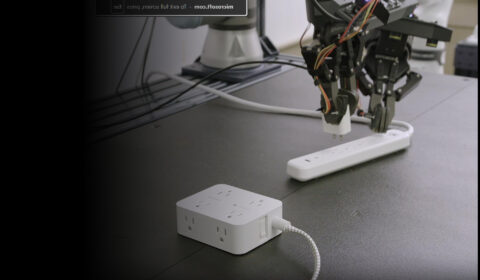
Rho-alpha, which translates natural language commands into control signals for robotic systems doing bimanual manipulation tasks, aims to make physical systems more adaptable by using physical sensing modalities like touch and continuous learning from human feedback.
In the news | Microsoft Signal
Exploring what AI means for education and the next generation
As AI transforms how we work, live and learn, higher education is more than another player — it needs to lead the way. Higher education must strike a balance as it prepares the next generation for a world being reshaped…
In the news | Association for Computing Machinery
Madanlal Musuvathi named ACM Fellow
Madanlal was selected by his peers for the development of methods in concurrency verification and testing, and machine learning systems design.
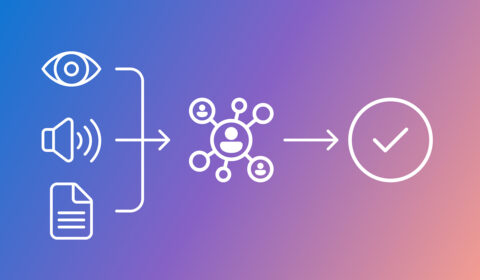
Multimodal reinforcement learning with agentic verifier for AI agents
| Reuben Tan, Baolin Peng, Zhengyuan Yang, Oier Mees, and Jianfeng Gao
Argos improves multimodal RL by evaluating whether an agent’s reasoning aligns with what it observes over time. The approach reduces visual hallucinations and produces more reliable, data-efficient agents for real-world applications.
In the news | Ragon Institute
Ava Amini and collaborators receive Bits to Bytes grant
The project represents a significant step forward in understanding immune responses at the tissue level. By generating and analyzing large datasets using artificial intelligence and machine learning, the team will develop tools to measure and predict how immune cells interact…