In the news | Wired
Chatbot teamwork makes the AI dream work
I’ve been playing this week with AutoGen, an open source software framework for AI agent collaboration developed by researchers at Microsoft and academics at Pennsylvania State University, the University of Washington, and Xidian University in China. The software taps OpenAI’s…
In the news | Unlocked
The thread of memory
June 6, 1944, the beginning of the end: When Allied troops landed on the shores of Normandy 80 years ago, they made history with their courage and sacrifice, which contributed to the liberation of France from Nazi Germany. In The Thread…
In the news | WIRED
Many Chatbots Make Light Work 🤝🤖 🎉
Turning to a friend or coworker can make tricky problems easier to tackle. Now it looks like having AI chatbots team up with each other can make them more effective. I’ve been playing this week with AutoGen, an open source…
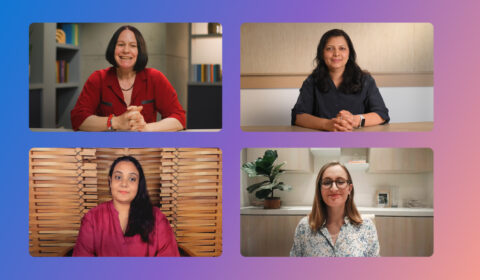
Microsoft Research Forum Episode 3: Globally inclusive and equitable AI, new use cases for AI, and more
“We’re at the very early stage of generative AI and the impacts it will have on work. This is a fast-moving field, and there's an immense opportunity to take control of the agenda and build truly globally equitable AI systems”,…
Microsoft at FAccT 2024: Advancing responsible AI research and practice
From studying how to identify gender bias in Hindi to uncovering AI-related risks for workers, Microsoft is making key contributions towards advancing the state of the art in responsible AI research. Check out their work at ACM FAccT 2024.
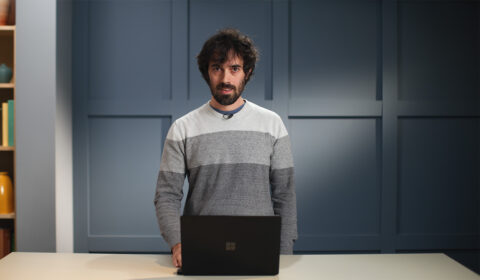
Adam Fourney discusses the effectiveness of using multiple agents, working together, to complete complex multi-step tasks. He will showcase their capability to outperform previous single-agent solutions on benchmarks like GAIA, utilizing customizable arrangements of agents that collaborate, reason, and utilize…

Tian Xie introduces MatterGen, a generative model that creates new inorganic materials based on a broad range of property conditions required by the application, aiming to shift the traditional paradigm of materials design with generative AI.

Jiang Bian discusses how generative AI transforms industries by bridging gaps between AI capabilities and sector needs. He will showcase domain-specific foundation models and versatile AI agents, setting new industry standards.

Daniela Massiceti delves into the transformative potential of multimodal models such as CLIP for assistive technologies. Specifically focusing on the blind/low-vision community, the talk explores the current distance from realizing this potential and the advancements needed to bridge this gap.