A compilation of research being done at Microsoft on accelerating biodiversity surveys with AI We apply machine learning tools to a variety of image sources – including motion-triggered camera traps, aerial cameras, and microphones – to accelerate ecologists’ workflows. Our…

编者按:2021年,获得 ICCV 最佳论文奖的 Swin Transformer,通过在广泛的视觉问题上证明 Transformer 架构的有效性,加速了计算机视觉领域基本模型架构的变革。2021年末,微软亚洲研究院的研究员们又进一步提出了 Swin Transformer v2.0 版本,新版本训练了迄今为止最大的稠密视觉模型,并在多个主流视觉任务上大大刷新了记录,相关论文也已被 CVPR 2...

AAAI is one of the top academic conferences in the field of Artificial Intelligence and is hosted by the Association for the Advance of Artificial Intelligence. This year's AAAI conference was held from February 22 to March 1. More than…
In the news | Microsoft on the Issues
States must act quickly, thoughtfully to bridge the digital divide
An alarming number of people in America are cut off from opportunities afforded to the rest of us who have internet access. Microsoft data shows that more than one out of three people in the U.S. are not using the…
In the news | Azure Cognitive Services
What’s new in Azure Cognitive Service for Language?
Azure Cognitive Service for Language is updated on an ongoing basis. To stay up-to-date with recent developments, this article provides you with information about new releases and features.

Awards | IEEE VGTC Technical Awards
2022 IEEE VGTC Virtual Reality Significant New Researcher award goes to Mar Gonzalez-Franco
The 2022 IEEE VGTC Significant New Researcher Award goes to Mar Gonzalez-Franco of Microsoft, in recognition of her research and incipient leadership in the field of Virtual Reality and spatial computing. Her work has provided new insights on how people…
In the news | Ahmedabad Mirror
Microsoft’s AI Tech Helps Blind Kids To Make Friends, Build Confidence
Tech giant Microsoft has developed a novel Artificial Intelligence-based technology that helps blind children and young people better understand their immediate social environment, interact with peers and gain confidence more easily.

Microsoft has demonstrated the underlying physics required to create a new kind of qubit
| Dr. Chetan Nayak
Quantum computing promises to help us solve some of humanity’s greatest challenges. Yet as an industry, we are still in the early days of discovering what’s possible. Today’s quantum computers are enabling researchers to do interesting work. However, these researchers…
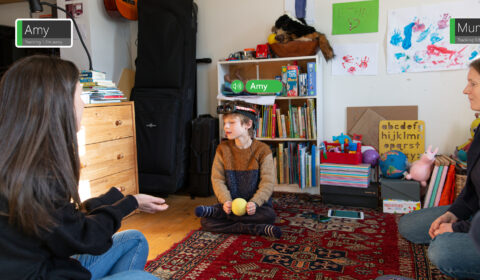
PeopleLens: Using AI to support social interaction between children who are blind and their peers
| Cecily Morrison, Katherine Jones, Martin Grayson, and Ed Cutrell
For children born blind, social interaction can be particularly challenging. A child may have difficulty aiming their voice at the person they’re talking to and put their head on their desk instead. Linguistically advanced young people may struggle with maintaining…