
Helping users build – and maintain – a wall between personal and business communications is a key job that technology can do to help users once they create a business identity. We plan to continue delving into the needs of…
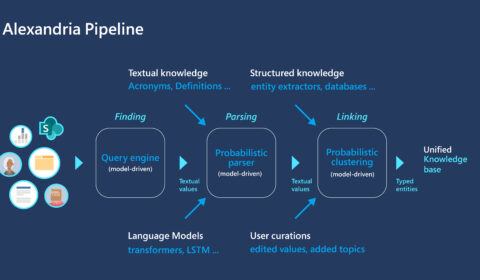
Alexandria in Microsoft Viva Topics: from big data to big knowledge
| Sanil Rajput , John Winn, Naomi Moneypenny, Yordan Zaykov, and CJ Tan
Project Alexandria is a research project within Microsoft Research Cambridge dedicated to discovering entities, or topics of information, and their associated properties from unstructured documents. This research lab has studied knowledge mining research for over a decade, using the probabilistic…
In the news | EurekAlert
First village-level mapping of childhood undernutrition in India reveals local disparities
The risk of childhood undernutrition varies widely among villages in India, according to new research led by Harvard T.H. Chan School of Public Health in collaboration with researchers at Harvard's Center for Geographic Analysis, Harvard's Center for Population and Development…
In the news | Microsoft in Business Blogs
Improving the Rare Disease diagnosis journey with Azure Health Bot
During the pandemic, we have seen dramatic shifts in technology usage: rapid acceleration of at-home shopping, a transition from in-person to online learning, and much more. In healthcare, telehealth visits have jumped more than 150 percent. This increase of visits…

经常收到大家的各种留言、私信,询问如何到微软亚洲研究院实习?微软亚洲研究院需要什么样的实习生?到研究院实习能够学到什么?…… 带着这些问题,小编咨询了在微软亚洲研究院实习生招聘过程中“久经沙场”且对带实习生有丰富经验的研究员和研究工程师,希望能够解答各位申请者的一些疑惑。其中关于“令人眼前一亮的简历”、“面试时考察的能力”、“跨专业实习”等回答或许对提高综合实力也有借鉴意义哦。 Q:微软亚洲研究院...

While UXR Day is an internal event, we share the news about what we’re doing and thinking to show how much the UXR discipline is valued, and encourage people to join our teams. Research is in our DNA.
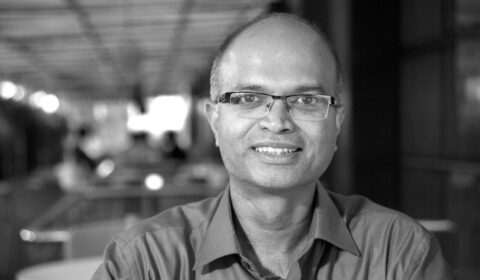
Podcast: Research @Microsoft Research India: interdisciplinary and impactful. With Dr. Sriram Rajamani
Episode 008 | April 20, 2021 Podcast: Research @Microsoft Research India: interdisciplinary and impactful. With Dr. Sriram Rajamani Microsoft Research India is constantly exploring how research can enable new technologies that positively impact the lives of people while…

ZeRO-Infinity and DeepSpeed: Unlocking unprecedented model scale for deep learning training
| DeepSpeed Team, Rangan Majumder, and Andrey Proskurin
Since the DeepSpeed optimization library was introduced last year, it has rolled out numerous novel optimizations for training large AI models—improving scale, speed, cost, and usability. As large models have quickly evolved over the last year, so too has DeepSpeed.…
In the news | Untangling the Web Podcast
Episode 13: Web and the New Future of Work with Jaime Teevan
In this episode, (26 min. long) we talk with Jaime Teevan, chief scientist for Microsoft’s Experiences and Devices, where she’s charged with creating the future of productivity. She also developed the first personalized search algorithm used by Bing and introduced…