In the news | Nature
Laser writing in glass for dense, fast and efficient archival data storage
Long-term preservation of digital information is vital for safeguarding the knowledge of humanity for future generations. Existing archival storage solutions, such as magnetic tapes and hard disk drives, suffer from limited media lifespans that render them unsuitable for long-term data…
In the news | National Academy of Engineering
Doug Burger elected to National Academy of Engineering
Academy membership honors individuals who have made outstanding contributions to engineering research, practice, or education. Burger was elected for accelerating cloud-scale computing and networking infrastructures with field-programmable systems.
From One to Many
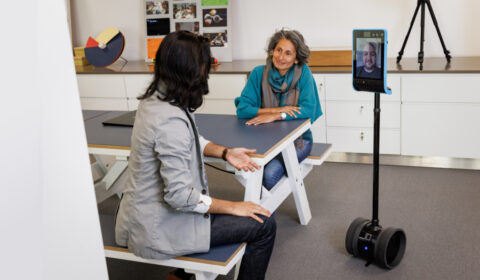
By Jaime Teevan, Chief Scientist & Technical Fellow In recent years we’ve all lived through the transition to cloud computing, a sudden shift to remote work, and now the rapid rise of AI. Each individually has felt like a seismic…
In the news | New benchmarks and models for low-resource languages, medical and brain foundation models, AI in space, and innovation kits
“Cognitive Load Estimation Using Brain Foundation Models and Interpretability for BCIs” paper featured in MSR Research Focus Channel
The paper "Cognitive Load Estimation Using Brain Foundation Models and Interpretability for BCIs", accepted for publication during ICASSP 2026, with authors Deeksha M Shama, Dimitra Emmanouilidou, Ivan Tashev, is featured in the MSR Research Focus Channel.
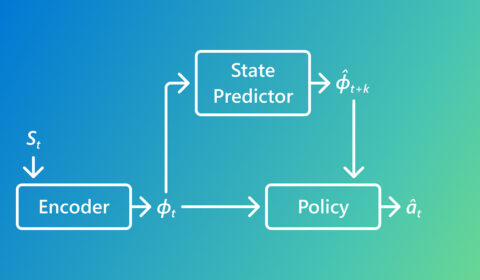
Rethinking imitation learning with Predictive Inverse Dynamics Models
| Pallavi Choudhury, Lukas Schäfer, Chris Lovett, Katja Hofmann, and Sergio Valcarcel Macua
This research looks at why Predictive Inverse Dynamics Models often outperform standard Behavior Cloning in imitation learning. By using simple predictions of what happens next, PIDMs reduce ambiguity and learn from far fewer demonstrations.

Paza: Introducing automatic speech recognition benchmarks and models for low resource languages
| Mercy Muchai, Kevin Chege, Nick Mumero, and Stephanie Nyairo
Microsoft Research unveils Paza, a human-centered speech pipeline, and PazaBench, the first leaderboard for low-resource languages. It covers 39 African languages and 52 models and is tested with communities in real settings.
In the news | Unlocked
Giving every language a voice
Recognizing what’s at stake, UNESCO designated 2022–2032 as the Decade of Indigenous Languages. This highlights a global effort to support revitalization and digital inclusion, and the work that partners in places like Nunavut are helping advance. According to the UNESCO Atlas of World’s Languages…
In the news | LinkedIn Article
When Minutes Matter: Advancing Wildfire Early Detection with ALERTCalifornia
Strengthening wildfire response takes more than any single institution, any single technology, or any single moment of heroism. It takes sustained collaboration between the people building new tools and the first responders relying on them under the harshest conditions.

UniRG: Scaling medical imaging report generation with multimodal reinforcement learning
| Sheng Zhang, Flora Liu, Guanghui Qin, Mu Wei, and Hoifung Poon
AI can help generate medical image reports, but today’s models struggle with varying reporting schemes. Learn how UniRG uses reinforcement learning to boost performance of medical vision-language models.