In the news | TechRepublic
Microsoft Research Debuts Phi-2, New Small Language Model
Phi-2 is a generative AI model with 2.7 billion-parameters used for research and development of language models. Phi-2 is available in the Azure AI Studio model catalog. Microsoft intends for it to be used only by researchers; however, Phi-2 might…

作者:GHDDI 2023年12月12日,北京——全球健康药物研发中心(Global Health Drug Discovery Institute, GHDDI)与微软研究院科学智能中心(Microsoft Research AI4Science)宣布达成合作,双方将共同研发全球健康传染病领域的生成式人工智能与基础大模型技术,聚焦落地转化,加速创新药物研发。此前,双方已成功在结核分枝杆菌以及冠状...
Abstracts: December 12, 2023
| Gretchen Huizinga, Tao Qin, and Lijun Wu
Members of the research community at Microsoft work continuously to advance their respective fields. Abstracts brings its audience to the cutting edge with them through short, compelling conversations about new and noteworthy achievements. In this episode, Senior Principal Research Manager…

Steering at the Frontier: Extending the Power of Prompting
| Eric Horvitz, Harsha Nori, and Yin Tat Lee
We’re seeing exciting capabilities of frontier foundation models, including intriguing powers of abstraction, generalization, and composition across numerous areas of knowledge and expertise. Even seasoned AI researchers have been impressed with the ability to steer the models with straightforward, zero-shot prompts. Beyond…
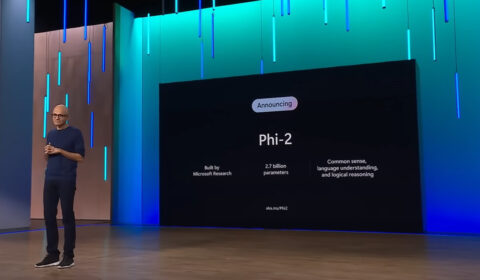
Phi-2: The surprising power of small language models
| Mojan Javaheripi and Sébastien Bubeck
Phi-2 is now accessible on the Azure model catalog. Its compact size and new innovations in model scaling and training data curation make it ideal for exploration around mechanistic interpretability, safety improvements, and fine-tuning experimentation on a variety of tasks.
In the news | VentureBeat
Microsoft releases Phi-2, a small language model AI that outperforms Llama 2, Mistral 7B
The rapid pace of generative AI news and announcements isn’t slowing down, even as we reach the final stretches of 2023 and the traditional winter holiday quiet period. Just take a look at Microsoft Research, the blue sky division of…
Abstracts: December 11, 2023
| Gretchen Huizinga and Alessandro Sordoni
By treating language models as layers in a network and prompts as learnable parameters, researchers aim for more adaptable, reusable LLM architectures. Check out the work in the “Abstracts” podcast series with guest Alessandro Sordoni and at #NeurIPS2023:
NeurIPS 2023 highlights breadth of Microsoft’s machine learning innovation
We’re proud to have 100+ accepted papers At NeurIPS 2023, plus 18 workshops. Several submissions were chosen as oral presentations and spotlight posters, reflecting groundbreaking concepts, methods, or applications. Here’s an overview of those submissions.
In the news | NEJM AI
Multimodal Generative AI for Precision Health
The dream of precision health is to develop a continuous learning health system where new health information is instantly incorporated to optimize care delivery and accelerate biomedical discovery. Multimodal generative AI has the potential to drastically accelerate progress toward precision…