
Discussions at the customer level bring product teams together; user models (UMs) synthesize and summarize customer information to facilitate those discussions. This article discusses the move from personas to UMs because personas reduce customers to an average that doesn’t exist, while UMs allow for a broader representation of a range of customers.
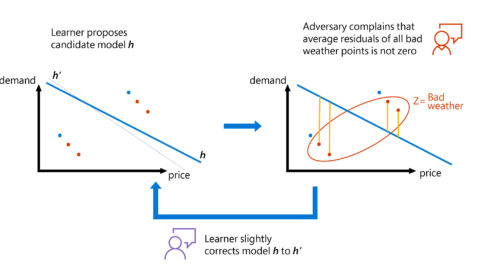
Adversarial machine learning and instrumental variables for flexible causal modeling
| Vasilis Syrgkanis
We are going through a new shift in machine learning (ML), where ML models are increasingly being used to automate decision-making in a multitude of domains: what personalized treatment should be administered to a patient, what discount should be offered…
In the news | Adaptive Biotech
T Cell Testing Outperforms Antibody Testing in Determining Prior COVID-19 Infection
COVID-19 rates are at an all-time high. With no singular containment strategy underway in the U.S., it has become more critical than ever to understand who has previously been infected by the virus, whether or not they displayed symptoms. Traditional…

The human side of AI for chess
| Reid McIlroy-Young, Ashton Anderson, Jon Kleinberg, and Siddhartha Sen
Editor’s note: The section “Modeling individual players’ styles with Maia” has been updated as of July 12, 2021. As artificial intelligence continues its rapid progress, equaling or surpassing human performance on benchmarks in an increasing range of tasks, researchers in…
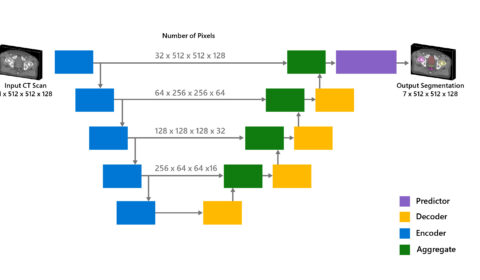
Project InnerEye evaluation shows how AI can augment and accelerate clinicians’ ability to perform radiotherapy planning 13 times faster
| Ozan Oktay, Anton Schwaighofer, David Carter, Melissa Bristow, Javier Alvarez-Valle, and Aditya Nori
Up to half of the population in the United States (opens in new tab) and United Kingdom (opens in new tab) will be diagnosed with cancer at some point in their lives. Of those, half will be treated with radiotherapy…
In the news | Microsoft Industry Blogs
Medical imaging, AI, and the cloud: what’s next?
Today marks the start of RSNA 2020, the annual meeting of the Radiological Society of North America. I participated in my first RSNA 35 years ago and I am super excited—as I am every year—to reconnect with my radiology colleagues…
In the news | Microsoft Industry Blogs
Secure, safe, and equitable vaccine distribution
As several COVID-19 vaccines near regulatory approval in the U.S., the E.U., Japan, and other countries, governments around the world must establish systems to ensure effective and equitable distribution within their countries. At Microsoft, we have been working with public…
In the news | Finextra
The next big thing in AI for Financial Services
In the news | The Wall Street Journal
Too Much Caution is Killing Covid Patients
Fear and panic are central impediments to competent decision-making during a crisis. As Covid-19 cases and hospitalizations rise around the country, creating an atmosphere of crisis, political leaders are reaching for last spring’s lockdown playbooks. Their grave tone conveys an…