In the news | Data Release
New Release: Sepsis Data Cohort
Announcing a GitHub repo which generates a data cohort for reinforcement learning research on Sepsis. The cohort is produced from the publicly available hospital database, MIMIC III.
In the news | VentureBeat
Microsoft details Speller100, an AI system that checks spelling in over 100 languages
In a post on its AI research blog, Microsoft today detailed a new language system, Speller100, that the company claims is one of the most comprehensive ever made in terms of linguistic coverage and accuracy. Comprising a number of AI models…
Accelerate development of machine learning applications for engineers and data scientists
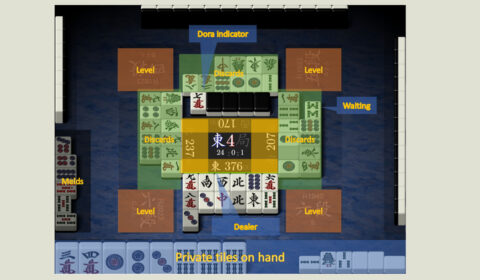
Research Collection – Shall we play a game?
From a research point of view, games offer an amazing environment in which to develop new machine learning algorithms and techniques. And we hope, in due course, that those new algorithms will feed back not just into gaming, but into…
In the news | Microsoft on the Issues
Microsoft launches Covid-19 vaccine dashboard that tracks administration of vaccines aligned with federal goal
As the world reaches the next stage in our collective fight against Covid-19 with the availability of vaccines, we’ve thrown in our support by mobilizing our AI for Health data science team, in collaboration with Dr. Ashish K. Jha at Brown School…
Editor’s note: To promote the implementation of the “AI + industry” concept and support more companies to ride the current wave of digital transformation, Microsoft Research Asia established the Innovation Partnership in 2017. Today, the partnership has expanded to 27…
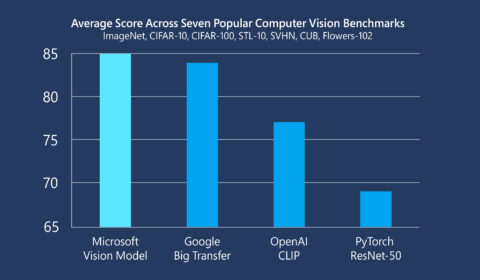
Microsoft Vision Model ResNet-50 combines web-scale data and multi-task learning to achieve state of the art
| Zygmunt Lenyk and Junwon Park
Pretrained vision models accelerate deep learning research and bring down the cost of performing computer vision tasks in production. By pretraining one large vision model to learn general visual representation of images, then transferring the learning across multiple downstream tasks,…
In the news | Consequential Podcast (Season 3, Episode 8)
Consequential Podcast: Language, Power and NLP
Natural language processing is the branch of artificial intelligence that allows computers to recognize, analyze and replicate human language. But when it’s hard enough for humans to say what they mean most of the time, it’s even harder for computers…
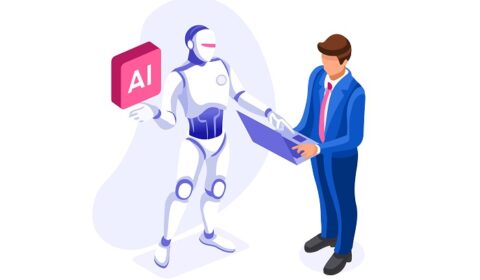
Human beings are creatures of habit*. Our routine behaviors are repeated regularly, often without our conscious awareness. When designing for AI experiences, such as voice or assistive features, we are competing with long-standing habits that people have formed to complete tasks. For teams working in this space, changing these habits means connecting a user’s problem…