
AI Frontiers: A deep dive into deep learning with Ashley Llorens and Chris Bishop
| Ashley Llorens and Christopher Bishop
In this episode of “AI Frontiers,” AI4Science Director Chris Bishop talks about the state of deep learning; his new textbook, “Deep Learning: Foundations and Concepts,” and the impact the field is having on the natural sciences.
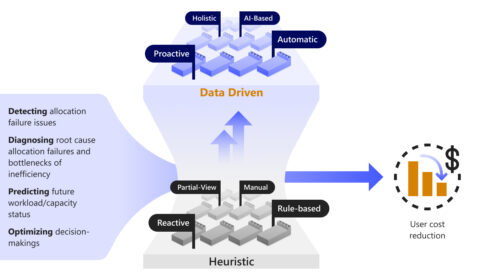
Boosting Cloud Efficiency: Harnessing Data-Driven Decision-Making and Optimization Techniques
Si Qin, Principal Research Manager; Fangkai Yang, Senior Researcher; Rujia Wang, Principal Research PM; Qingwei Lin, Partner Research Manager; Saravan Rajmohan, Partner Director AI and Applied Research and Dongmei Zhang, Distinguished Scientist and Vice President. Microsoft's cloud system serves as…
The rapid development of Generative Pre-trained Transformer (GPT) technologies and the advent of the large model era have significantly impacted every facet of the information world. As AI steps into the complex web of human society, it is transitioning from…
Microsoft Research Asia StarTrack Scholars Program has recently embarked on an exciting new chapter, inviting exceptional young minds from around the world to partake in a transformative three-month research visit. In this second installment of our exclusive series on the…
In the news | LinkedIn Article
Novartis – AI4HealthyCities
It is known that only 20% of our health outcomes are shaped by the healthcare we access; the other 80% is linked to the conditions in which we grow, live, work and age[I]. Along with Microsoft AI for Health, local…
从产品合作到前沿研究,从推荐系统到社会责任人工智能,从 AI 小白到四篇顶会一作,中科大-微软联合培养博士生易婧玮在研究院的四年实习生涯中经历了太多的成长与蜕变。 她完成过“复现陌生领域论文”的笔试挑战,也抗下过“推翻工作重新修改”的巨大压力。一路的困难与鲜花背后,是命运的草蛇灰线,也是天道酬勤的因果耕耘。而在体验了各种工作、斩获 ACL 2023 领域主席奖后,她也更加明确了自己的心之所向。 站...
In the news | TechRepublic
Microsoft Research Debuts Phi-2, New Small Language Model
Phi-2 is a generative AI model with 2.7 billion-parameters used for research and development of language models. Phi-2 is available in the Azure AI Studio model catalog. Microsoft intends for it to be used only by researchers; however, Phi-2 might…

作者:GHDDI 2023年12月12日,北京——全球健康药物研发中心(Global Health Drug Discovery Institute, GHDDI)与微软研究院科学智能中心(Microsoft Research AI4Science)宣布达成合作,双方将共同研发全球健康传染病领域的生成式人工智能与基础大模型技术,聚焦落地转化,加速创新药物研发。此前,双方已成功在结核分枝杆菌以及冠状...
Abstracts: December 12, 2023
| Gretchen Huizinga, Tao Qin, and Lijun Wu
Members of the research community at Microsoft work continuously to advance their respective fields. Abstracts brings its audience to the cutting edge with them through short, compelling conversations about new and noteworthy achievements. In this episode, Senior Principal Research Manager…