
ADeLe: Predicting and explaining AI performance across tasks
| Lexin Zhou and Xing Xie
AI benchmarks report how large language models (LLMs) perform on specific tasks but provide little insight into their underlying capabilities that drive their performance. They do not explain failures or reliably predict outcomes on new tasks. To address this, Microsoft…

AsgardBench: A benchmark for visually grounded interactive planning
| Andrea Tupini, Lars Liden, Reuben Tan, Yu Wang, and Jianfeng Gao
Imagine a robot tasked with cleaning a kitchen. It needs to observe its environment, decide what to do, and adjust when things don't go as expected, for example, when the mug it was tasked to wash is already clean, or…

GroundedPlanBench: Spatially grounded long-horizon task planning for robot manipulation
| Sehun Jung, HyunJee Song, Dong-Hee Kim, Reuben Tan, Jianfeng Gao, Yong Jae Lee, and Donghyun Kim
Vision-language models (VLMs) use images and text to plan robot actions, but they still struggle to decide what actions to take and where to take them. Most systems split these decisions into two steps: a VLM generates a plan in…

Will machines ever be intelligent?
| Doug Burger, Subutai Ahmad, and Nicolo Fusi
Are machines truly intelligent? AI researchers Subutai Ahmad and Nicolò Fusi join Doug Burger to compare transformer-based AI with the human brain, exploring continual learning, efficiency, and whether today’s models are on a path toward human intelligence.
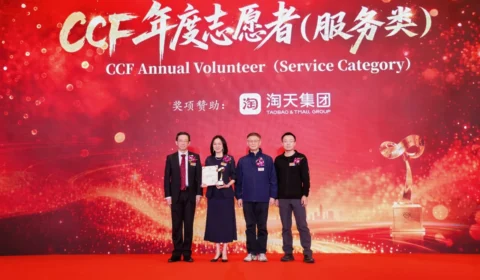
微软亚洲研究院携手 CCF,共促科研创新生态
近日,2025 CCF 颁奖典礼在北京举行。大会以“责任 · 创新 · 奉献”为主题,集中表彰了在计算技术研究、学术服务与科研生态建设方面作出积极贡献的个人与团队。作为大会的协办方之一,微软亚洲研究院参与了多项重要环节,与学术界同仁共同见证了这一年度科研盛会。 在本届大会的个人奖项中,微软研究院学术合作总监马歆女士荣获 CCF 年度志愿者(服务类)奖。在过去十余年中,马歆积极促进微软亚洲研究院与C...
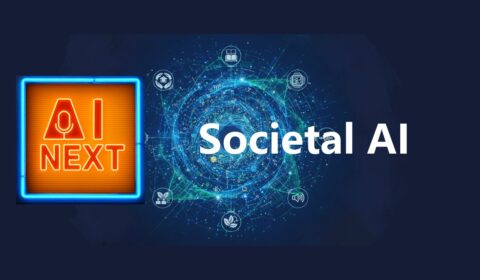
《AI Next》是微软亚洲研究院推出的一档利用 AI 技术制作的播客,内容聚焦 AI 前沿技术、科研趋势与社会影响。第一季主要围绕当今智能发展的核心议题,探索前沿趋势。 在第五期节目中,我们邀请到微软亚洲研究院副院长谢幸博士,共同探讨 AI 与社会的深层关联。随着 AI 从单纯的工具逐步演进为人类的“伙伴”,一系列关乎技术走向与社会共生的关键问题也浮出水面:AI的价值观究竟源自何处?如何构建可信...

微小而伟大:十年,如何用技术打破偏见的高墙?
编者按:十年,可以是一段青春,也可以是一场变革的开端。微软亚洲研究院高级研究员、本文作者矣晓沅作为清华大学改革开放以来首位重度残障学生,2015年起投身于多元与包容事业中,从校园社团到微软亚洲研究院,从无障碍倡导到AI技术赋能,一步步将信念转化为行动。十年间,他以自身经历为线索,诠释了何为“微小而伟大的事”。世界仍有偏见的高墙,但总有人愿做那束微光——因为真正的包容,始于理解,成于行动。 这一切始...

真理与传承——跨越时空的科研对话
居里夫人(玛丽亚·居里 )发现镭、钋元素并开创了放射性研究的理论,罗莎琳·富兰克林帮助识别并阐明了DNA的结构,吴健雄用β衰变实验证明了在弱相互作用中的宇称不守恒,屠呦呦从中国草药青蒿中提取出能抗击疟疾的青蒿素…… 她们身处不同时代,但抱有同样不屈不挠、积极勇敢的科研精神,不畏惧外界的流言蜚语,也不为内心的怀疑打败。没有人同行,就化为先驱,毅然踏出第一个脚印;不被人理解,就埋首书本、潜心钻研,以脚...

AAAI 上新 | 从金融模拟到类人推理,聚焦大模型的能力边界
编者按:欢迎阅读“科研上新”栏目!“科研上新”汇聚了微软亚洲研究院最新的创新成果与科研动态。在这里,你可以快速浏览研究院的亮点资讯,保持对前沿领域的敏锐嗅觉。 本周,第 40 届AAAI人工智能会议(AAAI 2026)在新加坡举行。微软亚洲研究院有多篇论文入选,内容涵盖了多模态生成、复杂逻辑推理、类人特质对齐及垂直行业模拟等多个前沿领域。 本期内容速览 1. Di...