Awards | Microsoft Research Asia
Hsiao-Wuen Hon receives 2014-2016 Great Wall Friendship Award
The Beijing Municipal Government presented a 2014-2016 Great Wall Friendship Award to Hsiao-Wuen Hon, corporate vice president of Microsoft, chairman of Microsoft Asia-Pacific R&D group and managing director of Microsoft Research Asia. Hon was chosen for extraordinary contributions in the fields of…
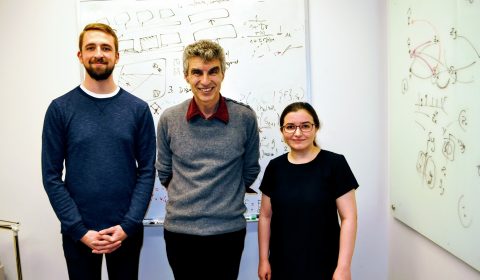
FigureQA: an annotated figure dataset for visual reasoning
Reasoning about figures Almost every scientific publication is accompanied by data visualizations in the form of graphs and charts. Figures are an intuitive aid for understanding the content of documents, so naturally, it is useful to leverage this visual information for…
In the news | The AI Blog
AI wave rolls through Microsoft’s language translation technologies
A fresh wave of artificial intelligence rolling through Microsoft’s language translation technologies is bringing more accurate speech recognition to more of the world’s languages and higher quality machine-powered translations to all 60 languages supported by Microsoft’s translation technologies.
In the news | Windows Central
Microsoft’s Project Emma helps people with Parkinson’s Disease
Approximately 10 million people around the world are living with Parkinson's Disease, and Microsoft's Emma Watch can help alleviate one of the disease's most troubling symptoms.

New feature: Citation list
We recently launched a new feature that enables users to cite papers directly from Microsoft Academic. Today, we release an enhancement that makes it possible to cite multiple papers with one click. The citation list feature empowers users to select…

Microsoft extends AirSim to include autonomous car research
| Ashish Kapoor and Shital Shah
Earlier this year, we open-sourced a research project called AirSim, a high-fidelity system for testing the safety of artificial intelligence systems. AirSim provides realistic environments, vehicle dynamics and sensing for research into how autonomous vehicles that use AI that can…
Neural fuzzing: applying DNN to software security testing
| William Blum
Microsoft researchers have developed a new method for discovering software security vulnerabilities that uses machine learning and deep neural networks to help the system root out bugs better by learning from past experience. This new research project, called neural fuzzing,…

Computing in the 21st Century: Academic collaboration fosters the art of artificial intelligence
On October 19, 2017, in Harbin, China, Microsoft Research Asia and Harbin Institute of Technology jointly held the 19th annual Computing in the 21st Century conference to share advanced AI research results and opinions with more than 1,600 students and…

Scientists use machine learning to predict DNA binding rates from sequence
By Microsoft Research Lab - Cambridge and Department of Bioengineering, Rice University The binding of DNA strands by Watson-Crick base pairing is a fundamental process in biotechnology, which is used around the world for reading and writing DNA sequences and…