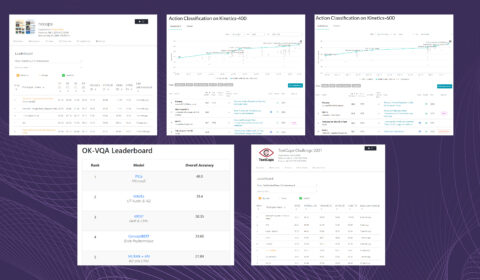
Azure AI milestone: New foundation model Florence v1.0 advances state of the art, topping popular computer vision leaderboards
| Project Florence Team
The Project Florence Team Florence v1.0—along with recent milestones in Neural Text-to-Speech and question answering—is part of a larger Azure AI (opens in new tab)mission to provide relevant, meaningful AI solutions and services that work better for people because they…

Serving the needs of the VSB space requires understanding of their motivations. The dreamer wants technology to take care of the mundane, operational tasks that are required to run a business, so they can focus on their passion. The pragmatist…
Awards | El Economista
Citibanamex award won by Diego Jimenez Hernandez
Diego Jimenez Hernandez and Enrique Seira awarded the prestigious Citabanamex top prize in the research category for their paper "Should the Government Sell You Goods? Evidence from the Milk Market in Mexico".

In the news | 30th Anniversary Generations of Inspirational and Impactful Research Panel Series
Panel discussion on “Pursuing a resilient and sustainable global society”
To mark the 30th anniversary of Microsoft Research, Eric Horvitz, Chief Scientific Officer, co-moderates a series of panel discussions on the “Generations of Inspirational and Impactful Research”. The panelists, comprised of current and past Microsoft Research Scientists and Engineers from…

微软亚洲研究院成立理论中心,以理论研究打破AI发展瓶颈
12月11日,微软亚洲研究院举办了2021理论学术研讨会,来自学术界和产业界的理论研究专家齐聚一堂,分享了最新的研究成果。研讨会上,微软亚洲研究院宣布成立理论中心,通过搭建国际学术交流与合作枢纽,促进理论研究与大数据和人工智能技术的深度融合,在推动理论研究进步的同时,加强跨学科研究合作,助力打破 AI 发展瓶颈,实现计算机技术跨越式发展。 理论中心由微软亚洲研究院高级研究员陈卫博士担任主任、高级研...

Deep neural networks (DNN) have recently achieved remarkable success in various fields. When training these large-scale DNN models, regularization techniques such as L2 Normalization, Batch Normalization, Dropout, etc. are indispensable modules to prevent model overfitting and improve model generalization. Among…
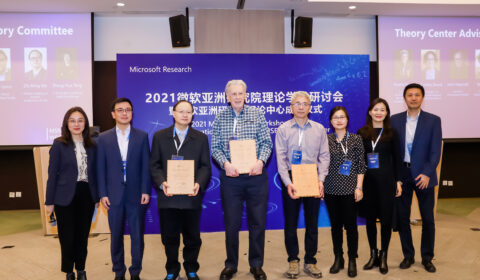
Microsoft Research Asia Establishes Theory Center to Strengthen Theoretical Foundation of AI
On December 11th, Microsoft Research Asia (MSR Asia) held the 2021 Theory Workshop, where theoretical research experts from academia and the industry came together to share their latest research results. At the workshop, MSR Asia announced the establishment of its…
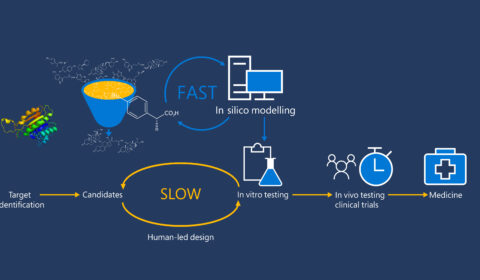
FS-Mol: Bringing Deep Learning to Early-Stage Drug Discovery
| Marc Brockschmidt and Megan Stanley
The drug development process is an iterative one that consists of discovery, design, and testing. Historically, drugs were derived from plants and discovered through trial-and-error experiments. Fortunately, this drug discovery process now occurs in a lab, with each iteration of…
This is a guest post from our close partners, Semantic Machines By Zachary Tellman Conversational interfaces are an idea that is forever on the cusp of transforming the world. The potential is undeniable: everyone has innate, untapped conversational expertise. We…