In addition to the license change, this release brings many internal and a few API updates.
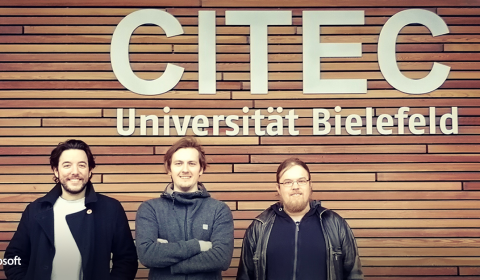
Winners announced in multi-agent reinforcement learning challenge
| Noboru Sean Kuno
In Learning to Play: The Multi-Agent Reinforcement Learning in MalmÖ (MARLÖ) Competition, we invited programmers into this digital world to help tackle multi-agent reinforcement learning. This challenge, the second competition using the Project Malmo platform, tasked participants with designing learning…
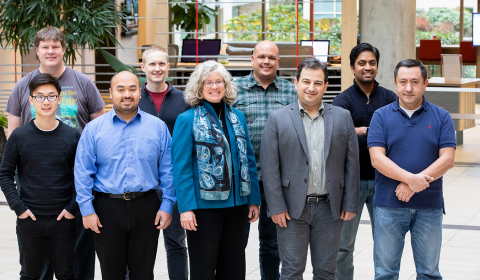
Microsoft SEAL open source homomorphic encryption library gets even better for .NET developers!
| Kristin Lauter, Kim Laine, Hamed Khanpour, and Ester de Nicolas
Since its open-source release on December 3rd 2018, Microsoft SEAL has become one of the world’s most popular homomorphic encryption libraries and has been adopted by security and privacy professionals world-wide in both academia and industry. Thanks to the fact…
By Weiwei Cui, Shi Han, Qingwei Lin, Jian‑Guang Lou, Yong Xu, Dongmei Zhang, Haidong Zhang, and Bin Zhu, Microsoft Research Asia Data intelligence is a new interdisciplinary field that synthesizes areas such as big data management, data mining, machine learning, human-computer…
In the news | Wired
When Algorithms Think You Want to Die
Opinion: Social media platforms not only host troubling images of suicide and self-harm, they end up recommending it to the people most vulnerable to it.
In the news | DARK Reading
Researchers Propose New Approach to Address Online Password-Guessing Attacks
Automated online password-guessing attacks, where adversaries try numerous combinations of usernames and passwords to try and break into accounts, have emerged as a major threat to Web service providers in recent years.
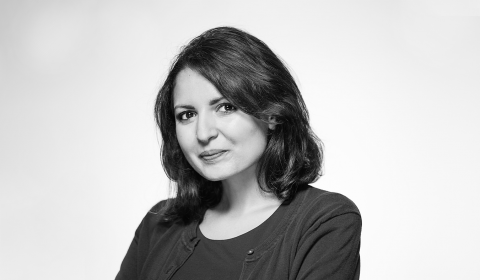
Talking with machines with Dr. Layla El Asri
Episode 64, February 20, 2019 - Dr. Layla El Asri talks about the particular challenges she and other scientists face in building sophisticated dialogue systems that lay the foundation for talking machines. She also explains how reinforcement learning, in the…
In the news | TWiML
Fairness in Machine Learning with Hanna Wallach
Today we’re joined by Hanna Wallach, a Principal Researcher at Microsoft Research. Hanna and I really dig into how bias and a lack of interpretability and transparency show up across machine learning. We discuss the role that human biases, even…