
Project
Project Origin
Project Provenance
Empowering everyone to understand digital content provenance through human-centric design
“Generative AI is blurring the boundary between authentic and synthetic media. Without accessible, human-centered provenance tools, we risk drifting into a post-epistemic world where fact and fiction cannot be reliably distinguished.”
Eric Horvitz, Microsoft Chief Scientific Officer
Advances in generative AI are accelerating the creation of highly realistic synthetic content, blurring the boundary between what is real and what is fabricated. As this content spreads across the web and into everyday discourse, the ability to understand where information comes from—and how it has been altered—has never been more important.
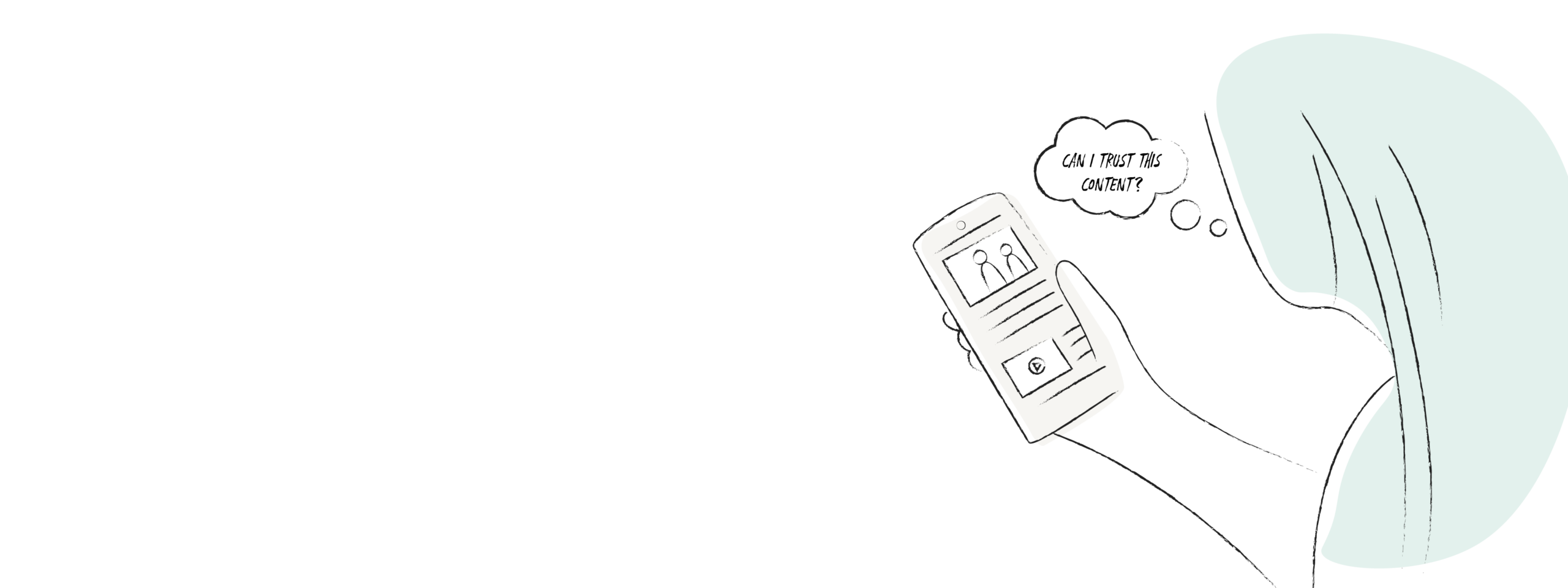
Project Provenance focuses on a critical, underexplored challenge: how people understand and use signals about the origin and history of digital content. We place end-user understanding at the center, exploring through human-centered design and empirical study how provenance information can be made more accessible, meaningful, and actionable in real-world settings.
Microsoft has been a leader in developing provenance technologies and in co-founding the Coalition for Content Provenance and Authenticity (opens in new tab) (C2PA), a cross-industry effort to establish global standards for content authenticity. Yet even as technical approaches, such as cryptographic provenance and watermarking, advance, their impact depends on how effectively people can interpret and act on these signals.
By bridging technical innovation with human experience, Project Provenance aims to strengthen trust in digital media and empower people to better assess the content they encounter every day.
The project is centered at Microsoft Research Cambridge, with collaborators across the Office of the Chief Scientific Officer, Microsoft Research in Redmond, and other teams at Microsoft.

A new study explores how AI shapes what you can trust online
A Microsoft report outlines how combining provenance, watermarking, and digital fingerprinting can strengthen trust in digital media as AI-generated content becomes harder to verify.
Emblems for Crafted and Co-Created Content
As generative AI becomes part of everyday creation, people may wish to express how their writing, crafts, and work came into being. Some will want to affirm that their words, art, and ideas were shaped entirely through human effort, from first spark to polish to final finish. Others may choose to acknowledge the role of AI as a collaborator in their creative process.
We’ve created two emblems to support this transparency. Each provides a simple, visually distinctive way to signal how a piece of content was crafted, whether fully human-authored or developed through human–AI collaboration. These were hand sketched and fully human crafted.

Related Prior Work
Publication
AMP: Authentication of Media via Provenance
LINKEDIN ARTICLE
A Milestone Reached
linkedin article
Better Together: Joining Forces on Digital Media Provenance
linkedin article
Protecting Scientific Integrity in an Age of Generative AI
人员

Neeltje Berger
Senior Designer

Jingya Chen
UX Designer
Microsoft

Pratik Ghosh
Senior Research Designer

Eric Horvitz
Chief Scientific Officer

Andrew Jenks
Principal Lead Program Manager

Viktor Kewenig
Cognitive Science Researcher

Clare Morgan
Senior Business Program Manager, MSR Cambridge

Abigail Sellen
VP/Distinguished Scientist

Jessica Young
Director, Science & Technology Policy