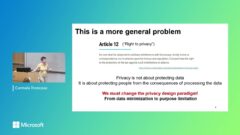
Efficient Homomorphic Integer Computer from CKKS
- Jaehyung Kim, Stanford University
Fully homomorphic encryption (FHE) has evolved from Gentry’s original blueprint into a diverse family of practical schemes, including BGV/BFV for exact arithmetic, DM/CGGI-style schemes for fast binary computation, and CKKS for high-throughput approximate arithmetic. I will begin with a brief overview of this evolution and the main ideas that shaped modern FHE.
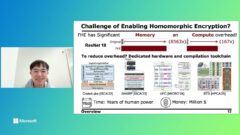
The focus of the talk is my recent work on extending CKKS beyond approximate numerical computation to support reliable and efficient discrete and integer arithmetic. I will introduce the discrete CKKS framework, which reformulates CKKS so that encrypted data can behave like exact integers or bits, while preserving the efficiency and structure that make CKKS attractive in practice.
Building on this, I will show how CKKS can be used as a practical engine for general-purpose integer computation. In simple terms, this makes it possible to run programs that manipulate large integers directly on encrypted data, even though CKKS was originally designed for approximate arithmetic. Such programs include cryptographic, database, and systems-level computations. These constructions demonstrate that CKKS can serve as a unified platform for both numerical and discrete computation, significantly broadening its scope for privacy-preserving systems.
Speaker bio
Jaehyung Kim is a Ph.D. student in Computer Science at Stanford University, working on fully homomorphic encryption and lattice-based cryptography. His research focuses on efficient bootstrapping and homomorphic discrete computation in CKKS and related schemes. He previously worked as a research engineer at CryptoLab Inc., contributing to both theoretical and practical FHE systems. He has published in leading cryptography venues including Crypto, Eurocrypt, and ACM CCS.
-
-

Jaehyung Kim
PhD Student
Stanford University
-
-
系列: Cryptography Talk Series
-
-
-
-

Efficient Homomorphic Integer Computer from CKKS
- Jaehyung Kim
-

Fuzzy Extractors are Practical
- Melissa Chase,
- Amey Shukla
-
-
-
-
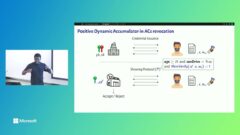
Lattice-Based Accumulator and Application to Anonymous Credential Revocation
- Victor Youdom Kemmoe,
- Betül Durak
-
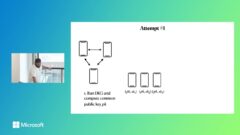
Efficient Secure Aggregation for Federated Learning
- Varun Madathil,
- Melissa Chase
-
-
-
-

Hamming Quasi-Cyclic
- Edoardo Persichetti
-
-
-

Attestations over TLS 1.3 and ZKP
- Sofía Celi
-

A Closer Look at Falcon
- Jonas Janneck
-

Quantum Lattice Enumeration in Limited Depth, Fernando Virdia
- Fernando Virdia
-
-
-