This is the Trace Id: 65312a1d2a80ac57e91cbc66441e686f
5/27/2025

Earthquake Damage Organization revolutionizes crisis management with Microsoft Azure

The EDO needed a scalable digital solution to analyze large volumes of data and, in the event of an earthquake, quickly assess the damage, calculate the cost of reconstruction, and efficiently coordinate emergency personnel.

The EDO has developed TERMOT as a scalable platform on Microsoft Azure for data-based damage assessment, operational planning, and collaboration.

TERMOT enables the EDO to scale quickly even in response to major events, and thus to critically reinforce national resilience.

Earthquake Damage Organization

Switzerland’s national risk analysis data points to earthquakes as one of the biggest threats to the population, infrastructure, and the economy. The EDO was set up to help the country optimize its preparations for such crisis scenarios. In the event of an earthquake, its aim is to help people, authorities, and the insurance industry deal with damage and the challenge of reconstruction. As such, the EDO is integral to the country’s earthquake contingency planning. After an earthquake, damage can be evaluated and costs estimated quickly so that focused reconstruction can begin without delay. While critical from an economic perspective, this also reinforces people’s confidence in public sector crisis management. The goal is to be able to assess up to 300,000 buildings within a year. 

The EDO is a public-private partnership model that works closely together with the 26 cantons, the Principality of Liechtenstein, public building insurers in the cantons, and private insurance companies. Collaboration helps all parties optimize their preparations for natural disasters—to protect the population, but also regarding financial considerations. 

Producing a valid incident assessment involves processing and continuously recalculating extensive geodata and then distributing it to the experts on site at the damaged buildings. “Given these complex requirements, we immediately realized that a digital, data-based solution was the only viable option,” says Bruno Spicher, EDO board member and project leader. “And we were astonished to discover that no such platform was available yet anywhere in the world. So, we took the initiative ourselves." In collaboration with Microsoft partner risktec Ltd., the EDO began developing TERMOT—a platform that was one of its kind worldwide—in mid-2022. 

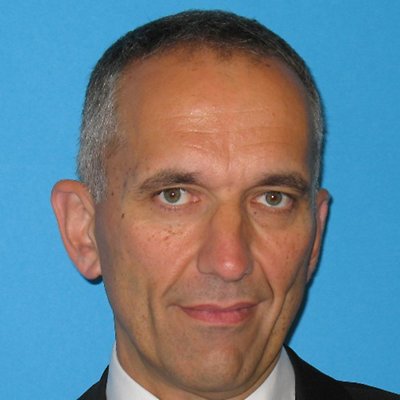
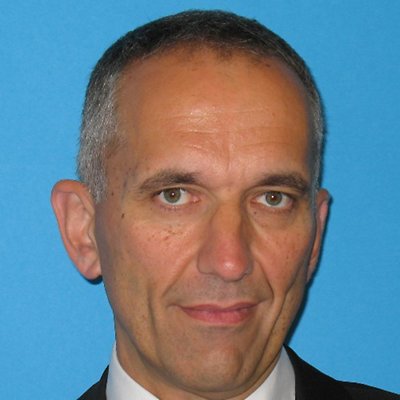
Bruno Spicher, Board Member and Project Leader, EDO

“Given these complex requirements, we immediately realized that a digital, data-based solution was the only viable option. And we were astonished to discover that no such platform was available yet anywhere in the world. So, we took the initiative ourselves.”

Bruno Spicher, Board Member and Project Leader, EDO

Using technology to integrate complex requirements 

The platform had to satisfy different demands, so developing it was a complex task. In particular, the solution had to meet the strictest availability, scalability, and security requirements—the kind that only a hyperscaler like Microsoft can guarantee. Integration capabilities were also needed to give the broad range of stakeholders seamless access to data and functionality. At the same time, the relevant regulations laid out clear rules governing data sovereignty; the data centers had to be located in defined regions, placing further restrictions on the choice of suitable technology partners.

The solution needed a flexible, scalable, and cost-efficient architecture that could be run up quickly in a live scenario, but that would minimize operating costs when it was not in active service. However, the biggest challenge was not the technology itself but coordinating the requirements of more than 50 stakeholders. 

For example, a transparent view of what data is available and how it is being used must be available at all times. This consideration was a central driver of the need for a lean, well-designed platform and rapid development. Communication between the partners was equally important. “I am so impressed by Bruno’s excellent skills in motivating people,” notes Marco Peyer, Co-Founder and CPO of risktec Ltd. “Building on the right technological foundation, that enabled us to realize our vision and bundle everyone’s expertise in TERMOT.” 

Microsoft played a decisive role in ensuring successful implementation. The reliability of the platform, the team’s familiarity with the ecosystem, and the availability of the required services in Switzerland together laid a firm foundation. The managers were thus free to concentrate exclusively on organizational challenges, knowing that the technological platform was secure, stable, and open to flexible configuration. 

Marco Peyer, Co-Founder and CPO, risktec Ltd

“I am so impressed by Bruno’s excellent skills in motivating people. Building on the right technological foundation, that enabled us to realize our vision and bundle everyone’s expertise in TERMOT.”

Marco Peyer, Co-Founder and CPO, risktec Ltd

Development aligned with real business needs 

TERMOT is based on Microsoft Azure, whose robust architecture meets the highest standards of security, compliance, and scalability. All that is essential for the platform as a whole. At the same time, Azure provides sufficient flexibility to operate TERMOT efficiently, deliver what is needed, and conserves resources. Thanks to the wealth of knowledge possessed by the partners involved in developing innovative platform solutions, constant access to the latest technological developments helped the project team to selectively improve TERMOT. “For us, working with Microsoft Azure and risktec was only logical,” Spicher explains. “We needed a powerful, future-proof and trustworthy basis for a platform that, if the worst comes to the worst, will make a critical contribution to national resilience." Microsoft Azure supplies more than just the necessary security and data protection mechanisms for the tailor-made architecture, however. It can also be scaled dynamically if an incident occurs. During quieter phases, an optimized cost structure minimizes resource consumption. Moreover, the solution is hosted in Switzerland and complies with all local standards.         

A business-oriented, product-centric approach was adopted when developing TERMOT. The agile process included biweekly sprints, enabling work to proceed quickly, flexibly, and iteratively. Five specialized teams worked in parallel on topics ranging from management information to building evaluations to damage estimates. Representatives of the EDO, risktec Ltd, building experts, and insurers held regular coordination sessions to ensure that all stakeholders’ needs were channeled into development. “Close cooperation within our cross-functional team was the key to success,” Peyer affirms. “That helped us stay on time and on budget, but also to fully meet all technical and quality specifications.” 

Bruno Spicher, Board Member and Project Leader, EDO

“For us, working with Microsoft Azure and risktec was only logical. We needed a powerful, future-proof and trustworthy basis for a platform that, if the worst comes to the worst, will make a critical contribution to national resilience.”

Bruno Spicher, Board Member and Project Leader, EDO

Working together to optimize the user experience 

Optimizing the user experience was always the focus of development work. Rigorous quality management, for example, was introduced right from the start. During the process, the team also made use of visualizations and mock-ups, as well as conducting extensive user tests to validate the user journey. Automated testing, code reviews, and security checks were likewise regular features of ongoing quality assurance. To prepare users as best as possible for the worst-case scenario, the EDO and risktec also developed a comprehensive training concept. This includes target group-specific documentation, podcasts, and modular e-learning formats to guarantee efficient and practical knowledge transfer.        

Even today, the three partners stay in close contact regarding strategic and operational issues around TERMOT. Why? Because platform development never ends. “We see technological progress as an opportunity to continue developing and improving TERMOT and maximizing the benefit for the EDO,” Peyer explains. “Above all, we want to further boost national earthquake resilience, efficient damage estimates, and incident management.” In this way, new technological developments, relevant data sources and services can be seamlessly integrated in the platform—and can optimize response capabilities in the event of an earthquake. 

Marco Peyer, Co-Founder and CPO, risktec Ltd

“We see technological progress as an opportunity to continue developing and improving TERMOT and maximizing the benefit for the EDO. Above all, we want to further boost national earthquake resilience, efficient damage estimates, and incident management.”

Marco Peyer, Co-Founder and CPO, risktec Ltd

Innovating for a resilient future 

To make TERMOT even more powerful, scalable, and automated, the platform is constantly being optimized. Advanced technologies such as AI are essential today, so their potential to further improve damage assessment and response capabilities is continually being evaluated. The high-performance processing of large volumes of geodata in particular makes situation assessments more accurate. “Microsoft gives us constant access to powerful services that are easy to integrate in TERMOT,” Peyer explains. “That lets us enrich the platform and the existing architecture in incremental steps.” 

The EDO is also ramping up its use of drones. To gain an initial overview of the situation, drones fly over inaccessible areas and deliver high-resolution footage of individual buildings. Experts analyze these pictures in real time and can then initiate appropriate measures. “Thanks to this technology, specialized engineers in the back office can give precise instructions to the people on site—for example, to help them assess the condition of buildings or infrastructure,” Spicher notes. By the end of 2025, the first 50 to 100 drone pilots should be ready to fly.       

Expanding the range of applications is equally critical. Alongside earthquakes, other disasters such as floods, storms, and technical accidents should also be covered in the future. TERMOT’s flexible architecture allows existing functions to be added for different crisis scenarios. There is also room for new modules—exactly in line with the partners’ commitment: to build the resilience needed to face future incidents with vision, courage, and action. Spicher makes one final comment: “Our partnership with Microsoft and risktec gives us all the resources we need to cement the EDO’s position as an indispensable aspect of incident management. Making use of technological progress helps us proactively implement our vision to become more resilient in the face of natural disasters—today and in the future.” 

Bruno Spicher, Board Member and Project Leader, EDO

“Our partnership with Microsoft and risktec gives us all the resources we need to cement the EDO’s position as an indispensable aspect of incident management. Making use of technological progress helps us proactively implement our vision to become more resilient in the face of natural disasters—today and in the future.”

Bruno Spicher, Board Member and Project Leader, EDO

Earthquake Damage Organization (EDO) 

The Earthquake Damage Organization (EDO) is a Swiss association that supports the population and the country’s cantonal authorities in dealing with loss adjustment and reconstruction after an earthquake. It provides personnel and technical resources to evaluate damaged buildings and estimate the cost of reconstruction. The EDO is funded by the 26 cantons, the Principality of Liechtenstein, the public building insurers in the cantons, and private insurance companies. 

risktec Ltd

risktec Ltd specializes in combining risk intelligence with modern technologies to develop digital products for the risk industry. It provides a suite of digital strategy, product development, and technology consulting services.

Take the next step

Fuel innovation with Microsoft

Explore more customer stories

Find out how customers are achieving more with Microsoft products and solutions.
A man wearing headphones and smiling.

Talk to an expert about custom solutions

Let us help you create customized solutions and achieve your unique business goals.
Three people in a meeting room.

Transform work with Microsoft AI

Bring intelligence into the flow of work and help your organization achieve its goals with secure, scalable AI solutions.

Follow Microsoft