This is the Trace Id: 10d9aad81f1444efbd932ba2ffae2191
10/22/2025

Kajima uses Microsoft Unified CodeWith to embark on the path to in-house development

A technology-driven company, Kajima determined that in-house IT system development was imperative for integrating vital data with AI and bolstering its competitive edge, while maintaining speed and security.

By utilizing Microsoft Unified AI Apps CodeWith, Kajima developed an in-house AI app on Azure with support from Microsoft and built a framework for in-house development by enhancing development expertise and problem-solving skills.

Using expertise gained in CodeWith, Kajima further improves its in-house conversational AI system, formulates internal security guidelines, and creates an in-house development roadmap to use as training material for new staff.

Kajima Corporation

Moving toward in-house development that utilizes critical internal data and enhances competitive edge

Kajima is a technology-driven company founded in 1840 that has developed a relationship of trust with communities and customers through their advanced architectural technologies. “As a group of individuals working together as one, we pursue creative progress and development founded on both rational, scientific principles and a humanitarian outlook, through which we strive to continually advance our business operations and contribute to society,” – this is the management philosophy and DNA of Kajima. Kajima’s broad architectural range brings forth not only buildings that allow people to lead a more prosperous daily life, but also architectural landmarks of times and a wide variety of other business services. Additionally, their civil engineering business provides a variety of infrastructure, something essential to any society.

In their 2024-26 medium-term business plan, Kajima outlines their aim of creating new value as a technology-driven company while pioneering a future together with society and customers. Kajima has been proactively encouraging digitalization to increase productivity and operational efficiency. Masaki Sato, Deputy Manager of Kajima IT Solutions Department, talks about the growing need for in-house development as IT usage expands and generative AI is utilized to improve operational efficiency. 

“At Kajima, each department outsources its systems development to an IT vendor as it requires a high level of expertise. Our IT Solutions Department, on the other hand, provides platforms used by all employees. Utilization of our vital business data is one of the challenges in company-wide IT solutions. It is possible to tell a vendor what we want to do and have them develop systems without sharing our internal data. However, this method requires a lot of time, and we find it difficult to keep up with changes in the business world and the increasing need for speed. That is why we decided to shift to in-house development for systems utilizing critical data that enhance our competitive edge.”

The development of Kajima ChatAI, their conversational AI model, marked the beginning of their path toward in-house development.

Learning development methodology and techniques through practice, the first step toward in-house development

Kajima ChatAI is a conversational AI model constructed for internal use based on Azure OpenAI. It guarantees data security by preventing external data leakage and offers unique features like employee authentication and usage logging.

In June 2023, 20,000 members of Kajima and their domestic group companies began using Kajima ChatAI with the aim of improving operational efficiency and productivity. Ryo Shimizu, Assistant Manager of Kajima IT Solutions Department talks about this challenge.

“The members of our IT Solutions Department were central to the development of Kajima ChatAI. Although they had little knowledge or experience at the start, they investigated and found the necessary information. One issue was that if a member of the development team transferred to another department, it became difficult to continue operations. We realized it was necessary to document the development process and know-how to address this. This issue is not limited to AI development; it applies to many other technical domains as well.”

Tomoki Uenaka of Kajima IT Solutions Department reflects on development and the long-standing issue of operational dependency on individual expertise and adds, “In order to move forward with in-house development, we needed a framework that would allow us to share individually acquired skills and expertise.”

They wondered if there was a way to strengthen their in-house development by learning not only technical skills, but also development methodologies and techniques. Kajima consulted with Microsoft, who recommended Microsoft Unified AI Apps CodeWith (hereafter CodeWith). CodeWith is a 2-week program where participants create PoC (Proof of Concept) or MVP (Minimum Viable Product) AI apps on Azure using agile practices, with support from Microsoft Cloud Solution Architects. The program enables participants to acquire knowledge and expertise for in-house development.

Kajima adopted CodeWith in December 2024 and began preparing for it in January 2025. The program theme was set as “adding new functions to Kajima ChatAI and building the foundation for in-house development.”  Necessary environment and knowledge were prepared, and workshops were held to address areas where expertise was lacking.

Ryo Shimizu reflects on that time. “We had many questions to ask the Microsoft Architects because we were using Azure OpenAI to develop Kajima ChatAI. CodeWith gave us precisely the training we needed.”

Atsuhiro Takeda, IT Solutions Department, Kajima Corporation

“Collaborative development with the Microsoft Architects helped us learn about standardization and documentation, as well as decision-making and new ways of thinking.”

Atsuhiro Takeda, IT Solutions Department, KAJIMA CORPORATION

Development in Conjunction with Microsoft Cloud Solution Architects

In February 2025, CodeWith began at Kajima. Participants included the Kajima ChatAI development team, with Masaki Sato as manager, and representatives from the Building Construction Management Division as users of the app. Shimizu says, “The members from the Building Construction Management Division joined the program not only to collaborate with the IT Solutions Department in building the foundation for in-house development, but also to provide feedback during sprint reviews as part of the program’s framework.”

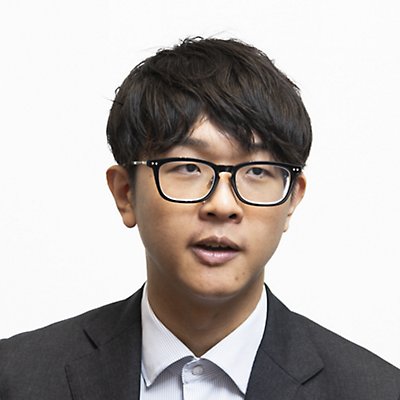
Tomoki Uenaka, IT Solutions Department, Kajima Corporation

“With the help of the Microsoft Architects, we could clarify the necessary input and the desired output, which enabled development to proceed smoothly.”

Tomoki Uenaka, IT Solutions Department, KAJIMA CORPORATION

CodeWith utilizes short repetitive cycles known as “sprints” where planning, design, development and testing processes are repeated. In this system, the actual work is done by the Kajima members, with the support of the Microsoft team. Shimizu says, “It’s like having an expert mentor by your side.”

Junpei Tsuchida, a Microsoft Japan Cloud Solution Architect who provided support for the assisted program, describes how this works.

“First, we discussed the construction, necessary elements, and technical options for the system design. In the development stage, we divided tasks into easy-to-manage portions for each sprint at a daily morning meeting, where we discussed the previous day’s progress and prioritized tasks for that day. After clarifying any issues or points that required assistance, each person worked on their individual tasks. The particular benefit of this program is the closeness between the Microsoft Cloud Solution Architects and the Kajima members. At Microsoft, we are always online and ready to deal with requests.”

For the sprints to be effective, it is necessary for everyone to adopt a collaborative development style, where multiple people work on their assigned tasks concurrently. Uenaka says, “In agile development, output (deliverables) becomes the input (information and resources) for the next cycle. At first, organizing this system of input and output was tricky. With the help of the Microsoft Architects, we could clarify the necessary input and the desired output, which enabled development to proceed smoothly.”

Microsoft Cloud Solution Architects review the source code. The source code is shared, developed and then deployed to Azure using Azure DevOps, and then advice is given. Microsoft Japan Cloud Solution Architect Kazuki Ota talks about how this is different from a regular review. “In addition to providing opportunities for improvement, we engaged in pair programming by sharing our screens online, collaboratively explored solutions to fix errors, and supported the IT Solutions Department members in applying tools and methodologies.”

Tsuchida says, “The true value of this program lies not in simply solving problems, but in the collaborative journey of finding solutions together.”

Shimizu, says, “By identifying the core of our challenges and actively experiencing how different perspectives and approaches can lead to solutions, we gained invaluable practical knowledge.”

The IT Solutions Department members participated in this program in addition to performing their daily tasks, and therefore needed to manage their time wisely. Shimizu says, “When we finished our first sprint, we asked for time to reflect on what we had learned. Microsoft was flexible, which allowed us to adapt our development style to fit our company’s system.”

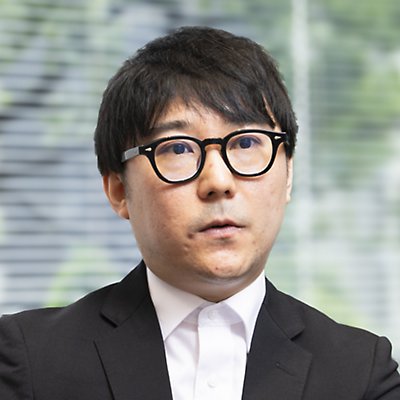
Ryo Shimizu, Assistant Manager of IT Solutions Department, Kajima Corporation

“We touched on not only technical skills, but also ways of thinking. This provided us with a valuable perspective on in-house development. Also, I learned from the Microsoft engineers how to train newcomers. In the future, we hope to pass this experience on to others in the company so that they, too, can guide others.”

Ryo Shimizu, Assistant Manager of IT Solutions Department, KAJIMA CORPORATION

Creating an In-house Development Map for Educating New Members

Kajima utilizes the knowledge and expertise they had gleaned from CodeWith to improve Kajima ChatAI. Shimizu says, “By incorporating sprints, everyone on the development team can be on the same page, which makes it easier to share progress and follow up on development. Monthly releases have become more consistent. We are also creating a reflective feedback loop by holding monthly meetings with the core business departments; receiving improvement requests, having them test developed features, and incorporating their feedback.”

Two main initiatives emerged from CodeWith to help build Kajima’s in-house development framework. The first is in-house development guidelines. They primarily focus on rules necessary to guarantee security. The second is an internal development map. Aimed at educating beginners, it visualizes the full journey of the CodeWith experience —including the challenges faced, stumbling blocks, resolution paths, concrete solutions, and the tools and knowledge required —and is documented in a chronological (timeline) format. This approach enables them not only to achieve a one-time success, but to build a system that captures each member’s experience at an organizational level. CodeWith was the first step toward “maintaining in-house development know-how within the organization and utilizing it in future endeavors.”

“We touched on not only technical skills, but also ways of thinking. This provided us with a valuable perspective on in-house development. Also, I learned from the Microsoft engineers how to train newcomers. In the future, we hope to pass this experience on to others in the company so that they, too, can guide others,” Shimizu says about CodeWith.

“It was a very meaningful experience,” Uenaka continues. “The Microsoft team answered our technical questions in detail, one by one, which made it easy for us to expand and apply our knowledge. The source code not only worked extremely well as a program, but was also easy to read, and had a writing style that improved both performance and quality. I gained many insights from this experience.”

Atsuhiro Takeda of Kajima IT Solutions Department says, “Collaborative development with the Microsoft Architects helped us learn about standardization and documentation, as well as decision-making and new ways of thinking.” He adds, “I also read Tsuchida’s blog and various writings, and it was a real honor to develop with him.”

Sato has this to say about CodeWith. “Utilizing generative AI requires a broad range of knowledge spanning AI and cloud technologies. Agile development methods and processes are also necessary. Having these Architects, each an expert in their field, working closely with us to create a comprehensive learning environment has helped our company make tremendous progress in in-house development.”

Kajima is strengthening its core as a company and breaking new ground to build a better future with communities and customers. As part of its efforts to improve productivity and operational efficiency through AI, Kajima received close support from the CodeWith program, which helped its engineers break new ground in in-house development. Shimizu concludes by saying, “What we acquired this time is not just a system, but the power to create solutions ourselves. This power will help us to solve future challenges in the frontlines.”

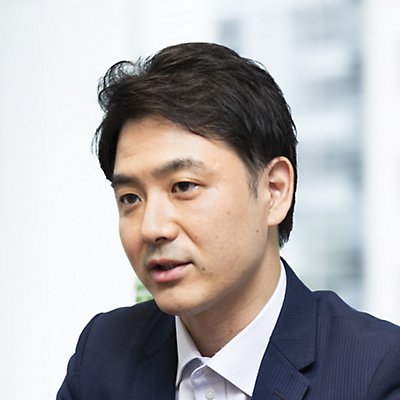
Masaki Sato, Deputy Manager of IT Solutions Department, Kajima Corporation

“Having these Architects, each an expert in their field, working closely with us to create a comprehensive learning environment has helped our company make tremendous progress in in-house development.”

Masaki Sato, Deputy Manager of IT Solutions Department, KAJIMA CORPORATION

Take the next step

Fuel innovation with Microsoft

Talk to an expert about custom solutions

Let us help you create customized solutions and achieve your unique business goals.

Drive results with proven solutions

Achieve more with the products and solutions that helped our customers reach their goals.

Follow Microsoft