This is the Trace Id: 7194722760dfc6e940baa04682fa6965
11/18/2025

SoftBank Corp. advances toward AI-powered call center with Foundry

Existing call centers struggled with long wait times, high staff turnover, and rising costs—pressures intensified by Japan’s competitive telecom market.

SoftBank launched operations for an AI-powered call center using Microsoft Foundry, Azure OpenAI in Foundry Models, Azure App Service, and Azure SQL Database.

Human–AI collaboration cut customer wait times by optimizing workflows, boosting efficiency, and enhancing service quality for faster, more reliable outcomes.


SoftBank Corp

SoftBank solves call center bottlenecks with scalable AI pipelines

Japan’s call center industry faces mounting labor shortages and rising operational costs—pressures that threaten service continuity and profitability across the country’s labor-constrained service economy. These challenges are mirrored globally as enterprises race to automate customer operations responsibly, without compromising quality or trust.

With approximately 20,000 employees and a reputation for innovation, Japan-based telecom and IT operator SoftBank Corp. (SoftBank) set out to reimagine its customer care infrastructure. Its previous call center system struggled with long wait times and high staff turnover. In Japan’s competitive telecom market, the company saw that fully automating operations was crucial to meet rising customer expectations and reduce costs. It sought a more complete transformation over incremental improvements. The company aimed to build an AI-powered call center to deliver human-quality service with zero wait times, eventually operating around the clock and scaling across its enterprise footprint.

SoftBank’s initiative addresses systemic labor shortages and service costs in Japan’s massive call center industry. It offers a scalable model for global enterprises seeking to modernize customer operations.

The company collaborated with Microsoft to co-engineer a solution using the full AI, apps, and data stack of Foundry Models. The project was supported by Global Black Belt technical experts in Foundry Tools and the Industry Solutions Delivery (ISD) team. The groups worked side-by-side across design, deployment, and governance validation.

Building the platform with Azure at the core

SoftBank uses Microsoft Foundry to create intelligent agents that respond dynamically to customer needs. It relies on Azure OpenAI in Foundry Models for language understanding and generation. To confirm relevancy, Azure AI Search grounds agent responses in real-time context. Semantic Kernel orchestrates multiple agents and streamlines workflows across the platform.

By choosing Azure App Service, a fully managed platform as a service (PaaS), SoftBank avoided infrastructure complexity and accelerated time to market. App Service delivers scalable, low-latency hosting and orchestrates AI-driven workflows. The service interoperates with Azure SQL Database and Azure Cosmos DB. Azure Cosmos DB records and stores contextual information related to conversations, such as processing logs, reasoning steps, internal states, and interpreted intents. In the future, this data will improve conversation models and conduct systematic analyses, with the goal of further enhancing the quality and accuracy of AI responses and behavior.

A key innovation is SoftBank’s proprietary voice controller, which uses LiveKit, a real-time communication framework, with Azure Speech in Foundry Tools. Drawing on the company’s expertise in telephone audio control, this system bridges generated responses and human caller expectations for natural, empathetic interactions. Custom Neural Voice also enhances the realism and warmth of speech, creating conversations that feel distinctly human.

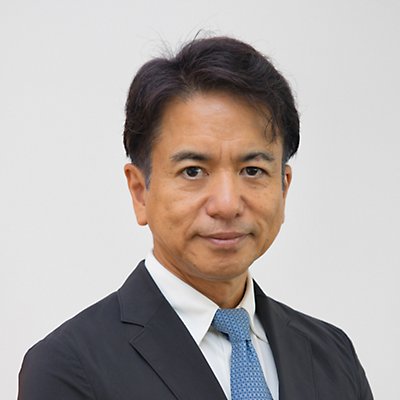
Katsuya Kitazawa, IT Division Lead, SoftBank Corp.

“Legal compliance regarding communication confidentiality and personal information is very strict. Ideally, on-premises would be best for these requirements.”

Katsuya Kitazawa, IT Division Lead, SoftBank Corp.

The hybrid capabilities and advanced security in Azure have met SoftBank’s needs and support national scalability. “Legal compliance regarding communication confidentiality and personal information is very strict. Ideally, on-premises would be best for these requirements,” explains Katsuya Kitazawa, IT Division Lead at SoftBank Corp.

SoftBank’s platform exemplifies the new era of agentic AI—autonomous systems capable of orchestrating multiple agents across workflows, using Foundry. This architecture could eventually support other service domains.

Elevating customer experience through progressive AI transformation

SoftBank is continuously working on building the next-generation call center using Azure AI. Early validation of generative AI architecture showed strong potential for advanced dialogue control. Achieving full compliance with operational rules in real-world settings will require ongoing refinement.

Today, the company operates the system with collaboration between AI and human agents, reducing initial response time. By establishing a continuous improvement cycle driven by real operational data, SoftBank will enhance both service quality and operational efficiency going forward.

The company’s goal is to expand the scope of tasks addressable by AI and evolve toward an autonomous call center that can complete most of SoftBank’s customer interactions with AI. With a future target of achieving cost reductions and delivering an even better customer experience, SoftBank continues to advance architecture that balances scalability with tangible business impact.

Choosing Microsoft for its business-critical AI capabilities

SoftBank had evaluated several vendors before making its choice. The team selected Microsoft for the enterprise-grade reliability of Azure and its support for production-scale AI workloads. The decision reflected SoftBank’s focus on building a trusted platform for intelligent operations.

“SoftBank chose Microsoft Azure due to its AI capabilities and scalable platform—essential for significantly improving the resolution rate through AI. The set of tools that Azure provides made it a clear strategic choice for building our next-generation customer service infrastructure,” says Keiichi Makizono, EVP and Chief Information Officer, SoftBank Corp.

Keiichi Makizono, EVP and CIO, SoftBank Corp.

“SoftBank chose Microsoft Azure due to its AI capabilities and scalable platform—essential for significantly improving the resolution rate through AI. The set of tools that Azure provides made it a clear strategic choice for building our next-generation customer service infrastructure.”

Keiichi Makizono, EVP and CIO, SoftBank Corp.

SoftBank built its AI-powered call center on Foundry, which provides real-time orchestration, retrieval-augmented generation (RAG), and multi-agent coordination. These capabilities are essential for handling complex, high-volume customer interactions. Foundry also uses content filters to help ensure responsible outputs in a regulated, customer-facing environment.

SoftBank has built a proprietary control platform to deliver proactive AI conversations in which the AI agent interprets user input and context, then autonomously determines the next question or guidance step. This mechanism enables the dialogue to adapt dynamically to user intent and situation, delivering natural and efficient interactions.

The platform operates on Azure App Service as an orchestration layer that assimilates AI models and application logic, facilitating scalable operations and seamless coordination. Reflecting Microsoft’s strategy across AI, data, and applications, this architecture advances SoftBank’s vision of autonomous enterprise automation.

Transforming operations with measurable impact

SoftBank’s AI call center is a foundational step in broader automation. With the core architecture in place, SoftBank is evaluating agentic AI applications across internal IT support.

Early results from initiatives like SmartAI-Chat, a highly secure internal AI assistant used by approximately 20,000 employees, show generative AI streamlining operations, reducing support overhead, and improving employee experience.

Equally important is the shift in employee roles. With AI handling routine interactions, human agents could eventually transition into supervisory and escalation roles, focusing on complex, value-added tasks. This shift has improved job satisfaction and service quality, while also enabling SoftBank to scale operations without increasing headcount.

The introduction of AI in SoftBank’s call center will deliver steady improvements in both operational efficiency and service quality. Through collaborative operations between AI and human agents, SoftBank has reduced operator workload and improved response speed. The company also shortened average customer wait time and expanded uptime coverage.

SoftBank plans to further optimize performance using real operational data, gradually increasing AI autonomy to achieve both cost efficiency and enhanced customer experience.

The platform’s scalability has opened new doors. With the core infrastructure in place, SoftBank is now exploring additional use cases across its business units, including sales support, internal help desks, and field service coordination.

Looking ahead to scalable innovation

With its AI-powered call center operational, SoftBank is entering a new phase of intelligent automation. The team is developing a commercial version of the platform for broader market use. The solution would help other organizations to modernize service operations with proven Foundry capabilities for orchestration, multi-agent coordination, and RAG. This approach extends the software foundation that powered SoftBank’s transformation, making enterprise-grade automation accessible without requiring specialized infrastructure investments.

“Our objective was never limited to internal transformation. From the outset, we aimed to develop an AI call center solution that could scale beyond SoftBank, serving Japan’s call center market. By pioneering this technology internally, we are laying the groundwork to deliver scalable AI-driven support industry-wide,” explains Makizono.

Keiichi Makizono, EVP and CIO, SoftBank Corp.

“Our objective was never limited to internal transformation. From the outset, we aimed to develop an AI call center solution that could scale beyond SoftBank, serving Japan’s call center market. By pioneering this technology internally, we are laying the groundwork to deliver scalable AI-driven support industry-wide.”

Keiichi Makizono, EVP and CIO, SoftBank Corp.

Future updates aim to strengthen AI quality assurance by introducing large language models as judges. This approach helps AI systems evaluate and refine SoftBank’s own outputs based on standards aligned with human judgment.

For SoftBank, AI is an engine for continuous transformation. The company’s success represents a blueprint for Japan’s service economy and a model for global enterprises embracing AI responsibly.

Discover more about SoftBank on FacebookLinkedIn, X/Twitter, and YouTube.

Take the next step

Fuel innovation with Microsoft

Talk to an expert about custom solutions

Let us help you create customized solutions and achieve your unique business goals.

Drive results with proven solutions

Achieve more with the products and solutions that helped our customers reach their goals.

Follow Microsoft