This is the Trace Id: 5171a4ff7930830056494c037591e1f9
11/18/2025

SK Telecom deepens customer connections with agentic workflows in Microsoft Foundry

With people demanding more from cellular carriers, SK Telecom looked to enable its successful A.(A-Dot) personal AI assistant app to deliver intelligent, hyper-personalized digital experiences and real-time insights to its millions of subscribers.

SK Telecom built an agentic solution, using Microsoft Foundry for its multi-agent orchestration, fine-tuned Korean language models, and robust compliance capabilities.

Using highly secure and compliant Azure AI technologies, SK Telecom is delivering natural conversation experiences informed by users’ routines, preferences, and location, driving millions of new subscribers.

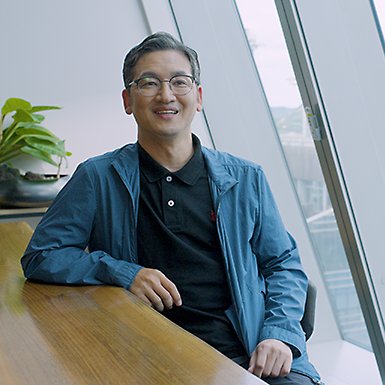
SK Telecom

Global telecommunications companies are undergoing rapid change as consumer expectations shift toward seamless, hyper-personalized digital experiences that enhance users’ lives day-to-day. Providers face the dual challenge of elevating service quality while reducing operational complexity and cost. This has driven a strategic pivot toward AI, enabling operators to extract insights from data and automate interactions at scale. At the same time, telecoms must navigate evolving regulatory landscapes and stringent privacy requirements, especially in markets like South Korea, where data localization and compliance are crucial.

A vision for agentic transformation 

SK Telecom, one of South Korea’s leading telecommunications providers, had already made strides with its personal AI assistant, A.(A-Dot). The company’s next goal was to move beyond simple, single-turn responses to orchestrate complex, multistep tasks capable of managing real-world user goals such as scheduling, daily routines, and multimodal interactions. The imperative was clear: deliver stable, fast, and cost-effective service to millions of users, especially during peak periods, while meeting regulatory requirements and enabling integration with local partners for richer capabilities.

“Our goal was to develop highly individualized agent services, creating an assistant that remembers the customer’s usage history and uses it to provide the proper services to the customers,” recalls JungRyong Lee, Vice President of AI Agent Development Office at SK Telecom. This vision laid the foundation for advanced agentic AI within A.(A-Dot).

The SK Telecom solution took shape around five key requirements:

  • Multi-agent collaboration: Breaks down user goals and coordinates multiple agents—scheduling, media, search—so the experience feels natural.

  • Context management: Maintains conversation memory, user preferences, and retrieval-augmented generation (RAG) to ground answers in relevant data.

  • Scalability and performance: Supports millions of users with low latency.

  • Integration capabilities: Connects to enterprise systems and local APIs for services like hotel booking.

  • Cost control and customization: Fine-tunes models for Korean language and domain-specific tasks.

Of course, as a carrier responsible for managing a massive volume of user data, SK Telecom knew that security and compliance were nonnegotiable. South Korea’s Personal Information Protection Act and sector guidelines require strict controls over data purpose, minimization, and locality. “The law requires a clear purpose of using personal data, and you could collect the very least amount of personal information,” says MinSeok Ko, Lead Planner of Vertical Agents at SK Telecom. “We work very hard to ensure we conform with the guidelines provided by the Korean government.”

JungRyong Lee, Vice President, AI Agent Development Office, SK Telecom

“Our goal was to develop highly individualized agent services, creating an assistant that remembers the customer’s usage history and uses it to provide the proper services to the customers.”

JungRyong Lee, Vice President, AI Agent Development Office, SK Telecom

Powering multi-agent AI at scale

SK Telecom partnered closely with Microsoft, using Microsoft Foundry to drive its AI platform. Azure OpenAI in Foundry Models provides the backbone for reasoning and conversation, with models such as GPT-4.1 and GPT-4.1 mini. 

Because off-the-shelf AI models lacked the necessary domain-specific accuracy and language nuance, fine-tuning was a critical step. Through this process, SK Telecom was able to significantly improve accuracy for Korean language and telecom-specific tasks. It also optimized response speed and cost by using mini-model variants, and enabled multi-agent orchestration for complex workflows such as scheduling, search, and media handling.

“Because we are providing service in the Republic of Korea, it was imperative for us to select the product that could provide Korean language,” says SungWon Han, Lead Developer of AI Agent at SK Telecom. “We chose Azure OpenAI models for their strong capabilities in understanding and using the Korean language model.” Han also emphasized the importance of mini-type models for response speed and cost, along with the need for fine-tuning to increase accuracy.

Engineers curated expert data and used prompt evaluation tools to rigorously assess language model performance. The fine-tuning process was iterative, involving cycles of tuning and validation with use-case planners to help ensure alignment with business goals. Microsoft supported this effort with a dedicated three-day training course on language model evaluation and governance structures for the SK Telecom team.

The A.(A-Dot) architecture supports multi-agent orchestration. User goals are broken into subtasks managed by specialized agents (scheduling, media, search), coordinated by an orchestrator that relies on Foundry resource allocation and model management. This enables reliable, multistep workflows and agent collaboration, improving accuracy and user satisfaction. 

Describing the runtime behavior, Han explains, “The A.(A-Dot) agent does not generate an answer in one single call. It goes up several steps. Sometimes many different agents cooperate to generate the best answer, reflecting on previous answers to provide multistep processes.” 

Voice interactions are fueled by Azure Speech in Foundry Tools, enabling real-time speech to text and text to speech across web, mobile, and Microsoft Teams interfaces. To optimize costs and guarantee performance, SK Telecom adopted Prepaid Token Unit (PTU) provisioning. This strategy helped ensure predictable performance during peak traffic and significant cost savings compared to consumption-based models—a critical factor for telecom-scale deployments.

Responsible AI is a cornerstone of the solution, with Azure AI Content Safety filtering harmful content and SK Telecom developing additional internal safety features. RAG and semantic search embeddings ground AI responses in relevant, up-to-date data, while policy-aware security filters enforce governance and compliance. Compliance and security are built into every layer, with certifications and the highly secure Azure environment supporting regulatory requirements. 

Operational excellence is maintained through prompt flow tools that evaluate language model outputs and sample production data, institutionalizing rapid iteration and systematic evaluation.

Throughout the project, SK Telecom’s engineering teams worked closely with Microsoft to fine-tune models for Korean language and specific verticals, rapidly iterating to resolve issues like text repetition and incomplete outputs. 

SungWon Han, Lead Developer of AI Agent, SK Telecom

“We chose Azure OpenAI models for their strong capabilities in understanding and using the Korean language model.”

SungWon Han, Lead Developer of AI Agent, SK Telecom

Accelerating delivery and user engagement

The results of SK Telecom’s AI enhancements have been significant. The platform supports millions of monthly active users, maintaining stable performance during traffic spikes thanks to PTU provisioning. Partnering with Microsoft, SK Telecom has been able to shorten delivery times for new services by three to four months. It can also reuse agentic components across third-party products, such as the TMAP Mobility service. 

A.(A-Dot) debuted on Azure OpenAI in late 2023 and quickly reached the Top 10 in South Korea’s App Store for three months. Starting with approximately 1.1 million monthly active users, the AI assistant surpassed 10 million subscribers and monthly active users by 2025 as its features expanded, achieving tenfold growth in less than two years. The PTU model delivered fast, stable responses during spikes and substantial cost savings versus the longstanding Pay-As-You-Go model—outcomes essential to sustaining engagement at telecom scale.

Frequent releases, ongoing optimization, and deep interoperability with Microsoft’s engineering teams have helped trim three to four months off feature development time. As a result, SK Telecom can accelerate adoption of new features among customers. 

MinSeok Ko, Lead Planner of Vertical Agents, SK Telecom

“We’re focused on developing very natural communication between humans and AI that agentic AI enables, and we plan to continue to use Microsoft Foundry to help us develop it.”

MinSeok Ko, Lead Planner of Vertical Agents, SK Telecom

Shaping the future of human–AI collaboration

With platform foundations and engineering practices in place, SK Telecom is poised to expand A.(A-Dot)’s reach and capability across consumer touchpoints and partner ecosystems. The roadmap includes agent-to-human and agent-to-agent experiences, advanced voice agent capabilities, and continued optimization of reasoning models under Azure provisioning. 

Strategically, SK Telecom anticipates deeper personalization, stronger multimodal experiences, and tighter linkage to core telecom services. “We’re focused on developing very natural communication between humans and AI that agentic AI enables, and we plan to continue to use Microsoft Foundry to help us develop it,” says Ko.

SK Telecom’s journey demonstrates how a clear product vision, rigorous compliance and safety posture, and deep engineering collaboration can drive success. Combined with a platform designed for orchestration, multimodality, and cost-efficient performance, these elements can operationalize intelligent assistants at carrier scale. For the South Korean telecom leader, its ability to deliver on the promise of providing more seamless, digital-first, and highly personalized experiences is paying off. The impact is evident in user growth, per-user engagement, and delivery speed, with a roadmap for even richer innovation ahead. 

Discover more about SK Telecom on Facebook, Instagram, LinkedIn, X/Twitter, and YouTube

Take the next step

Fuel innovation with Microsoft

Talk to an expert about custom solutions

Let us help you create customized solutions and achieve your unique business goals.

Drive results with proven solutions

Achieve more with the products and solutions that helped our customers reach their goals.

Follow Microsoft