This is the Trace Id: b8ac3d723510f8f3c11f5cc6070d75d1
2/11/2026

UC Chile scales responsible AI with Azure OpenAI for more than 4,600 students

UC Chile aimed to implement artificial intelligence securely, at scale, and equitably for thousands of students, ensuring governance, privacy, and pedagogical consistency without relying on disparate tools.

The university deployed AyudantIA, a pedagogical agent platform integrated with Canvas and operated on Microsoft Azure, utilizing the Azure OpenAI Service with institutional authentication and centralized governance.

UC deployed 194 agents across nearly 100 courses, impacting over 4,600 students. The sessions, averaging 13 to 23 minutes in duration, fostered deeper interaction and supplied valuable insights enabling instructors to refine their teaching methods.

PUC Chile

Integrated into Canvas and built on Azure OpenAI in Foundry Models, AyudantIA enables UC to deliver deeper, more equitable, and well‑governed learning experiences to thousands of students.

The Pontificia Universidad Católica de Chile deployed 194 artificial‑intelligence pedagogical agents—integrated directly into Canvas and powered by Microsoft AzureAzure AI Foundry, and Azure OpenAI Service—to support learning and strengthen the teaching experience at scale. Led by the Office of the Vice President for Digital Intelligence and the Office of the Vice President for Academic Science, this initiative represents one of the first large‑scale deployments of pedagogical agents in Latin America. UC successfully moved AI from academic debate to everyday classroom practice, supported by clear metrics, governance standards, and institutional oversight.

Integrating AI with impact, equity, and governance

In a moment where artificial intelligence is already shaping how students learn, UC faced a strategic challenge: how to integrate AI institutionally—ensuring equitable access, data protection, and academic quality—without displacing the essential role of faculty.

If adoption happened spontaneously and without guidance, students and instructors could gravitate toward isolated tools with no governance, no visibility, and no pedagogical alignment. The result could be uneven learning experiences, course‑to‑course disparities, and new privacy and security vulnerabilities.

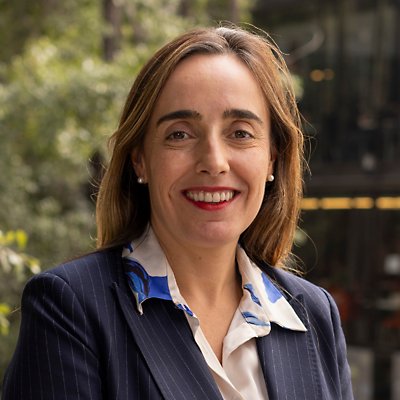
“What matters most is combining the power of artificial intelligence and modern technology with the expertise and creativity of educators so we can deliver a better learning experience for students,” explains Paula Aguirre, Vice-Rector for Digital Intelligence at UC.

Guided by this vision, the university committed to a model that aligns AI with its educational mission—a structured, responsible, and institution‑wide approach. The goal: empower teaching and learning through AI, while ensuring every deployment meets the university’s standards for impact, equity, safety, and academic excellence.

Paula Aguirre, Vice-Rector for Digital Intelligence, UC Chile

“What matters most is combining the power of artificial intelligence and modern technology with the expertise and creativity of educators so we can deliver a better learning experience for students.”

Paula Aguirre, Vice-Rector for Digital Intelligence, UC Chile

A strategic decision: Creating AyudantIA

UC made a deliberate and strategic choice: to build AyudantIA, an institutional platform of pedagogical agents designed to support learning and strengthen the work of teachers—not replace it. Each agent is configured by the instructor of the course, responds only to academically validated content, and operates under a unified governance framework that ensures safety, coherence, and quality across the university.

“With this initiative, we aim to enhance learning by giving our academics tools that reinforce their central role and allow them to focus on what matters most: the teacher–student relationship,” says Ignacia Torres, Executive Director of the Academic Vice‑Rectory.

From the very beginning, the approach was intentionally pedagogical. The goal was not to experiment with AI in isolation or create disconnected pilots, but to build a scalable, academically consistent foundation that works the same way across all faculties and programs.

“We want to use AI to learn more and better. If this tool helps in deeper learning, we will be fulfilling our mission,” reflects Pablo Barceló, Director of Artificial Intelligence at UC.

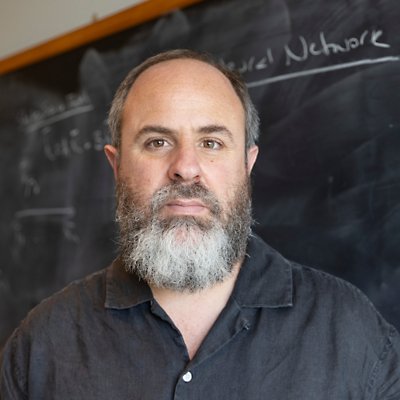
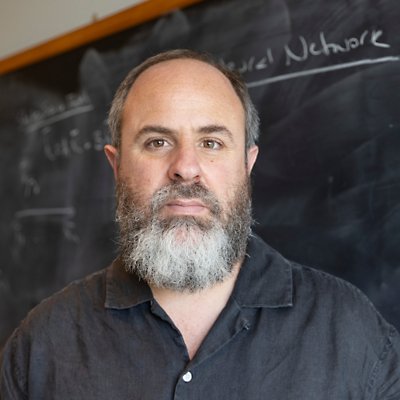
Pablo Barceló, Director of Artificial Intelligence, PUC Chile

“We want to use AI to learn more and better. If this tool helps in deeper learning, we will be fulfilling our mission.”

Pablo Barceló, Director of Artificial Intelligence, PUC Chile

From a global reference to an institutional platform on Azure

Before becoming a university‑wide initiative in Chile, AyudantIA had an important precursor. The team began by studying Cogniti, a digital tutoring experience developed at the University of Sydney. This early reference helped validate the potential of AI‑supported learning but also made clear that UC would need to adapt the approach to its own academic, regulatory, and technological context.

“Cogniti came to us from Sydney. The first thing we did was deploy it in an Azure environment and, with support from XMS, run a quick pre‑pilot,” explains Juan Sebastián Gómez Navas, Deputy Director of Applied AI and Innovation at UC. “From there, the focus shifted to transforming it into a solution that truly made sense for our institutional reality.”

To lead this adaptation and implementation, the university partnered with XMS—the technology integrator responsible for designing, configuring, and deploying the platform. The goal: ensure full alignment with UC’s academic standards, governance models, and a cloud architecture built to scale securely and sustainably.

Integrated into Canvas, built on Azure

AyudantIA was developed on Microsoft Azure, using Azure OpenAI Service as the foundation for its AI capabilities. Integrated directly into Canvas—UC’s learning management system—and supported by the Directorate of Teaching and Teaching Innovation within the Academic Vice‑Chancellor’s Office, the platform fits naturally into existing academic workflows. Teachers and students didn’t need external tools or new interfaces; AI simply became part of the learning experience.

From a technical perspective, the solution uses services such as Azure App Service and containerized deployments to run and scale pedagogical agents securely and efficiently. The entire environment operates under a clear framework for responsible AI use and data protection, fully aligned with UC’s institutional standards.

“94% of students already use AI. Our role is to offer a safe and well-regulated space to learn more and better,” adds Pablo Barceló.

Pablo Barceló, Director of Artificial Intelligence, UC Chile

“94% of students already use AI. Our role is to offer a safe and well-regulated space to learn more and better.”

Pablo Barceló, Director of Artificial Intelligence, UC Chile

Impact in the classroom: deeper and more visible learning

From the very first semester, AyudantIA began demonstrating measurable results. During the pilot, UC deployed 194 pedagogical agents across nearly 100 courses, reaching more than 4,600 students inside Canvas.

In the most active agents, sessions averaged 13–23 minutes, a level of sustained engagement that signals deep exploration of course content, not quick or superficial queries. “I asked them to interact 10–15 minutes before class. The dynamic changes—students arrive with questions and critical thinking,” says Francisco Suárez, Professor of Engineering, UC.

The platform also delivered clear value to instructors. With access to aggregated, anonymized interaction data, teachers were able to spot patterns of confusion, adjust materials, and reinforce key topics directly in class.

As the semester progressed, more sophisticated pedagogical uses emerged: some agents provided task‑specific feedback, others facilitated Socratic dialogue, and others supported thematic exploration. Together, they opened new ways of accompanying student learning.

Internal surveys reinforced these results: More than 60% of students reported that the agents contributed positively to their learning, and 90% expressed interest in continuing to use AyudantIA. 

Among faculty, two‑thirds evaluated its impact positively, highlighting the value of the insights generated to strengthen the in‑class experience.

Francisco Suárez, Professor of Engineering, UC Chile

“I asked them to interact 10–15 minutes before class. The dynamic changes—students arrive with questions and critical thinking.”

Francisco Suárez, Professor of Engineering, UC Chile

What's Next: Scale, measure, and expand

With these results, PUC is now planning the next phase of AyudantIA. The Artificial Intelligence Directorate will scale the platform progressively—semester by semester—toward a potential reach of up to 5,000 courses. The university will preserve the gradual, evidence‑driven approach that allowed it to learn, adjust, and consolidate the foundation effectively.

A key priority now is deepening impact measurement. The next stage combines usage metrics with academic outcomes and interaction analytics to understand where AI is driving deeper learning—and where pedagogical strategies should be refined.

This evolution aligns with PUC’s institutional “Apps + Agents” strategy: modernizing internal applications with Azure intelligence and embedding agents into university processes, always under principles of responsible governance, privacy, and ethical data use.

AyudantIA is only the beginning—an initial deployment that delivers clear metrics, honest learnings, and a community of faculty and students now prepared to keep evolving with AI in service of learning, today and in the future.

Take the next step

Fuel innovation with Microsoft

Talk to an expert about custom solutions

Let us help you create customized solutions and achieve your unique business goals.

Drive results with proven solutions

Achieve more with the products and solutions that helped our customers reach their goals.

Follow Microsoft