This is the Trace Id: 077f225b4e19a22643b7a41cf4bfbce8
4/15/2026

ARUM tackles skilled labor shortages by adding LLM to machining centers with Azure AI

ARUM had successfully automated process design, NC program generation, and the 12 core machining processes. However, a shortage of manufacturing technicians meant that few workers had the experience to expertly operate ARUM solutions.

ARUM designed a machining center that leverages LLM, enabling anyone to easily operate the tool through natural conversations. Microsoft’s AI technologies and the Microsoft for Startups program were critical elements in the project’s success.

ARUM produced a solution featuring interactive AI character KAYA, enabling novice workers to perform high-precision machining. It also cuts the NC program creation process from 177 steps to two and slashes manufacturing costs by 50% per part.


ARUM

LLMs offer a potential solution to skill shortages in the metalworking industry 

Established in 2006, ARUM is transforming manufacturing with automation, robotization, and AI. In 2021, the company launched its manufacturing-focused ARUMCODE AI model to automate process design and numerical control program1 generation. 2024 saw the launch of TTMC Type-F, a machining center equipped with independently-developed AI software which automated the 12 core machining processes.

1 Automatic machining programs that provide movement instructions and other directions to metalworking equipment like machining centers. Traditionally, creating and operating NC programs has required veteran expertise.

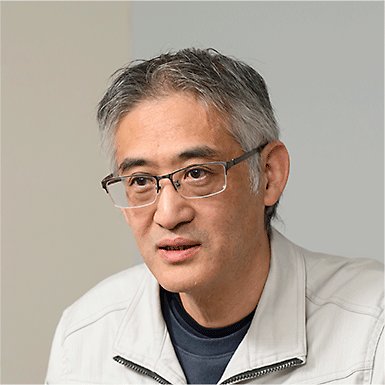
“Japan has over 200,000 metalworking companies, but the number of skilled workers in the industry is dwindling drastically; we do not expect to see more in the future,” says ARUM CEO Takayuki Hirayama. Increasing productivity amid the skills shortage is a massive challenge.

“To that end, we developed the completely original ARUMCODE and TTMC Brain,” Hirayama continues. “While there were tools to help create NC programs in the past, ours were the first to automate NC program generation and machining processes.”

However, the many buttons on these tools still hindered effective use among inexperienced users. ARUM therefore began considering large language models (LLMs). Its aim was to create TTMC Origin, a machining center easily operable by conversing in natural language.

“With LLMs, we can standardize advanced cutting knowledge which previously required skilled workers, making high-precision machining experience available to inexperienced technicians,” says Hirayama. “We therefore began planning TTMC Origin around the concept of ‘intelligent metal lifeforms.’”

Hirayama proposed the concept to Microsoft in 2023. Microsoft was the natural choice for the proposal because of its solid security, established development environments, and ARUM engineers’ familiarity with Microsoft technologies and services. Microsoft is also involved in hardware-related areas and Windows is a common OS for industrial PCs installed in machine tools. “We’re also fans of Microsoft,” Hirayama states.

Takayuki Hirayama, CEO, ARUM

“TTMC Origin is the first solution to integrate LLMs into CNC and CAM. Users can perform high-precision machining as easily as using a smartphone. Reservations open in July 2026 and we’re already flooded with inquiries. We’ll gradually release it overseas from 2027. We want to elevate the global manufacturing industry.”

Takayuki Hirayama, CEO, ARUM

Microsoft supports development and implementation of AI character KAYA

After the proposal, ARUM started developing TTMC Origin with the support of Microsoft for Startups. This program propelled everything from concepting to prototyping, MVP design, and bringing the solution to market. A prototype was completed in August 2025. The machining center supports simultaneous three-axis high-speed rotation and features TTMC Brain and LLM-powered AI character KAYA for chat.

The front of the machining center boasts a large vertical display, on which KAYA converses with the user by voice. An LLM (GPT-5) running on an industrial PC in the machining center controls KAYA, which also integrates with various AI services on Azure.

Users with no machining knowledge can perform high-precision operations via voice chats with KAYA.

The tool’s Azure AI services include Azure Speech for voice communication with users, Azure OpenAI for summarizing and interpreting conversations, and Azure AI Search for database searches. Additionally, Foundry Agent Service on the Microsoft Foundry platform provides a fallback generic AI in case the primary AI function doesn’t perform as expected.

KAYA also integrates with TTMC Brain. Based on the conversation with the user, TTMC Brain automatically generates a program for the machining process and autonomously controls the machining center. Satoshi Murakami, General Manager of the ARUM CSE Development Team, explains the user experience below.

“With TTMC Origin, KAYA explains all the setup steps and AI executes the applications for startup, processing, and output, so users can start machining simply by talking to KAYA and performing the setup. It’s like talking, or communicating through a chat app. Even if you’re talking with KAYA in a noisy location, she recognizes every word accurately. And because Azure AI supports multiple languages, KAYA is multilingual."

Hirayama identifies multilingual support as extremely important for manufacturing sites. This is because manufacturers in Japan are hiring more foreigners to cope with labor shortages and some factories are expanding overseas. And with plans to introduce TTMC Origin to overseas markets, Azure AI’s support for over 100 languages was enticing. “Even an automated machining center won’t be effective if users can’t operate it in their own language,” explains Hirayama. “TTMC Origin can solve such problems.”

Satoshi Murakami, General Manager, CSE Development Team, ARUM

“With TTMC Origin, KAYA explains all the setup steps and AI executes the applications for startup, processing, and output, so users can start machining simply by talking to KAYA and performing the setup. It’s like talking, or communicating through a chat app... And because Azure AI supports multiple languages, KAYA is multilingual.”

Satoshi Murakami, General Manager, CSE Development Team, ARUM

Performing high-precision machining as easily as using a smartphone

To what extent does TTMC Origin improve productivity?

“TTMC Brain, which automatically generates machining programs, slashes the input work for NC programming,” says Murakami. Traditional CAM-based NC programming involves 177 steps, but TTMC Brain automates all but the first and last stages. “NC programming accounts for 50% of the production cost per part, so automating this stage could cut production costs in half.”

Ease of use is another essential point. Because users converse with the AI character on the front end, they don’t require advanced expertise to get great results.

“TTMC Origin is the first solution to integrate LLMs into CNC and CAM,” says Hirayama. “Users can perform high-precision machining as easily as using a smartphone. Reservations open in July 2026 and we’re already flooded with inquiries. We’ll gradually release it overseas from 2027. We want to elevate the global manufacturing industry.”

TTMC Origin software is currently available on three-axis machining centers, but ARUM will soon add it to its flagship five-axis products. Five-axis machining centers have numerous machining capabilities, but they are complex and difficult to use. The power to perform machining through conversations with KAYA looks set to eliminate this hurdle.

The results of the journey that ARUM and Microsoft have embarked on will be unmissable.

Take the next step

Fuel innovation with Microsoft

Explore more customer stories

Find out how customers are achieving more with Microsoft products and solutions.
A man wearing headphones and smiling.

Talk to an expert about custom solutions

Let us help you create customized solutions and achieve your unique business goals.
Three people in a meeting room.

Transform work with Microsoft AI

Bring intelligence into the flow of work and help your organization achieve its goals with secure, scalable AI solutions.

Follow Microsoft