This is the Trace Id: 6b322f7820c6eb5508a0fd920bcf577e
5/26/2026

SimCorp unifies its SimCorp One platform on Azure to scale AI

SimCorp helps the world’s leading asset managers, pension funds, and insurers manage investment operations at scale. As AI entered workflows, it saw a chance to deliver governed intelligence across regions and build a platform to support it at scale.

SimCorp unified its SimCorp One platform on Azure to embed AI directly into global investment operations, delivering governed, auditable intelligence at scale through Microsoft Foundry.

SimCorp customers saw 134% ROI over 3 years and up to 45% better operational efficiency, saving 10 hours per person a week due to automated processes and faster decision-making. By year 3, customers get to market 50–60 days faster than before.

SimCorp

For decades, SimCorp’s investment management platform was built around one requirement: stability. Supporting global financial institutions means intense regulatory scrutiny, strict security expectations, and near-zero tolerance for failure. That model held until risk evolved. Across financial services, AI shifted from a future capability to a real-time input to investment decisions.

As data volumes grew and regulations diverged by region, SimCorp needed more than uptime. It needed a platform that behaved consistently at global scale, without introducing new control gaps.

“Incorporating agentic AI solutions in our products amplifies the need for a strong platform backbone,” says Xiaopeng Li, Head of AI and Insights, SimCorp. “Without underlying consistency and governance, agentic workflows cannot scale in a trustworthy manner.”

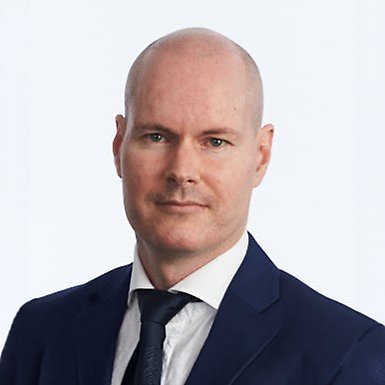
Xiaopeng Li, Head of AI and Insights, SimCorp

“Incorporating agentic AI solutions in our products amplifies the need for a strong platform backbone.”

Xiaopeng Li, Head of AI and Insights, SimCorp

Building a platform fit for AI at scale 

SimCorp’s response was a deliberate platform reset, guided by a single defining principle: migrate data, not environments. Client environments were rebuilt on a standardized software as a service (SaaS) architecture on Microsoft Azure, with data and integrations moved through controlled cutovers. As a result, governance stays consistent by design across regions, tenants, and regulatory requirements.

“We didn’t start by talking about cloud services,” says Ulrik Elstrup Hansen, SVP, Chief Technology Officer, Platform, SimCorp. “We started by defining what had to be true: built-in governance, predictable operations, and AI support without new control gaps.”

Standardizing modules instead of customizing environments 

At the core of SimCorp One is a modular tenant architecture. Every client environment is composed of standardized platforms and application modules from a shared code base. What varies is the composition of modules, not how they are built, deployed, or governed. “Every tenant is built the same way; only the module mix changes,” says Nicholas Preetzmann, Distinguished Architect, SimCorp. “By standardizing the building blocks instead of customizing environments, we can scale SaaS delivery without increasing operational risk.”

Azure provides the control plane for this model. Identity, logging, monitoring, and security policies are applied consistently across regions, helping SimCorp meet local requirements without redesigning controls market by market. To run these workloads consistently across regions, SimCorp standardized on Azure Kubernetes Service (AKS), enabling scalable, production-grade deployments without introducing configuration drift.

“We made a very deliberate decision to standardize on AKS—to move a large and growing portion of our workloads onto AKS without turning AKS itself into a product we have to operate,” says Preetzmann.

Infrastructure, application services, configurations, and integrations are provisioned through automated pipelines. By deploying as code, SimCorp improves repeatability and accelerates rollout at a global scale.

“For a regulated platform, visibility isn’t just an operational benefit. It’s essential for auditability and trust,” Hansen adds.

“We made a very deliberate decision to standardize on AKS—to move a large and growing portion of our workloads onto AKS without turning AKS itself into a product we have to operate.”

Nicholas Preetzmann, Distinguished Architect, SimCorp

From experimentation to operationalized AI

SimCorp’s early AI work started as experimentation across teams and products. But in regulated investment workflows, fragmented AI is hard to govern and difficult to scale with confidence. As the SaaS platform foundation stabilized, SimCorp shifted from pilots to a production model. The company established a hub-and-spoke operating model anchored by an AI Center of Enablement. Governance standards, evaluation criteria, and a common AI stack are defined centrally, while product teams focus on domain-specific use cases to realize value at scale.

By standardizing on Azure OpenAI in Foundry Models and Azure AI Search, SimCorp embeds agentic AI directly into investment workflows while enforcing the same identity, audit, and governance controls used across the broader platform. This tight interoperability means AI capabilities inherit, rather than bypass, the platform’s security posture.

AI capabilities now support teams across the investment lifecycle. For portfolio managers and risk analysts, accelerated access to insights reduces decision latency during volatile market conditions. Analytics that once took minutes now complete in seconds. For operations teams, AI automates manual processes across middle- and back-office workflows, reducing reconciliation effort and freeing staff to focus on higher-value work. “These gains aren’t just about speed,” Li notes. “They reduce time spent gathering data and increase time spent making decisions.” That shift matters in live markets, where decision latency directly affects risk exposure and client outcomes.

Alongside these changes, engineering teams are evolving how software is built. Developers use GitHub Copilot as part of an AI-assisted development approach, accelerating prototyping and reducing time to code as new capabilities are built into SimCorp One. As a result, by the third year, customers can see their time to market improve by 50 to 60 days, according to a 2024 Forrester Total Economic Impact™ study commissioned by SimCorp.

Ulrik Elstrup Hansen, SVP, Chief Technology Officer, SimCorp

“For a regulated platform, visibility isn’t just an operational benefit. It’s essential for auditability and trust.”

Ulrik Elstrup Hansen, SVP, Chief Technology Officer, SimCorp

When work moves into the flow

Once SimCorp One went live as a unified SaaS platform, manual environment management largely disappeared. New client environments are created through automated pipelines, reducing provisioning effort and operational risk. Engineering teams now focus on evolving the platform instead of rebuilding environments for each client.

For users, analysis and reporting moved earlier into the flow of investment activity. Portfolio managers no longer wait for end-of-day cycles to explore scenarios or validate insights; they engage with data in real time and respond faster as conditions change.

Behind the scenes, site reliability engineering practices evolved alongside standardized telemetry, monitoring, and incident management. Governance shifted from manual review to automated enforcement.

“Automation builds environments,” Preetzmann says. “Engineers run the platform.”

According to the Forrester Total Economic Impact™ study of SimCorp One, users can save up to 10 hours per week, enabling faster decisions without compromising governance.

Scaling AI within a governed platform

With SimCorp One as its backbone, SimCorp is building an ecosystem of AI capabilities that support strategic decisioning and operational efficiency across the investment lifecycle. Each new capability operates within the same standardized architecture, inheriting the same controls and the same standards, so that innovation scales consistently across regions, regulations, and client environments.

SimCorp didn’t add AI to its platform; it built the conditions for AI to operate at scale, with governance embedded from the start. As the company’s platform evolves, so does client confidence in its ability to support AI-driven workflows.

“This foundation raises expectations for us and for our clients,” Hansen says. “Now the question isn’t whether we can support AI-driven investment workflows, but how far we can take them responsibly.”

Discover more about SimCorp on Facebook, Instagram, LinkedIn, X, and YouTube.

Take the next step

Fuel innovation with Microsoft

Explore more customer stories

Find out how customers are achieving more with Microsoft products and solutions.
A man wearing headphones and smiling.

Talk to an expert about custom solutions

Let us help you create customized solutions and achieve your unique business goals.
Three people in a meeting room.

Transform work with Microsoft AI

Bring intelligence into the flow of work and help your organization achieve its goals with secure, scalable AI solutions.

Follow Microsoft