This is the Trace Id: 56cf006fae32ddc0913c950b398d1eb3
7/20/2026

Astellas explores hundreds of protein mutations with BioEmu in Microsoft Foundry

Protein-based drug discovery depends on fast iteration, making traditional simulation timelines and wet-lab constraints major barriers on the path from promising idea to viable medicine.

Astellas Pharma used BioEmu, a biomolecular simulation model from Microsoft Research available through Microsoft Foundry, to explore hundreds of protein mutations and connect AI-driven simulation to existing workflows.

With BioEmu, Astellas can evaluate more variants, prioritize candidates for wet-lab validation, and bring richer structural insight into decisions that may improve drug candidate quality.

Astellas Pharma

Developing a new medicine begins with a series of questions. Which biological target is driving a disease? What molecule might influence it? And if that molecule shows promise, can it be engineered into a therapy that is safe, stable, and effective for patients? Researchers may evaluate thousands—or even millions—of possibilities before finding a candidate worth advancing. Yet each answer depends on a familiar scientific loop: form a hypothesis, test it, learn from the result, and decide what to try next.

For pharmaceutical companies, that loop can be difficult to accelerate. Biology is complex, and promising therapeutic candidates must be evaluated across many dimensions before they can move forward. In protein-based drug discovery, the challenge is especially acute. Researchers need to understand not only whether a protein has the desired activity, but also how its structure changes, how mutations affect its behavior, and whether a candidate has the properties needed to become a viable medicine.

For Astellas Pharma, protein-related questions are not limited to one area of research. Headquartered in Tokyo and operating globally, Astellas has launched products across disease areas including oncology, ophthalmology, urology, women’s health, and immunology. That breadth is reflected in its R&D, which spans therapeutic approaches from chemical modalities and antibodies to mRNA, gene therapy, and cell therapy.

Proteins are especially relevant across this work because they play a central role in several therapeutic approaches. Antibodies are proteins, and some gene therapies rely on protein capsids to deliver genetic material to target cells. That makes protein structure, function, and interaction data important for research teams working across multiple areas of discovery and development.

Understanding protein behavior has traditionally required a combination of wet-lab experiments and computational modeling. Both approaches are essential. Both can also become bottlenecks.

“Wet experiments are necessary to produce and validate proteins, but they take time and can be expensive,” says Kenichi Mori, Lead of the Drug Design Informatics Team at Astellas. “That limits the number of proteins we can evaluate and means we need more time to get the molecule we want.”

Computational modeling brings a different kind of challenge. Molecular dynamics simulations can reveal important structural insights, but they require specialized expertise, significant computing resources, and long processing times. Exhaustive mutation analysis across many variants could take a week, a month, or longer, slowing the feedback loop between computational insight and experimental decision-making. By the time results arrived, the question that prompted them could be less useful to the decision at hand.

Astellas wanted a more scalable, faster way to explore protein variants, expand the search space, and help researchers prioritize the candidates most worth advancing to laboratory validation. The challenge was whether AI-driven molecular simulation could make that exploration faster, broader, and more practical.

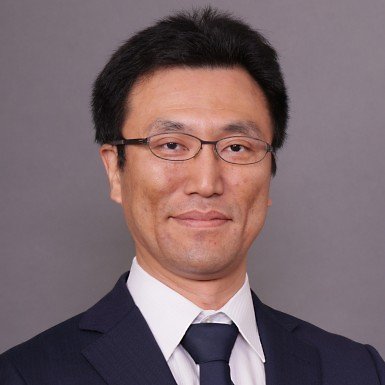
Kenichi Mori, Lead of the Drug Design Informatics Team, Astellas Pharma

“Collaborating with Microsoft researchers helped us quickly carry out the proof of concept and evaluate the technology correctly.”

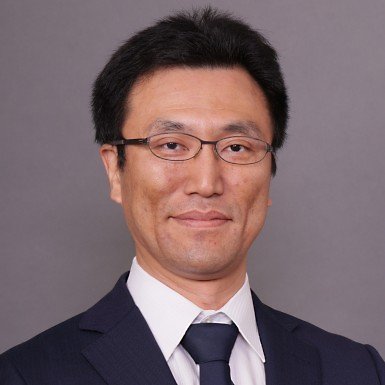
Kenichi Mori, Lead of the Drug Design Informatics Team, Astellas Pharma

AI-driven simulation: Choosing BioEmu in Microsoft Foundry to scale protein discovery

Having identified bottlenecks in both wet-lab validation and computational modeling, Astellas focused first on the simulation side of the loop. The team wanted to evaluate whether AI could emulate aspects of traditional molecular dynamics simulations and make it practical to explore more protein variants at scale.

“We saw an opportunity for BioEmu and other machine-learning approaches to emulate molecular dynamics simulations and other computational approaches that require a lot of time,” says Mori.

Astellas turned to BioEmu, a biomolecular simulation model developed by Microsoft Research and available through Microsoft Foundry. BioEmu generates protein conformational ensembles, helping researchers understand the range of shapes a protein can adopt and how mutations may affect its behavior. For Astellas, that capability aligned directly with the questions its researchers need to answer: how a protein changes, which mutations may improve or weaken a candidate, and which sequences should be prioritized for further study.

Astellas was familiar with the research behind BioEmu before the proof of concept began. When Microsoft introduced the model as a practical option for Astellas’ use case, the timing aligned with the company’s broader strategy to use AI and scalable data platforms to improve R&D productivity.

“We selected BioEmu because of its ability to simulate protein conformational ensembles and because it aligned with our scalable data platform strategy,” says Keigo Ide, Lead of the Biological Drug Design Informatics Team at Astellas.

The fit was not only scientific. Astellas collaborates with Microsoft Foundry to develop AI-enabled workflows, though these capabilities are not yet fully implemented in the research domain. APIs like BioEmu will play a critical role in future integration, giving Astellas a way to connect biomolecular simulation seamlessly with those workflows without requiring researchers to manage the underlying infrastructure directly.

Working with Microsoft also helped Astellas move quickly into unfamiliar territory. Microsoft Research and Microsoft engineering teams supported the setup environment and helped create a minimum viable product, giving Astellas guidance as it evaluated a new approach to molecular simulation.

“This approach was very new for us, but it was something we wanted for a long time,” says Mori. “Collaborating with Microsoft researchers helped us quickly carry out the proof of concept and evaluate the technology correctly.”

Keigo Ide, Lead of the Biological Drug Design Informatics Team, Astellas Pharma

“We selected BioEmu because of its ability to simulate protein conformational ensembles and because it aligned with our scalable data platform strategy.”

Keigo Ide, Lead of the Biological Drug Design Informatics Team, Astellas Pharma

Proof of concept: Bringing scalable protein simulation into research workflows 

To evaluate BioEmu in a real-world discovery setting, Astellas designed a proof of concept using internal and public datasets, including deep mutational scanning data. The analysis incorporated protein structure data, developability characteristics, and several hundred mutations to test whether AI-driven simulation could support broader protein-variant exploration than traditional molecular dynamics workflows alone.

For the proof of concept, Astellas wanted a practical way for researchers to access BioEmu without requiring them to configure and manage specialized GPU infrastructure. Preparing GPU environments for advanced simulation can require significant installation, configuration, and infrastructure-management effort. To support that goal, the team created a custom Azure Machine Learning compute environment and an API-based interface for running BioEmu simulations.

“After setting up the API, we could smoothly dive into using it,” says Ide. “That was good for us because we did not need additional setup or inefficient processes.”

Foundry APIs gave the team a way to evaluate BioEmu without requiring researchers to manage the underlying infrastructure directly. It also demonstrated how AI-driven protein simulation could be integrated into broader research workflows over time.

With easier access to BioEmu, Astellas could evaluate larger groups of variants and gather results across more of the sequence space. That shift mattered because traditional workflows made it difficult to run many mutation analyses in parallel, even when researchers needed a broader view before selecting candidates for further study.

“Traditional workflows require many resources, so we could not run 100 mutation-scan datasets in parallel,” says Ide. “With this solution, we can run that kind of analysis in a much shorter time.”

Keigo Ide, Lead of the Biological Drug Design Informatics Team, Astellas Pharma

“Traditional workflows require many resources, so we could not run 100 mutation-scan datasets in parallel. With this solution, we can run that kind of analysis in a much shorter time.”

Keigo Ide, Lead of the Biological Drug Design Informatics Team, Astellas Pharma

Candidate prioritization: Using structural insight to guide wet-lab validation

Every wet-lab experiment requires a choice. Researchers need to decide which protein sequences deserve time, materials, and validation work—and which should wait. BioEmu gave Astellas another way to make those choices, using conformational insights—information about how proteins fold and change shape—to help assess variants before they moved into experimental testing.

“We cannot evaluate all candidates with wet experiments,” says Ide. “BioEmu can help show which protein sequences may be good for wet-lab evaluation.”

That added evidence helped researchers look beyond the most familiar areas of sequence space. When simulations take too much time or require too many resources, teams may narrow the field early. With BioEmu, Astellas could explore more of a protein’s structure and consider variants that may otherwise have been difficult to investigate.

The model also expanded how researchers could think about developability. In protein research, teams typically evaluate properties such as viscosity, stability, and other biophysical features. BioEmu’s conformational data adds another layer to that assessment, helping researchers explore which structural properties may relate to stronger candidates.

The goal is better prioritization before the lab work begins: more variants in view, more structural context for each decision, and a clearer path toward the candidates most worth advancing.

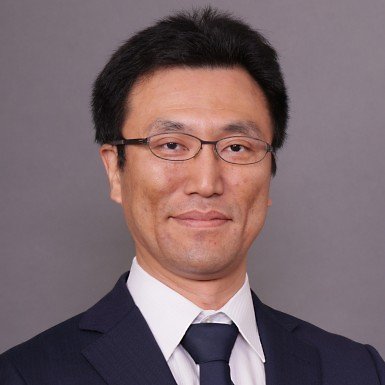
Kenichi Mori, Lead of the Drug Design Informatics Team, Astellas Pharma

“We expect AI and molecular information to help increase the quality of drug candidates entering the clinic. That can help accelerate the clinical trial phase, which is very important for pharmaceutical companies.”

Kenichi Mori, Lead of the Drug Design Informatics Team, Astellas Pharma

Impact and momentum: Building toward better medicines, faster 

Identifying a promising protein candidate is only the beginning. To become a medicine, that molecule must also have the right properties: stability, developability, and the quality needed to advance toward clinical testing. Improving those properties is difficult, and researchers need molecular insight to guide the engineering work.

BioEmu gives Astellas a way to bring that structural perspective into candidate evaluation earlier. Researchers can examine how proteins behave, how mutations affect structure, and which characteristics may influence a variant’s potential as a medicine. That added visibility helps focus attention on the variants most worth investigating further.

“We expect AI and molecular information to help increase the quality of drug candidates entering the clinic,” says Mori. “That can help accelerate the clinical trial phase, which is very important for pharmaceutical companies.”

BioEmu is one step in a much larger shift. Astellas sees AI reshaping work across the research lifecycle. “AI can accelerate every stage of drug discovery,” says Mori. “From target discovery through clinical development, we believe these technologies can help researchers move faster and make better decisions.”

Some of that opportunity reaches beyond molecules. Scientists spend meaningful time on text-heavy work, including reviewing literature, drafting documents, and finding protocols. Large language models can help reduce that load and bring AI into daily research workflows.

Closer to the lab, AI agents can make specialized scientific tools easier to use. Running scientific software has often required knowledge of Linux environments, infrastructure, and analysis tools. Agents can help researchers navigate those steps, widening access to advanced capabilities for scientists whose deepest expertise is biology.

The longer arc is the autonomous lab. AI agents help reason through the next experiment, robots run parts of the work, and researchers stay focused on the scientific questions that matter most. That future will come through practical advances that make complex workflows faster, more scalable, and easier to use.

BioEmu shows what one of those advances can look like. Astellas can explore more variants, bring richer structural insight into candidate selection, and shorten the distance between a promising idea and the evidence needed to act on it.

Developers and researchers looking to explore what comes next can find BioEmu and other cutting-edge AI experiments from Microsoft Research on Foundry Labs, available at labs.ai.azure.com. Foundry Labs offers a glimpse into potential future directions for AI in science, from biomolecular simulation and reasoning models to agentic frameworks and beyond.

Kenichi Mori, Lead of the Drug Design Informatics Team, Astellas Pharma

“AI can accelerate every stage of drug discovery. From target discovery through clinical development, we believe these technologies can help researchers move faster and make better decisions.”

Kenichi Mori, Lead of the Drug Design Informatics Team, Astellas Pharma

Discover more details

Take the next step

Fuel innovation with Microsoft

Explore more customer stories

Find out how customers are achieving more with Microsoft products and solutions.
A man wearing headphones and smiling.

Talk to an expert about custom solutions

Let us help you create customized solutions and achieve your unique business goals.
Three people in a meeting room.

Transform work with Microsoft AI

Bring intelligence into the flow of work and help your organization achieve its goals with secure, scalable AI solutions.

Follow Microsoft