This is the Trace Id: 3946f51bbcc74734ee29f9c6d1f247df
3/23/2026

ManpowerGroup reduces complexity to strengthen global security with Microsoft 365 E5

As ManpowerGroup scaled globally, its longstanding mix of security tools became more difficult to manage, driving complexity, inconsistent controls, and slower response as threats and regulatory demands increased.

To reduce tool sprawl, ManpowerGroup deployed Microsoft 365 E5 for the real-time identity, endpoint, email, and cloud prevention, detection, and response capabilities of Defender, plus the cloud-native SIEM/SOAR performance of Microsoft Sentinel.

By deploying Microsoft 365 E5, ManpowerGroup reduced security complexity, cut integration timelines from weeks or months to hours or days, unified global security operations, and built an AI-ready security foundation.

ManpowerGroup

The global workforce solutions industry is defined by high transaction volumes, thin margins, and intense competition. With a client base that expects rapid onboarding and seamless service delivery, any friction caused by system outages, operational delays, or security controls can quickly erode trust and send business elsewhere.

The vast volumes of highly sensitive personal data these firms handle—candidate identities, employment histories, background checks, payroll information, and client business data—challenge IT and security teams to balance global access to data with robust protection from bad actors.

As cyberthreats increase in sophistication and automation becomes commonplace, many workforce solutions providers are confronting an uncomfortable reality: security tool sprawl and inconsistent tool sets across regions are no longer just inefficient—they are active risk multipliers.

Complexity as a security risk

For ManpowerGroup, a global workforce solutions leader operating approximately 2,100 offices across more than 70 countries and territories, those risks were growing. Years of expansion and regional autonomy resulted in a collection of best-of-breed security tools deployed differently across geographies and managed under varying operating models.

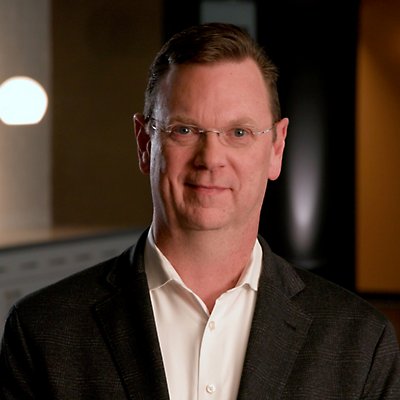
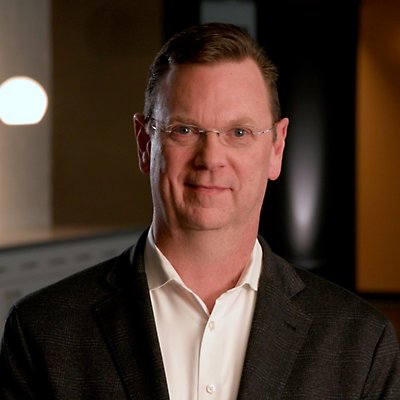
While the organization remained well protected, visibility across identity, endpoint, email, and cloud environments was fragmented, and incident response often required manual correlation across systems. Security teams navigated multiple consoles, integration points, licensing agreements, and renewal cycles to ensure continuous protection. For Randy Herold, Chief Information Security and Privacy Officer at ManpowerGroup, the core issue became clear. “The biggest risk we faced wasn’t a single vulnerability or tool gap. It was complexity,” he points out.

That complexity carried direct business implications. In a high-volume business, operational inefficiency directly affects competitiveness. Security controls that introduced friction, slowed response times, or increased operational overhead were increasingly difficult to justify. “We can’t afford to add hurdles,” Herold explains. “Operational efficiency is not optional.”

Pramod Panhalkar, Global Transformation Leader, ManpowerGroup

“Once we centralized infrastructure and identity, it became very clear that security infrastructure was the next major challenge.”

Pramod Panhalkar, Global Transformation Leader, ManpowerGroup

Complexity was also limiting ManpowerGroup’s future-readiness. As AI began reshaping modern security operations, its fragmented environment wasn’t positioned to support that evolution at scale. “If we didn’t address complexity,” Herold says, “we were going to handcuff ourselves when it came to automation and AI.”

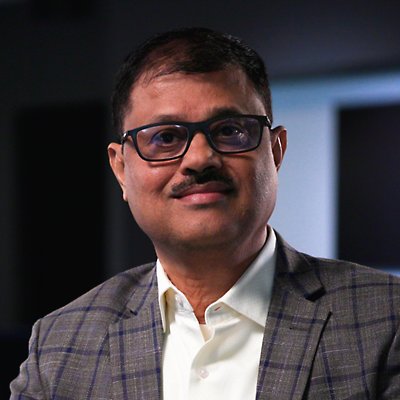
While Herold and his team were successfully managing the complexity day-to-day, Pramod Panhalkar, Global Transformation Leader at ManpowerGroup, had been heading up a broader transformation of the company’s global technology foundation. Over several years, the organization moved from a federated, regionally managed IT model to a centralized, globally governed operating structure. Local datacenters were consolidated into Microsoft Azure. Identities were centralized. Global service management was standardized. Regional IT teams were aligned under a single global CIO structure.

As this transformation progressed, one gap became impossible to ignore: security infrastructure had not modernized at the same pace. “Once we centralized infrastructure and identity, it became very clear that security infrastructure was the next major challenge,” Panhalkar recalls.

With Panhalkar and Herold aligned on the need for a fundamental reset, the stage was set for an ambitious security transformation.

A plan for streamlined security

ManpowerGroup approached security modernization as a platform decision, initiating a formal evaluation of major technology ecosystems to determine which platform could support both modernization and global execution. After extensive assessment, including direct engagement with three industry majors, ManpowerGroup selected Microsoft for its strategic security platform.

Several factors drove the decision. Between 75% and 80% of ManpowerGroup’s existing technology stack already ran on Microsoft platforms, making the transition to Microsoft Security a more streamlined and cost-effective approach. More important, Microsoft offered a fully integrated security ecosystem capable of replacing fragmented tools with unified capabilities spanning identity, endpoint, email, cloud, and security operations.

“No other platform offered that level of end-to-end integration,” Panhalkar notes. “This wasn’t just about security tools—it was about enabling a consistent, homogenous operating model.”

ManpowerGroup made the decision to standardize on Microsoft 365 E5 and Microsoft Security, tying identity, endpoint, cloud, email, and security operations into a unified, modern architecture. Soon, a comprehensive security transformation was underway, supported by Microsoft Enterprise Access Governance specialists and experts from the Microsoft Industry Solutions Delivery (ISD) team—the Microsoft consulting organization that helps customers realize value faster from their AI investments through deep industry and technical expertise. Ponkumar Venkatesh, ManpowerGroup Technology Infra and Security Architect, and other Technology team members contributed significantly in driving technical execution, ensuring architectural integrity, and reducing implementation risk.

Colin Quadros and Rajdeep Sharma, Global Program Execution Leads at ManpowerGroup, appreciated the Microsoft team’s hands-on approach. “Leaning on a strategic vendor with Microsoft’s technical depth was a real advantage,” says Quadros. “Of course, they’d done such a deployment multiple times, so their technical architects knew what was possible,” adds Sharma. “But they also called out the challenges we’d need to overcome when moving from a disparate set of solutions to a highly integrated, interoperable single stack from one provider. That helped us set expectations with our security teams around the world.”

Both security and IT leadership understood the operating model would have to change alongside the technology. Security operations were clearly delineated under the CISO organization, while security architecture, engineering, and governance were embedded within the global technology infrastructure function. This separation aligned with industry best practices and enabled consistent operationalization of the platform.

For Herold, this alignment was essential. “Security and IT look at the world differently,” he explains. “Security focuses on risk; IT focuses on operations. Microsoft allowed us to bring those perspectives together without creating friction.”

Quadros and Sharma, who led the rollout, were responsible for moving the model from strategy to reality. “We defined three core objectives from day one,” Sharma says. “Cost reduction, risk reduction, and operational efficiency.”

From the outset, Sharma and his team emphasized capability transformation, not feature-for-feature replacement. “Some of the tools we were replacing were leaders in their category,” Sharma explains. “The focus wasn’t on replicating every customization. It was on ensuring the core security capabilities continued and were delivered more effectively.”

Randy Herold, Chief Information Security and Privacy Officer, ManpowerGroup

“Security focuses on risk; IT focuses on operations. Microsoft allowed us to bring those perspectives together without creating friction.”

Randy Herold, Chief Information Security and Privacy Officer, ManpowerGroup

Reducing risk through rapid execution

One of the most unconventional and strategic decisions ManpowerGroup made was to compress the execution timeline. Rather than spreading the transformation over multiple years, Panhalkar opted for higher speed to value. “Running old and new security stacks in parallel actually increases risk,” he emphasizes. “It creates more complexity, more operational burden, and more opportunity for things to go wrong.”

Herold shared that concern. “During a transformation, your attack surface doubles,” he says. “You’ve got data moving, new tools, and teams learning new systems. The longer that phase lasts, the more risk you carry.” The organization chose a shorter, more intense execution window, accepting calculated operational strain in exchange for faster risk reduction and earlier value realization.

Strengthening security through a unified approach

With Microsoft Security in place, Microsoft Entra ID now serves as ManpowerGroup’s Zero Trust identity and access management foundation. 

Defender for Endpoint delivers endpoint protection and advanced threat detection. Meanwhile, Defender for Cloud provides continuous assessment and protection across ManpowerGroup’s multicloud environments, allowing several longstanding tools to be retired. Defender for Identity addresses identity-based threats across the company’s global Active Directory footprint, and Defender for Office 365 secures email, Microsoft Teams, and collaboration workloads against phishing and other advanced attacks.

ManpowerGroup security operations are unified through Microsoft Sentinel, a cloud-native security information and event management (SIEM) system and security orchestration, automation, and response (SOAR) platform. Microsoft Sentinel delivers centralized, one-console visibility and coordinated response across the organization’s global footprint and enables automation-driven SOC workflows. These capabilities are complemented by the data protection, information governance, Insider Risk Management, eDiscovery, audit, and regulatory compliance performance of Microsoft Purview

Randy Herold, Chief Information Security and Privacy Officer, ManpowerGroup

“The takeaway is simple—we reduced complexity. And by reducing complexity, we reduced risk and built a future-ready runway.”

Randy Herold, Chief Information Security and Privacy Officer, ManpowerGroup

A foundation for innovation

For ManpowerGroup, active change management was a key factor in the project’s success. The organization’s global communication strategy targeted the “why” behind the transformation. “People needed to understand the value, even if they didn’t feel the change directly,” Panhalkar explains. The result was broad alignment, with any hesitancy addressed early, through consistent messaging and visible executive sponsorship.

Those efforts paid off for ManpowerGroup, as people quickly felt the presence of a streamlined framework for trust. “For employees, that integration shows up as clarity,” says Dr. Syneathia LaGrant, VP, People and Culture Partner for Global Functions and Commercial Organization at ManpowerGroup. “Threats are flagged, quarantined, and explained, without having to jump between tools. That clarity means you’re not second-guessing yourself. You know what’s safe, what’s been stopped, and what action—if any—you need to take.”

Although the organization is still capturing long-term metrics, the initial impacts are being felt across the organization. Integration timelines have shrunk from weeks or months to hours or days, while security teams now operate from a common language and shared telemetry. The foundation is finally in place for automation and AI-driven security operations.

However, Herold is clear that AI is not about replacing people. “AI’s efficiency doesn’t mean fewer people,” he says. “It means doing more with the same people by removing repetitive, low-value tasks.” When mundane activities are automated—such as routine incident triage—security professionals can focus on critical thinking, decision-making, and business enablement.

“That’s the real value,” Herold adds. “And we couldn’t get there without first simplifying the environment.”

By consolidating its security infrastructure on Microsoft 365 E5 and Microsoft Security, ManpowerGroup has transformed security from a patchwork of tools into a strategic, scalable foundation. This approach protects the business end-to-end today and enables innovation tomorrow. Through modernization, ManpowerGroup is also positioning itself as an AI Frontier Firm, building on a foundation of intelligence and trust to responsibly embrace next-generation AI capabilities and lead with confidence in an increasingly complex digital landscape.

“It’s a move that sets us up for what’s next,” Herold says. “Which, in the short term, means expanding governance with Microsoft Purview and preparing to adopt Microsoft Security Copilot, so we can bring AI into our security operations the right way and keep delivering for people and businesses with confidence.”

Looking back on ManpowerGroup’s move to the Microsoft Security unified platform, Herold sees the radically reduced complexity it delivered as a critical measure of success. “The takeaway is simple—we reduced complexity. And by reducing complexity, we reduced risk and built a future-ready runway,” he says.

Discover more about ManpowerGroup on Facebook, LinkedIn, X/Twitter, and YouTube.

Take the next step

Fuel innovation with Microsoft

Explore more customer stories

Find out how customers are achieving more with Microsoft products and solutions.
A man wearing headphones and smiling.

Talk to an expert about custom solutions

Let us help you create customized solutions and achieve your unique business goals.
Three people in a meeting room.

Transform work with Microsoft AI

Bring intelligence into the flow of work and help your organization achieve its goals with secure, scalable AI solutions.

Follow Microsoft