This is the Trace Id: 71c04abadb4e50534dc7166580c091a9
9/4/2026

Vanderlande saves time and money with Power Platform and Copilot Studio

Vanderlande's manufacturing teams once managed parts of their global supply chain processes using web-based Excel files, macros, and multiple data sources.

The company adopted Microsoft Power Platform and Microsoft Copilot Studio, pairing ICT specialists with business users to replace spreadsheets with model-driven apps, real-time dashboards, and AI agents.

Today, automations save more than €950,000 a year, the manufacturing app saves users about 1.5 hours a day, and a community of 1,142+ makers continues to grow.

Vanderlande

Automating the flow of the world's airports and parcels

Vanderlande, part of Toyota Industries Corporation (TICO), is one of the world's leading logistics automation companies. Headquartered in Veghel, Netherlands, the company designs and operates systems that move materials from point A to point B at massive scale. Its technology powers some of the world’s largest e-commerce and parcel logistics through its integrated automation hub, Toyota Automated Logistics (TAL), along with the baggage-handling systems operating at more than 600 airports worldwide including Atlanta, Heathrow, LAX, JFK, and Amsterdam Schiphol.

With 10,000 employees across offices on multiple continents, Vanderlande requires scalable digital tools. To modernize operations, the company turned to Microsoft cloud and low-code stack.

A dedicated Digital Acceleration team—part of ICT (information and communication technology) based in the Netherlands, the United States, and Pune, India—supports this effort. The team enables employees to build solutions using Microsoft Power Platform, Microsoft Copilot Studio, and Microsoft 365 Copilot.

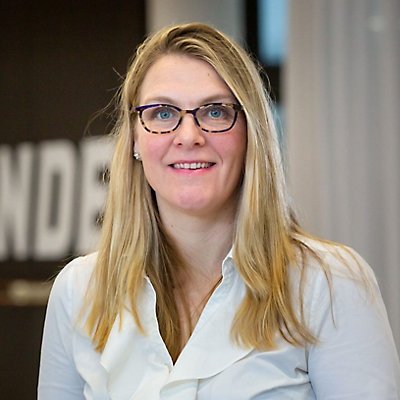
The strategy has the full backing of senior leadership, with Astrid van Druten, the company's CFO personally championing its Copilot adoption program: “The impact goes beyond productivity and numbers. By empowering makers and pairing them with strong governance, we are building a culture where continuous improvement becomes part of everyday work.”

Astrid van Druten, CFO, Vanderlande

“The impact goes beyond productivity and numbers. By empowering makers and pairing them with strong governance, we are building a culture where continuous improvement becomes part of everyday work.”

Astrid van Druten, CFO, Vanderlande

From spreadsheet complexity to a more connected supply chain

Before adopting Power Platform, Vanderlande's manufacturing and supply chain teams tracked procurement, orders, and factory deliveries through a collection of spreadsheets and exports from legacy systems, including Maximo, Enovia, and JD Edwards.

Planners and analysts regularly extracted data from these systems and combined it in Excel using layers of macros. Each day, teams downloaded files, ran a Python script, and generated a formatted spreadsheet. Over time, the process became heavily dependent on a single developer.

Felipe Mazzocchi, a Low-Code Adoption Specialist on the Digital Acceleration team, describes the result as a complex network of spreadsheets and macros that was difficult to maintain and made it challenging for teams to work from a consistent view of the data. Different teams worked from different versions of the same data, creating inconsistencies and blind spots in the manufacturing process. As he puts it, the teams faced a lot of inconsistencies in the data because the Excel file was very easily modified and therefore unreliable.

The fragility of the process also created operational risk. Data Analytics Engineer Jan Kleinlugtenbeld later built a replacement solution, but "If something changed in one of the input files, everything would break," he recalls. Pro-code alternatives were considered, but they were costly, slow, and would have left business users permanently dependent on third parties to maintain their own process.

Teaching the business to build, not just to use

Vanderlande's Digital Acceleration team follows a "teach to fish" model. Rather than building solutions for the business, ICT specialists partner with citizen developers in co-development engagements where they design, build, and learn together.

The journey began with Microsoft 365 Copilot and Power Platform for personal productivity. It expanded through training sessions, hackathons, and bookable consultations available to makers across supply, manufacturing, and finance.

But the turning point came after Kleinlugtenbeld attended an introductory canvas-app training session. He and Mazzocchi began experimenting, meeting weekly, and learning through trial and error until the right design emerged. They replaced the Excel routine with an application that combines a canvas and model-driven app built on Microsoft Power Apps and Dataverse.

Instead of relying on daily file downloads, macros, and a fragile Python script, data from the legacy systems now flows through Azure Databricks into Power Platform via dataflows, creating one standardized, real-time view of order status across three factories.

Crucially, the business now owns the solution. The team realized how quick and easy it was to build a structured process with Microsoft Power Apps, and a reliable solution that is low-code and maintainable by the owners of the process itself. As Mazzocchi explains, “Users don't have to depend on a third party or even on ICT to maintain this application; they have full control and ownership over it."

Felipe Mazzocchi, Low-Code Adoption Specialist, Vanderlande

“Users don't have to depend on a third party or even on ICT to maintain this application; they have full control and ownership over it.”

Felipe Mazzocchi, Low-Code Adoption Specialist, Vanderlande

To govern adoption safely at scale, the team runs a three-tier model: a do-it-yourself zone for personal productivity, a business-productivity tier for departmental apps co-developed with ICT, and an enterprise tier for mission-critical applications that ICT fully owns. Six maker personas—from highly technical makers to colleagues still wary of new technology—each get a tailored learning journey ensuring that no one is overwhelmed or held back.

Rene van Sandijk, Director ICT & QM, Vanderlande explains the approach this way, “Power Platform and Copilot are not just technology choices for us. They are a way to give our people ownership, connect ideas to business value, and scale innovation responsibly across Vanderlande whilst having central governance.”

Rene van Sandijk, Director ICT & QM, Vanderlande

“Power Platform and Copilot are not just technology choices for us. They are a way to give our people ownership, connect ideas to business value, and scale innovation responsibly across Vanderlande whilst having central governance.”

Rene van Sandijk, Director ICT & QM, Vanderlande

1,500 hours per month reallocated to high value work

With the new application in place, the spreadsheet complexity is gone—and the difference shows up first in the workday. Teams that once spent mornings downloading files and babysitting a script now open one application with a single, current view of every order—where it stands, who needs to act, and what is causing any delay.

The inconsistencies and broken formulas that once undermined trust in the data have disappeared. Every team now works from one source of truth. Communication has also been streamlined. Instead of multiple people emailing suppliers throughout the day, the app sends a single consolidated email at the click of a button, reducing confusion and removing dependency on any single person’s availability.

Those gains add up. Individual users report time savings of 1.5 hours of manual effort per day. From a wider view, the company estimates more than 30 hours per month per location are saved on operational data preparation. With over 90 hours per month across all three sites, data analysts’ hours were freed from manual data consolidation to focus on proactive innovation and continuous improvement initiatives. Eliminating data preparation reduced human error risk in operational reporting, thereby protecting data integrity at the source. The savings are equivalent to over 1,000 full-time analyst hours per year now redirected from tedious administrative work to new, strategic projects.

Communications efficiency has saved more than 500 hours per month per location.

“On a monthly basis, we are saving more than 1,500 hours of manual effort enterprise-wide with automated actions and communications with additional benefits expected as factories that still rely on fully manual processes come online,” says Kleinlugtenbeld. Not only are operational requests processed roughly 40% faster, but thousands of comments are logged against manufacturing order lines, creating a living historical record for trend analysis. 

Jan Kleinlugtenbeld, Data Analytics Engineer, Vanderlande

“On a monthly basis, we are saving more than 1500 hours of manual effort enterprise-wide with automated actions and communications, with additional benefits expected as factories that still rely on fully manual processes come online.”

Jan Kleinlugtenbeld, Data Analytics Engineer, Vanderlande

Because every action is stored alongside ERP source data, the team has gained an analytics layer it never had before. When a supplier consistently delivers late, that history provides evidence during performance reviews. When a factory must delay a shipment to a project site, teams can clearly identify and explain the reason. Operations now uses data-driven insights and lessons learned to proactively address issues, replacing reactive firefighting and transforming routine process logs into lasting institutional knowledge. 

Power Platform automations deliver more than €950,000 a year in savings

The same teach-to-build model is now scaling well beyond the manufacturing app. Vanderlande’s maker community has grown to more than 1,142 makers, and Mazzocchi describes a pace where the team is “doubling the number of makers every year at the pace that we are right now.” Microsoft 365 Copilot has reached 1,584 licenses with 682 employees on the waiting list. At the same time, a company-wide ICT agent now handles self-service support requests that previously reached the help desk—an early signal of how the company is moving from individual apps and automations to broader agentic transformation.

From one agent to an orchestrated, multi-agent enterprise

Vanderlande's next chapter is agentic. With manufacturing data now standardized, the team is preparing autonomous agents that can monitor for deviations and act proactively—for example, automatically emailing a supplier when an order runs late, rather than waiting for someone to notice the issue. A Microsoft Copilot Studio agent is also being built directly into the manufacturing app, adding natural-language interaction to the procurement workflow.

VIGO, Vanderlande's ICT self-service assistant, is part of that agentic vision. Built with Microsoft Copilot Studio and Azure AI Foundry, VIGO answers employee questions using the company's trusted knowledge base, generates pre-filled support tickets, and connects users with a live operator when needed. Available organization-wide through Microsoft Teams and the company's TopDesk portal, VIGO is expanding from an ICT-focused assistant into an orchestrated system with dedicated sub-agents for HR and finance, due in the next quarter. This will enable employees to resolve IT, HR, and finance requests through one conversational interface.

Momentum is also being fueled from the ground up. A second company-wide hackathon in Pune, India, drew 85 makers and produced several agentic solutions including a live baggage-handling monitor that automatically reorganizes capacity when flight schedules change. As Mazzocchi explains, the real value comes from collaboration between ICT specialists and business makers such as Kleinlugtenbeld—"key users who understand the technology and the benefits of adoption and then allowing them to go further."

Take the next step

Fuel innovation with Microsoft

Explore more customer stories

Find out how customers are achieving more with Microsoft products and solutions.
A man wearing headphones and smiling.

Talk to an expert about custom solutions

Let us help you create customized solutions and achieve your unique business goals.
Three people in a meeting room.

Transform work with Microsoft AI

Bring intelligence into the flow of work and help your organization achieve its goals with secure, scalable AI solutions.

Follow Microsoft