
“The bugs pick you”: Inside Wouter’s security research journey
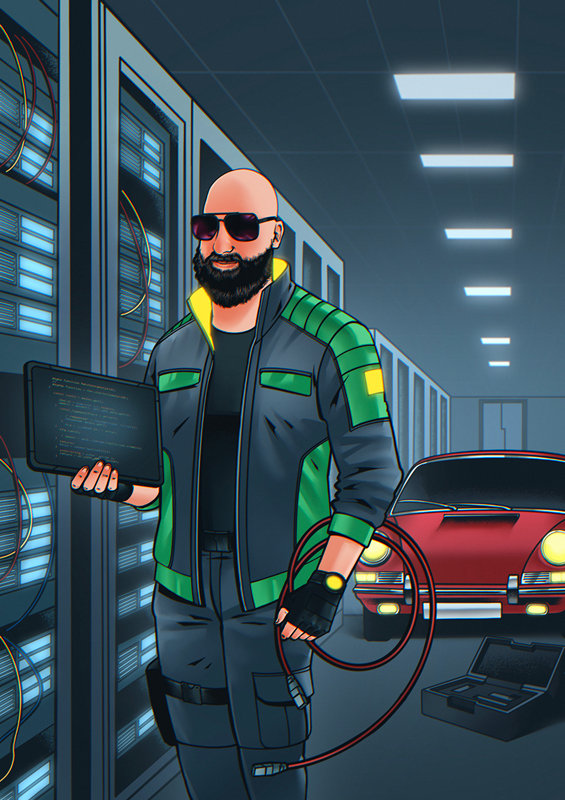
If you ask Wouter when his security journey began, he’ll take you back to a childhood in the Netherlands, tinkering with the 8086 PC his parents brought home when he was five or six. That early curiosity, fueled by racing games, trial-and-error exploration, and a tendency to pull things apart just to see how they worked, became the through‑line of his career. Today, Wouter is recognized as a Microsoft Most Valuable Researcher and recently qualified for Zero Day Quest 2026.
By the time he was 18, that curiosity led him to report a vulnerability to what was then the largest hosting provider in the Netherlands. Instead of brushing off the report, the company invited him in to discuss it. That meeting turned into his first job, then a long‑term role in hosting and security. This was well before bug bounty programs existed, back when hacking was still misunderstood, often conflated with criminal activity, and certainly not the celebrated discipline it is today.
After 15 years in industry, he founded his own company, Offensi, a playful inversion of the Netherlands’ national “Defence” organization. Although he began in traditional penetration testing, Wouter quickly realized the work didn’t match what he loved most about security. Pen testing felt constrained, prescriptive, and often more about meeting requirements than exploring the unknown.
Bug hunting, on the other hand, offered freedom and the space for Wouter to follow his instincts and chase the ideas that sparked his interest.
“I decide where I want to hurt you and where I can hurt you best.” (The line he jokes should probably be on a T‑shirt.)
He says it with humor, but the philosophy behind it is real: the work is most meaningful when he’s free to explore and discover.
Finding his way to Microsoft
Wouter’s connection to Microsoft began unexpectedly. Years ago, after giving a talk at a Google security event, he was approached by researcher (and now MSRC Senior Security Researcher) Cameron Vincent, who suggested he should try hunting vulnerabilities in Microsoft platforms.
At the time, Wouter carried some of the lingering attitudes of the late ’90s, when working with Microsoft products was considered “uncool” among young hackers. He assumed Microsoft’s cloud stack wouldn’t align with his skills or interests. But Cameron encouraged him to try anyway.
“I wouldn’t have done it on my own. Cameron talked me out of that old ‘Microsoft isn’t for real hackers’ mindset.”
That simple nudge changed his trajectory. Wouter discovered that Microsoft’s cloud stack not only suited his research approach, it energized it. Today, he is one of the most active researchers for MSRC, and he still credits that one conversation as a major turning point.
Outside of research, Wouter is a devoted father of two daughters, now 12 and 15. Running his own company allows him to recapture the time he once lost commuting to an office. He remembers the early years well: dropping his kids off at daycare in the morning, picking them up at night, and feeling like he missed too much. Today, he has the flexibility to work late into the night if a Wednesday afternoon is sunny and perfect for a trip to the pool. It’s a balance with challenges, especially when the home environment is lively, but he embraces the trade‑off.
He also enjoys hiking with his family, though he jokes about calling himself a “hiker.” In the Netherlands, he says, even a small hill is considered a climb. “Real hiking” is something he’s excited to try when he visits the Seattle area for Zero Day Quest.
Outside of work, Wouter also enjoys driving, including time on the Autobahn, as another way he steps away from the keyboard.
This spring will be his first visit to Seattle. What he’s most looking forward to is meeting the MSRC team and fellow security researchers in person, some for the first time and some he already knows from years of collaboration. He’s excited for the hacking, of course, but equally excited for the community.
Beyond the event, he has a short wish list for his first trip: the Space Needle and the Microsoft campus. As someone who’s built similar systems himself, he’s eager to understand the “nuts and bolts” that sit beneath the services researchers interact with every day.
Advice for new researchers
This is where Wouter’s encouragement for newer researchers shines through. After decades in the field, he believes the biggest obstacle isn’t skill, it’s confidence.
He sees too many beginners hesitate to engage with bug bounty platforms because they assume companies like Microsoft or Google are “too big” or “too advanced” to start with. In his view, that’s a misconception that holds people back.
Wouter shared that bugs appear everywhere: simple ones, complex ones, and everything in between. There is no single skill level required, no elite tier you must reach before you’re “allowed” to contribute.
His message is simple: Start where you are. Try things. Don’t be intimidated by a company name. There’s a bug for everyone and value in every perspective.
This philosophy has shaped his own path, and he hopes it opens doors for others too.
Wouter's journey is a reminder that security research is built not only on technical depth, but also on curiosity, community, and a willingness to explore. Whether he’s reverse‑engineering cloud systems, racing across the Autobahn, or spending a sun‑soaked weekday with his kids, he brings the same sense of enthusiasm and discovery to each part of his life.