June 08, 2026
Share this page


Bringing shark science and art together with Surface Pro
In this article:
- Natalie Donato combines marine biology, scientific illustration, and Surface Pro to help people better understand sharks.
- Her research focuses on electroreception, the hidden sensory system sharks use to detect electrical signals in the water.
- Surface Pro supports the portable, pen-first parts of her workflow, including sketching, note-taking, marking observations, and creating illustrations.
- Her work uses art and science together to shift public perception of sharks from fear toward curiosity.
- By making complex marine biology easier to see, Donato helps people understand sharks as threatened animals navigating sensory worlds humans cannot naturally perceive.

Join the MSFT:FWD newsletter.
Receive stories worth opening, every time. MSFT:FWD delivers forward-worthy stories, simply.
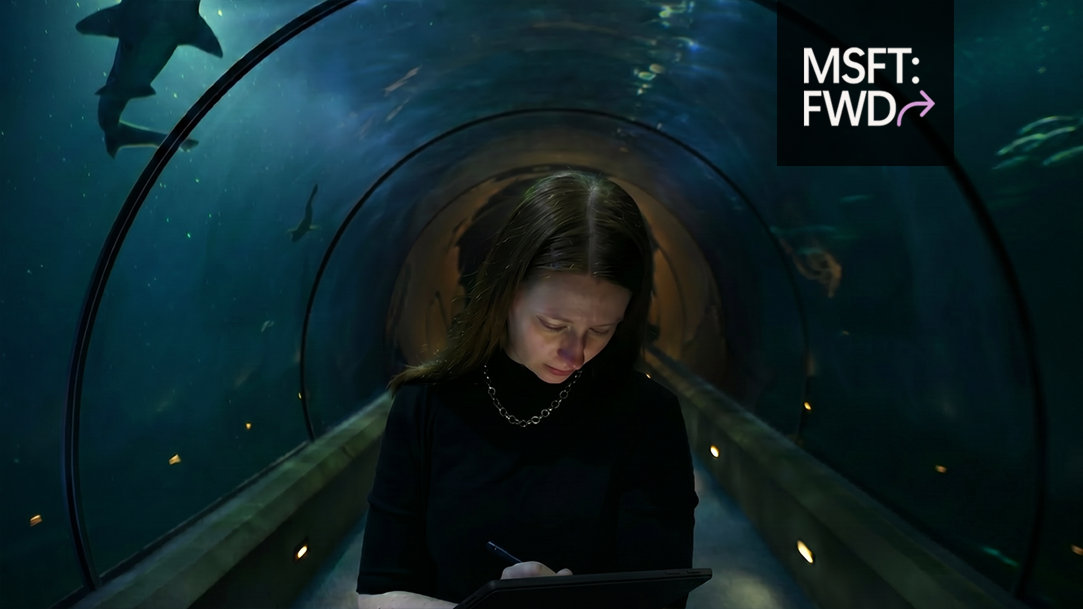
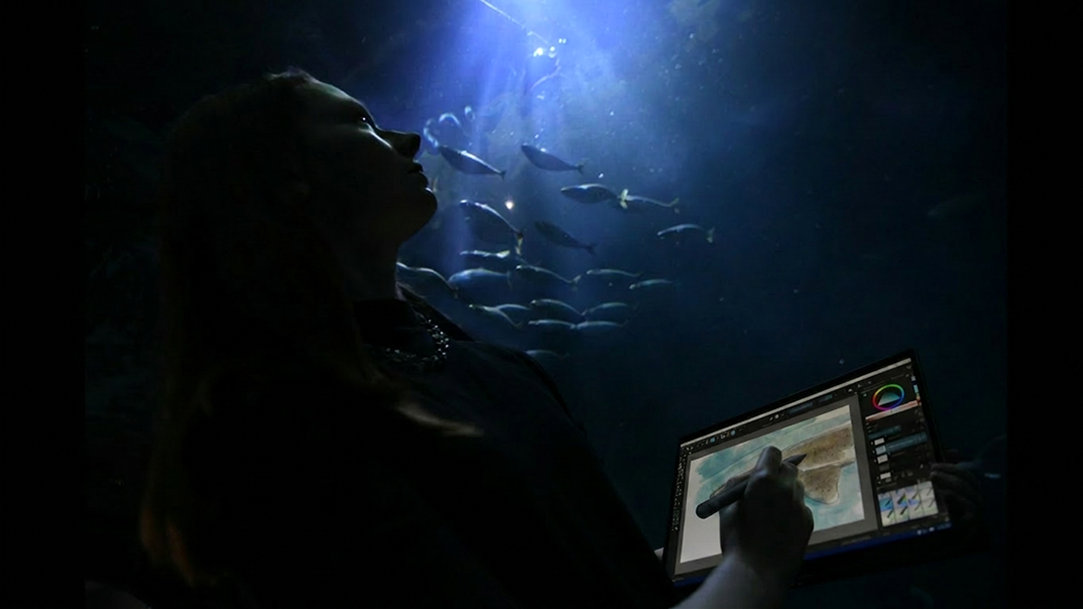
Broadnose sevengill sharks glide overhead, inches from the glass, as the Oregon Coast Aquarium begins to close for the night.
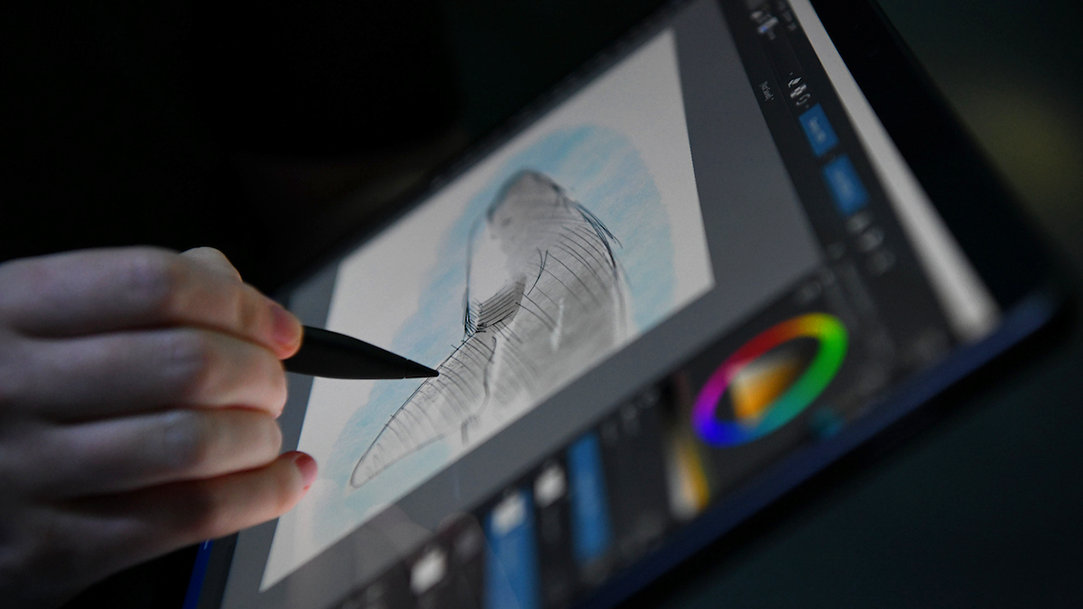
With the animals twisting and turning together through the fading light, shark researcher Natalie Donato has only minutes to capture the scene. No time to unpack paper and pencils — so she reaches for her Surface Pro, slides out the Pen, and starts sketching.
As the sharks move along the window, Donato follows them, quickly laying down line and color before the moment passes. Much of her work unfolds this way: through close attention and a field-ready creative setup that lets her record what she sees wherever she is.
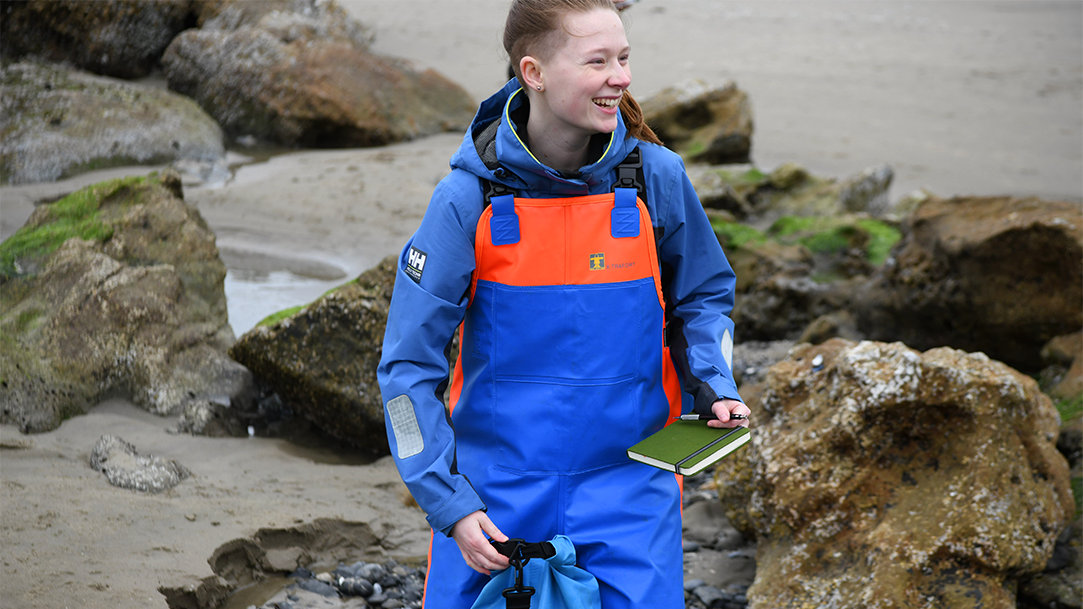
Depending on the day, that can be many different places. A scientific illustrator and undergraduate studying marine biology at Oregon State University (OSU), Donato shuttles between classrooms, laboratories, shark exhibits, and the coast, pursuing a passion for the underwater world first kindled by an aquarium trip at age two. Due in part to her complete aphantasia — a condition that affects the ability to voluntarily form mental images — drawing has always been part of how she pays attention to sea life and records what she sees.
Today, Donato’s research focuses on sharks’ electroreception — a finely-tuned sensory system that underscores just how sensitive these animals are, despite what Jaws or Deep Blue Sea might have audiences believe. Her illustrations, used for science communication and even on a new Oregon license plate, draw inspiration from her studies and invite people to see sharks differently: not as monsters, but as complex animals navigating an underwater world humans can barely imagine. The same art that once helped Donato remember an animal now helps others perceive one more fully.
"The media often perpetuates a negative narrative that sensationalizes sharks," says Donato. "Through combining my art and research interests, I hope to spotlight the intricacies and importance of these incredible animals instead."
Small details that lead to greater understanding
Electroreception is one of sharks’ most mysterious abilities. Tiny openings around the head connect to gel-filled canals beneath the skin, registering electrical fields in the water. Prey give off these signals as they move, breathe, and exchange charged particles with the environment, sending out subtle traces that sharks can pick up on at close range.
Researchers once studied electroreceptors by removing skin from a deceased shark sample, flattening it on a lightbox, and tracing the holes by hand. The method produced useful data, but it was destructive — ruling out the use of rare museum specimens or the possibility of working with live samples. Donato takes a different approach. While observing a live shark, she photographs it from many angles, then uses her Windows-based laptop with specialized 3D software to create a virtual model that can be examined, flattened, and analyzed digitally without damaging the creature itself. Throughout this process, she uses her Surface Pro to jot down notes, mark observations, and make quick illustrations of what she sees in the field.
Her creative instincts are central to the process. Breakthroughs depend on noticing the smallest details: a cluster of pores, a shift in pattern, a marking that appears only when viewed from a certain angle.
Donato’s work belongs to a still-nascent field. Electroreception was not identified in sharks until the mid-20th century, but discoveries by researchers like Donato are already raising crucial ecological questions. As more subsea power cables are laid for increasing offshore infrastructure, electromagnetic fields in the water are a growing concern. A 2024 study estimated that these fields — an example of what Donato describes as “sensory pollution” — could impact sharks, skates, and rays in a number of ways, including their embryonic development and migration patterns.
Turning discovery fragments into an accessible shark story
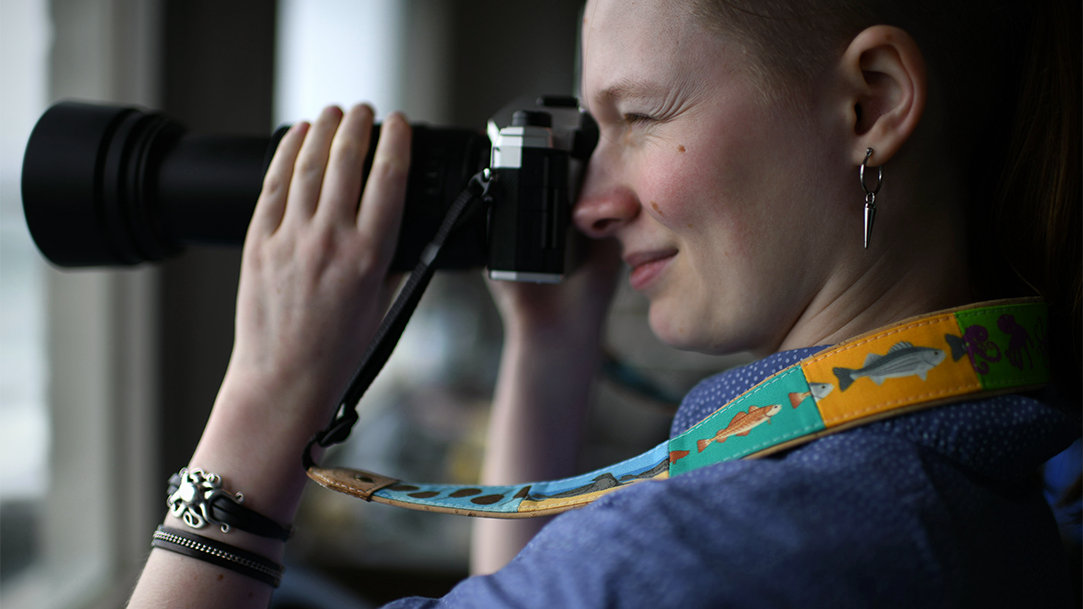
Donato’s fascination with sea life began long before she had a research question to pursue. An early visit to the Monterey Bay Aquarium left her enchanted, and subsequent trips to Oregon’s tide pools provided space for that passion to grow. At OSU, an undergraduate opportunity with the Chapple Big Fish Lab took her from broad marine biology into sharks, skates and rays, and the sensory systems that now anchor her work.
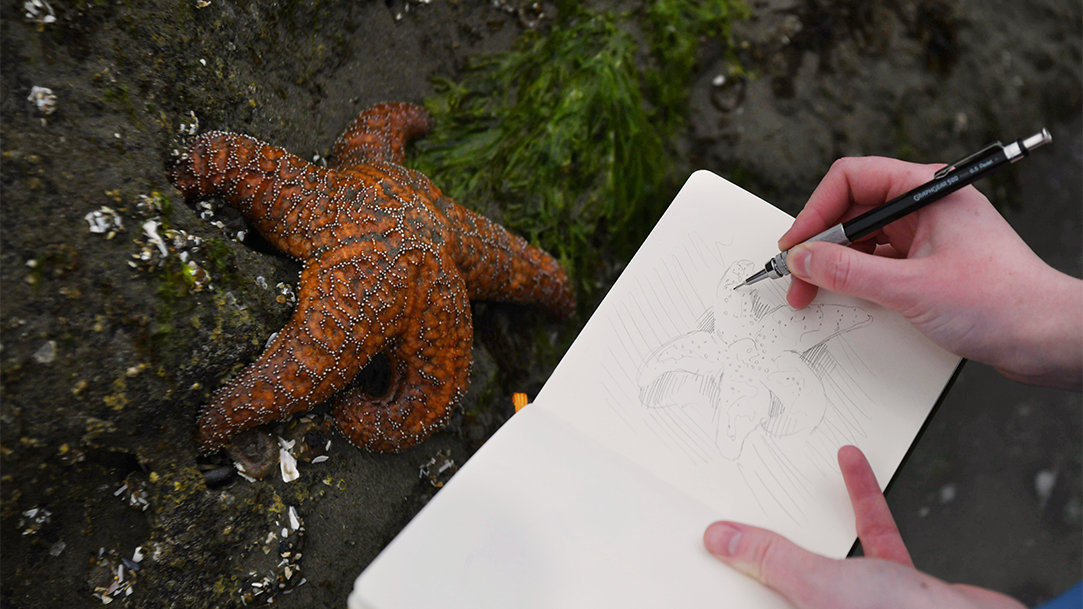
Creativity has been a mainstay throughout. An avid artist since childhood, Donato now uses scientific illustration to explain anatomy, clarify research ideas, and bring non-specialists closer to the animals she studies. "Art and science are two sides of the same coin," she says. "They are both ways of observing nature, exploring those findings, and sharing that interpretation with other people." The objective information gathered through academic research is crucial, Donato says, but art can bring those stories to life: hold attention, cross language barriers, make complicated concepts easier to grasp, and offer something tangible in an increasingly ephemeral world.
This visual translation is especially useful in the case of sharks. Underwater photographs are often distorted by light, shadow, and murky conditions, with some species — particularly those that live far below the surface — rarely caught on camera at all.
Illustration lets Donato build a fuller picture from fragments. "It's like assembling a puzzle. I use various reference images, feedback from researchers, and available scientific data to piece together a clearer picture of the animal." Her drawings now appear in public exhibitions, academic presentations, and on Oregon’s new specialty license plate, which Donato designed on her Surface Pro. She also leads workshops and talks that use art as a teaching tool, including sessions where participants draw oceanic creatures and seascapes while learning the biology they’re built on.
The goal, she says, is not to replace fear around sharks with fantasy: "They are not monstrous, but they are not cuddly either," says Donato. "They are complex animals navigating an intricate ecosystem. Bringing those details to the forefront can spark curiosity rather than fear, inspiring people to ask questions and learn more."
Bringing sharks into clearer focus
With more than a third of shark, ray, and skate species threatened with extinction, gaining deeper insight into environmental disturbances affecting them is vital. Effective marine conservation needs policy, enforcement, and fisheries management. But it also requires an understanding of how creatures experience the ocean — and how human activity may be changing the signals they rely on to survive. By making sharks’ little-understood sensory lives more accessible, Donato is helping people see sharks not as mindless threats, but highly attuned animals responding to pressures humans cannot readily perceive.
The gap between perception and reality is where Donato’s efforts matter most. If film and television have taught people to fear sharks, her drawings help slow that reflex down, sparking curiosity about how they move, how they interact, and how they perceive a world humans cannot sense.
“I want my art and research to help change the narrative,” Donato says, “to show sharks as animals in their own environment, with details and lives worth understanding.”

Natalie Donato
Natalie Donato is a marine biologist and artist, specializing in the sensory biology of marine animals and scientific illustration.