

Game Intelligence
Nouvelles et reportages
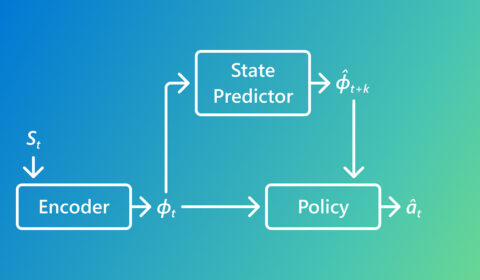
Rethinking imitation learning with Predictive Inverse Dynamics Models
| Pallavi Choudhury, Lukas Schäfer, Chris Lovett, Katja Hofmann, et Sergio Valcarcel Macua
This research looks at why Predictive Inverse Dynamics Models often outperform standard Behavior Cloning in imitation learning. By using simple predictions of what happens next, PIDMs reduce ambiguity and learn from far fewer demonstrations.
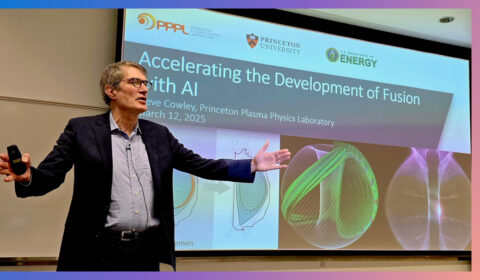
Microsoft Fusion Summit explores how AI can accelerate fusion research
| Kenji Takeda, Shruti Rajurkar, et Ade Famoti
The first Microsoft Research Fusion Summit brought together global experts to explore how AI can help unlock the potential of fusion energy. Discover how collaborations with leading institutions can help speed progress toward clean, scalable energy.

Introducing Muse: Our first generative AI model designed for gameplay ideation
| Katja Hofmann
Today Nature published Microsoft’s research detailing our WHAM, an AI model that generates video game visuals & controller actions. We are releasing the model weights, sample data, & WHAM Demonstrator on Azure AI Foundry, enabling researchers to build on the…

Collaborators: Gaming AI with Haiyan Zhang
| Gretchen Huizinga et Haiyan Zhang
For over a decade, Xbox has been leveraging AI to elevate gaming. Haiyan Zhang, GM of Gaming AI, explores the collaborations behind the work and the potential for generative AI to support better experiences for both players and game creators.

Using generative AI to imitate human behavior
| Tim Pearce, Tabish Rashid, Anssi Kanervisto, Dave Bignell, Mingfei Sun, Raluca Stevenson, Sergio Valcarcel Macua, Shanzheng Tan, Ida Momennejad, Katja Hofmann, et Sam Devlin
Diffusion models have been used to generate photorealistic images and short videos, compose music, and synthesize speech. In a new paper, Microsoft Researchers explore how they can be used to imitate human behavior in interactive environments.
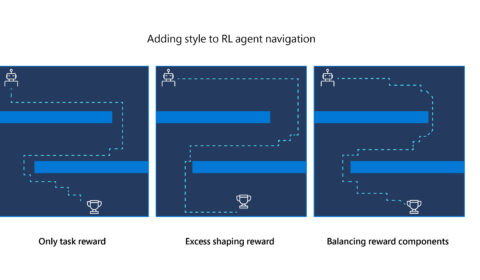
Designer-centered reinforcement learning
| Batu Aytemiz, Mikhail Jacob, Sam Devlin, et Katja Hofmann
In video games, nonplayer characters, bots, and other game agents help bring a digital world and its story to life. They can help make the mission of saving humanity feel urgent, transform every turn of a corner into a gamer’s…
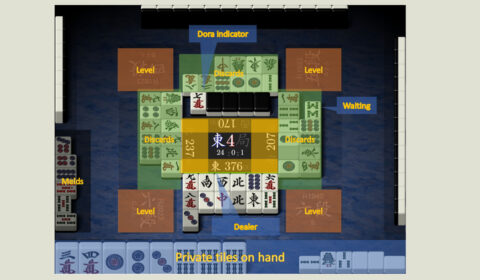
Research Collection – Shall we play a game?
From a research point of view, games offer an amazing environment in which to develop new machine learning algorithms and techniques. And we hope, in due course, that those new algorithms will feed back not just into gaming, but into…
MineRL sample-efficient reinforcement learning challenge—back for a second year—benefits organizers, as well as larger research community
| Noboru Sean Kuno
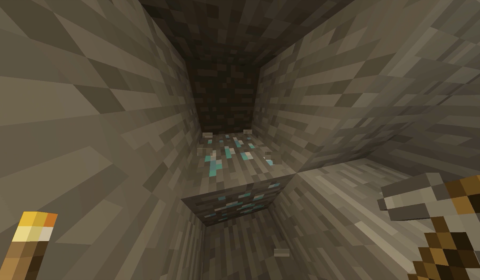
To unearth a diamond in the block-based open world of Minecraft requires the acquisition of materials and the construction of tools before any diamond mining can even begin. Players need to gather wood, which they’ll use to make a wood…
Three new reinforcement learning methods aim to improve AI in gaming and beyond
| Kamil Ciosek, Sam Devlin, et Katja Hofmann
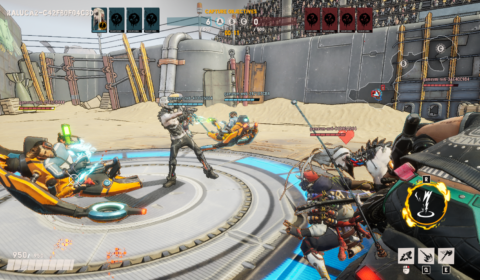
Reinforcement learning (RL) provides exciting opportunities for game development, as highlighted in our recently announced Project Paidia (opens in new tab)—a research collaboration between our Game Intelligence group at Microsoft Research Cambridge and game developer Ninja Theory. In Project Paidia,…