

AI Economy Institute
Meet the newest cohort of AIEI senior fellows
As AI continues to transform economies and societies, understanding how its adoption spreads is critical to shaping an inclusive future. The AI Economy Institute’s second research cohort builds on this mission by focusing on Education in the AI Economy—examining how AI diffusion impacts classrooms, educators, and workforce pathways worldwide. With researchers from eight countries and leading institutions, this multidisciplinary team explores national strategies, educational innovation, and labor market transitions to ensure AI-driven change benefits all. Their work will provide actionable insights for policy, education reform, and global collaboration across academia, industry, and government.
Cohort 2

Andrew Stokols, PhD (opens in new tab)
MIT/Singapore Management University, Singapore
Andrew Stokols is Assistant Professor of urban studies at Singapore Management University. Dr. Stokols research examines the geopolitics of digital infrastructure, including smart cities, data platforms, cloud computing, and data regulation in China and Southeast Asia.
Theme: AI and National Diffusion Differences
Subtheme: Examining National Strategies for AI Diffusion in East and Southeast Asia: Policies, Networks, and Early Adopters

Carolina Calvo, PhD (opens in new tab)
National Center for AI (CENIA), Chile
Carolina Calvo is an economist with 15 years of experience in program and policy evaluation, innovation systems, and strategic trade controls. Specializing in econometric analysis and impact evaluation, she focuses on R&D, productivity, and trade, bridging applied research with evidence-based policymaking. Her work centers on promoting innovation, advancing technology transfer, and generating evidence for effective public policy.
Theme: AI and National Diffusion Differences
Subtheme: Explaining AI Diffusion in Latin America: Human Capital, Institutions, and Infrastructure

Xin Skye Zhao, PhD (opens in new tab)
University of Manchester, England
Xin Zhao (Skye) is a Lecturer in Generative AI for Education at the Manchester Institute of Education and a partner in UNESCO’s AI competency frameworks. Dr. Zhao also serves on the UN expert panel for Generative AI. Her research focuses on ethical, inclusive uses of AI in education.
Theme: AI and National Diffusion Differences
Subtheme: Global Pathways of AI Diffusion: Skills, Governance, and Policy Strategies Across Regions

Arun Sundararajan, PhD (opens in new tab)
New York University (AIEI Cohort 1 Senior Fellow)
Arun Sundararajan is the Harold Price Professor of Entrepreneurship and Professor of Technology, Operations, and Statistics at NYU Stern School of Business, where he also serves as Director of the Fubon Center for Technology, Business, and Innovation. Dr. Sundararajan is widely recognized as an expert on the economics of digital goods and network effects, the regulation of AI and digital platforms, and the future of work. His award-winning book, “The Sharing Economy,” has been translated into multiple languages. He co-chairs the World Economic Forum’s Global Future Council on Data Frontiers.
Theme: AI and Opportunities for Community, Technical and Vocational College
Subtheme: Mapping High-Impact AI Transitions: Linking Occupations, Retraining Pathways, and Educational Institutions

Robert Seamans, PhD (opens in new tab)
New York University (AIEI Cohort 1 Senior Fellow)
Robert Seamans is a Professor at NYU’s Stern School of Business, Director of the Stern Center for the Future of Management, and a nonresident Senior Fellow at the Brookings Institution. His research focuses on the economic impact of AI, robotics, and advanced technologies. His work has been published in top academic journals and cited by outlets like The Atlantic, The Economist, and The New York Times. In 2015, he served as the senior economist for technology and innovation on President Obama’s Council of Economic Advisers.
Theme: AI and Opportunities for Community, Technical and Vocational College
Subtheme: Mapping High-Impact AI Transitions: Linking Occupations, Retraining Pathways, and Educational Institutions

Jason Jabbari, PhD (opens in new tab)
Washington University, St. Louis
Jason Jabbari is an Assistant Professor at the Brown School at Washington University in St. Louis and leads the Center for Education Research, Practice, and Policy Partnerships (CERP3). His research focuses on improving outcomes for vulnerable populations, with a current emphasis on AI’s impact in education and workforce development. He also directs the Clark-Fox Policy Institute and leads research in career education, student mental health, and neighborhood effects. Dr. Jabbari serves as a Captain in the US Army Reserves.
Theme: AI and Opportunities for Community, Technical and Vocational College
Subtheme: Stacking AI Skills through Education-Industry Partnerships: Case Studies and Causal Evidence on Technology Training, Non-Degree Credentials, and Apprenticeships

Sarah Rodriguez, PhD (opens in new tab)
Virginia Tech Foundation
Sarah Rodriguez is an Associate Professor of Engineering Education at Virginia Tech. Her research focuses on the engineering and computing identity development of historically marginalized populations in higher education. Dr. Rodriguez is currently involved in large-scale interdisciplinary projects on institutional environments and STEM identity, sponsored by the National Science Foundation (NSF) and the Kapor Center.
Theme: AI and Opportunities for Community, Technical and Vocational College
Subtheme: A Study of Community Colleges and GenAI Diffusion: Understanding Innovation, Workforce Development, & Regional Pathways

Bashar Alhafni, PhD (opens in new tab)
Mohamed bin Zayed University of AI (MBZUAI), UAE
Bashar Alhafni is an Assistant Professor of Natural Language Processing at the Mohamed bin Zayed University of Artificial Intelligence (MBZUAI). His research focuses on Arabic NLP, particularly in developing human-centered language technologies. He leads the Arabic AI Modeling (Aram) Lab, working on areas like grammatical error detection, text simplification, and controlled natural language generation. Dr. Alhafni is dedicated to creating Arabic NLP applications that support education and contribute to social good.
Theme: AI and the Impact on K-12 Teaching
Subtheme: Barriers and Opportunities for Generative AI in K-12 Arabic Education

Carolina Lopez, PhD (opens in new tab)
World Bank
Carolina Lopez is a Research Economist in the Poverty, Inequality, and Human Development Team at the World Bank’s Development Research Group. Her research focuses on education, human capital, and behavioral economics, particularly how beliefs influence behavior and welfare.
Theme: AI and the Impact on K-12 Teaching
Subtheme: AI in the Classroom: Evaluating the Impact of Teacher Training on Teaching Practices and Student Outcomes

Joseph Onderi Orero, PhD (opens in new tab)
Strathmore University, Kenya
Joseph Onderi Orero is a Senior Researcher in AI at Strathmore University’s School of Computing and Engineering Sciences. His internationally recognized research explores AI applications in education and health, and he has published extensively in these fields. Currently, Dr. Orero is exploring the use of Generative AI in game-based learning in Africa, aiming to integrate AI into education with an emphasis on ethical, human-centered design.
Theme: AI and the Impact on K-12 Teaching
Subtheme: AI in the Classroom: Evaluating the Impact of Teacher Training on Teaching Practices and Student Outcomes

Tingting Li, PhD (opens in new tab)
Washington State University (Microsoft 50 for 50 awardee)
Tingting Li’s research focuses on human-AI collaboration, science assessment, and rural education policy. She leads projects on generative AI in K–12 classrooms, particularly in underserved schools, and co-directs CAiRE at WSU, where she collaborates with educators to design AI tools for classroom use. Dr. Li has published 37+ peer-reviewed articles and has received several prestigious fellowships.
Theme: AI and the Impact on K-12 Teaching
Subtheme: RAISE (Rural AI for Societal Equity): A Roadmap Linking Classrooms and Workforce Equity in the AI Economy

Bharat Chandar, PhD (opens in new tab)
Stanford University
Bharat Chandar is a postdoctoral researcher at the Stanford Digital Economy Lab, part of the Institute for Human-Centered AI. Dr. Chandar’s research focuses on AI’s impact on the labor market and productivity using a combination of big data and company partnerships. Bharat is a co-author on the recent “Canaries in the Coalmine” paper from Stanford.
Theme: The Impact of AI on Entry-Level Jobs
Subtheme: The Labor Market Impacts of Business AI Adoption

Manuel Hoffmann, PhD (opens in new tab)
University of California, Irvine
Manuel Hoffmann is an Assistant Professor at the University of California, Irvine, at the Paul Merage School of Business and is also affiliated with Stanford University. Dr. Hoffmann’s research focuses on the social and behavioral aspects of open source software and artificial intelligence, with a broader interest in innovation and technology management. His work aims to deepen understanding of strategic issues facing large, medium-sized, and entrepreneurial firms.
Theme: The Impact of AI on Entry-Level Jobs
Subtheme: How Mentorship Affects AI Adoption and Usage – The Generative AI Gender Puzzle

Frank Nagle, PhD (opens in new tab)
Massachusetts Institute of Technology
Frank Nagle is a Research Scientist at MIT where he studies AI, open source, cybersecurity, and technology strategy. He is also the Chief Economist for The Linux Foundation.
Theme: The Impact of AI on Entry-Level Jobs
Subtheme: How Mentorship Affects AI Adoption and Usage – The Generative AI Gender Puzzle
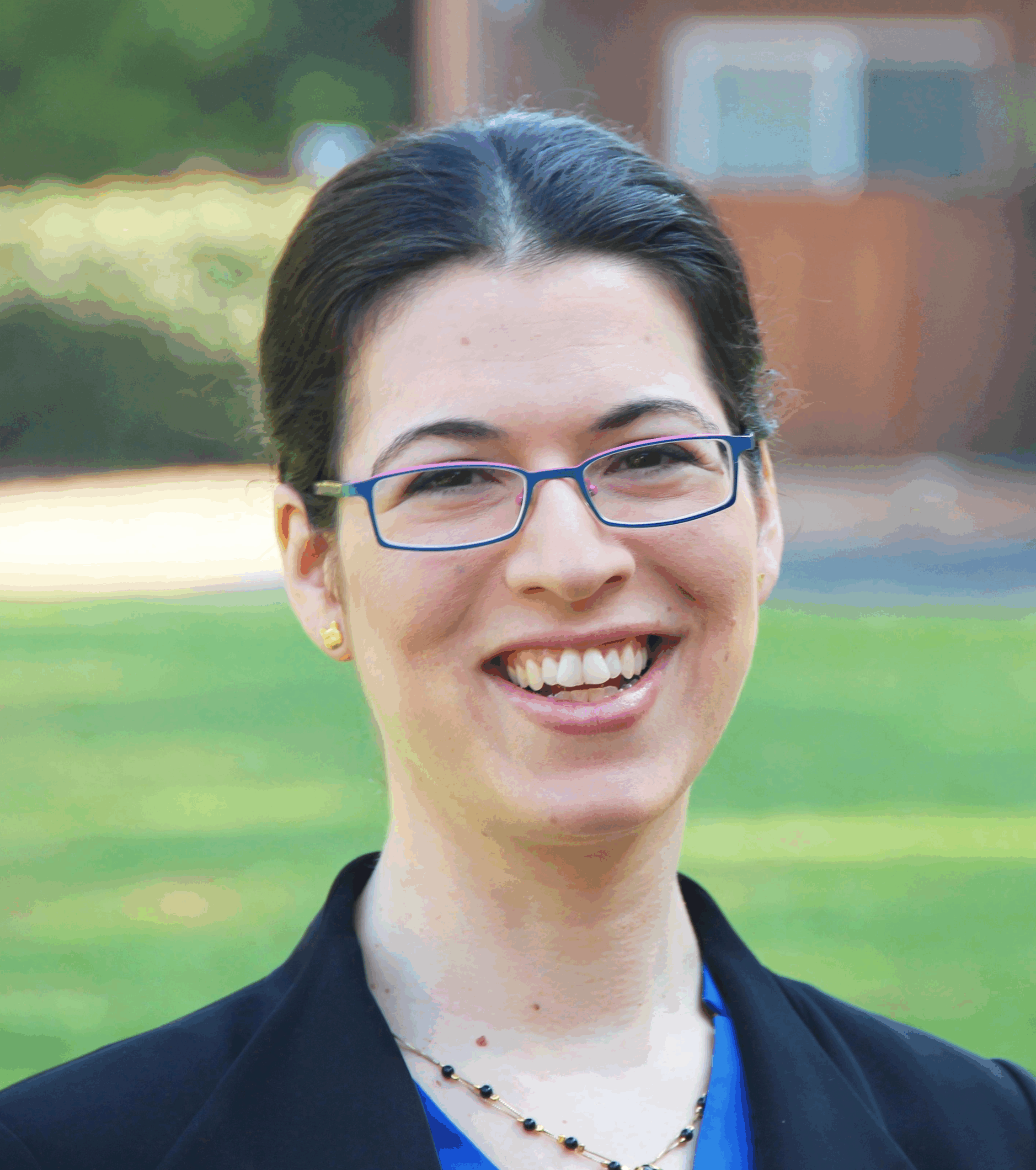
Inbal Talgam-Cohen, PhD (opens in new tab)
Tel Aviv University, Israel
Inbal Talgam-Cohen is an interdisciplinary researcher focused on incentives, algorithms, and learning, drawing from the fields of computer science, economics, and law. Dr. Talgam-Cohen is a faculty member at Tel Aviv University and a visiting faculty at the Technion, where she began her academic career before moving to TAU. Her research group spans both institutions.
Theme: The Impact of AI on Entry-Level Jobs
Subtheme: Contracts for AI-Empowered Online Labor Markets

Laura Nurski, PhD (opens in new tab)
Centre for European Policy Studies (CEPS), Belgium
Prof. Dr. Laura Nurski is Head of Program on the Future of Work at the Centre for European Policy Studies (CEPS) in Brussels, where she leads policy research on the impact of artificial intelligence on labor markets, work organization and job quality. She is also Assistant Professor in the Work and Organizations Studies department at KU Leuven (Belgium) where she leads the Acerta Chair AI at Work, conducting experimental (workplace) research on AI and job design.
Theme: The Impact of AI on Entry-Level Jobs
Subtheme: First European evidence on AI and entry-level jobs: replicating the Canaries in the Coal Mine

Michael Impink, PhD (opens in new tab)
HEC Paris, France
Michael Impink is an Assistant Professor of Strategy at HEC Paris and a research affiliate at Hi! Paris (AI for Society and Business) and Boston University TPRI. His research focuses on how digitization impacts firm structure and performance. Prior to the PhD, Michael was a senior manager at Microsoft based in Seattle and Singapore and a fellow at Harvard University’s Weatherhead Center for International Affairs
Theme: The Impact of AI on Entry-Level Jobs
Subtheme: Does the growing use of digital tools pave the way for white-collar apprenticeship programs?
Meet the inaugural first cohort of AIEI senior fellows
As AI reshapes the global economy, higher education will be crucial in preparing society for these changes. The AI Economy Institute’s first research cohort is studying how colleges and universities can lead this transformation by examining shifts in university structures, curricula, professional training, and their roles in the workforce. With 14 project teams and 24 scholars from various backgrounds, the Institute seeks to provide practical insights for policy and collaborative action among academia, industry, and government on the future of education and workforce.
-

Dr. Adam Cannon (opens in new tab)
Columbia University
Dr. Adam Cannon is a computer science faculty member at Columbia University, where he develops and teaches large undergraduate courses for both majors and non-majors. He has contributed to curriculum design at the departmental, school, and university levels, and chaired the development committee for the AP Computer Science Principles Exam. His current focus is on teaching computer science and AI literacy to liberal arts and humanities students. In 2000 he joined Columbia and also served as a visiting scientist at Los Alamos National Laboratory, where his research focused on machine learning methods for building data-dependent hypothesis classes. He holds a BS and MS in aerospace engineering from the University of California and a PhD in applied mathematics from Johns Hopkins University.
Project 1: The Evolution of CS Education: Integrating AI as a Foundational Element
Theme: Evolution of Computer Science
Subtheme: AI Integration into CS Curricula

Dr. Vishal Misra (opens in new tab)
Columbia University
Vishal Misra is a Professor of Computer Science and Electrical Engineering at Columbia University and Vice Dean for Computing and AI in the School of Engineering. An ACM and IEEE Fellow, his research focuses on mathematical modeling of systems, bridging practice and analysis. As a graduate student, he co-founded CricInfo, later acquired by ESPN. In 2021, he developed one of the first commercial applications using GPT-3 for ESPNcricinfo and has since modeled LLM behavior. He played a key role in India’s Net Neutrality regulation, with his definition adopted by both activists and regulators. He received Distinguished Alumnus honors from IIT Bombay (2019) and UMass Amherst (2014).
Project 1: The Evolution of CS Education: Integrating AI as a Foundational Element
Theme: Evolution of Computer Science
Subtheme: AI Integration into CS Curricula

Jeffrey Oakman (opens in new tab)
Princeton University
Jeffrey Oakman joined the Provost’s Office in September 2024 to lead the creation of the New Jersey AI Hub at Princeton. Collaborating with partners including the NJ Economic Development Authority, Microsoft, and CoreWeave, he is guiding efforts to position Princeton and New Jersey as leaders in AI innovation. The Hub will support advanced AI research, regional economic growth, workforce development, public sector guidance, and startup formation. Previously, Oakman served as a Senior Policy Advisor in Governor Murphy’s Administration, focusing on economic and community development. He holds degrees from Rice University and Princeton SPIA, where he also served as Associate Director of the Graduate Program from 2016 to 2019.
Project 2: Leveraging Artificial Intelligence to Transform Sectors and Reimagine Jobs Throughout the Economy
Theme: AI literacy, Professional Training and Reskilling
Subtheme: Access to AI Education

Jennifer Rexford (opens in new tab)
Princeton University
As Provost of Princeton University, Dr. Jennifer Rexford oversees the academic mission and long-term financial health of the institution. A 1991 Princeton graduate, she is the Gordon Y.S. Wu Professor in Engineering. After earning her PhD in electrical engineering and computer science from the University of Michigan, she spent over eight years at AT&T Labs, where she developed techniques used in backbone networks. She joined Princeton’s Department of Computer Science as a full professor in 2005, became department chair in 2015, and received her named professorship in 2012. Her research focuses on computer networking, with a broader goal of making the Internet more trustworthy and reliable.
Project 2: Leveraging Artificial Intelligence to Transform Sectors and Reimagine Jobs Throughout the Economy
Theme: AI literacy, Professional Training and Reskilling
Subtheme: Access to AI Education

Dr. Matthew Connelly (opens in new tab)
Columbia University
Dr. Matthew Connelly is a Professor of International and Global History and Vice Dean of AI initiatives at Columbia University. He co-led Columbia’s Institute for Social and Economic Research and Policy and directs History Lab, which uses data science to study state secrecy, focusing on intelligence, surveillance, and weapons of mass destruction. Prior to that, he directed the Hertog Global Strategy Initiative on planetary threats. His publications include “A Diplomatic Revolution: Algeria’s Fight for Independence and the Origins of the Post-Cold War Era,” which won five prizes, and “Fatal Misconception: The Struggle to Control World Population,” an Economist and Financial Times book of the year. His research appears in journals such as Nature Human Behaviour, Annals of Applied Statistics, and Comparative Studies in Society and History.
Project 3: AI and the Transformation of Higher Education: An Integrated Approach
Theme: AI literacy, Professional Training and Reskilling
Subtheme: AI Fluency and Workforce Training

Dr. SJ Beard (opens in new tab)
University of Cambridge
Dr. SJ Beard is a leading researcher in the transdisciplinary field of Existential Risk Studies, focusing on global catastrophic risks, future ethics, and building existential hope. Their work explores systemic threats from transformative technologies and environmental breakdown, and they co-authored Double Debt Disaster on injustice and disaster recovery. Beard has edited two volumes on existential risk and is writing a monograph on existential hope. They are a Borysiewicz Interdisciplinary Fellow, advisor to the UK’s All-Party Parliamentary Group for Future Generations, BBC New Generation Thinker, and editorial board member of Futures. Their media work includes BBC programs and appearances on Newsnight, Analysis, and The Naked Scientists.
Project 3: AI and the Transformation of Higher Education: An Integrated Approach
Theme: AI literacy, Professional Training and Reskilling
Subtheme: AI Fluency and Workforce Training

Dr. Morgan Frank (opens in new tab)
University of Pittsburgh
Dr. Morgan Frank is an Assistant Professor at the School of Computing and Information at the University of Pittsburgh in the Department of Informatics and Networked Systems. He is interested in the complexity of AI, the future of work, and the socio-economic consequences of technological change. While many studies focus on phenotypic labor trends, Dr. Frank’s recent research examines how genotypic skill-level processes around AI impact individuals and society. Combining labor research with investigations into the nature of AI research and the social or societal implications of AI adoption, he hopes to inform our understanding of AI’s impact. Dr. Frank has a PhD from MIT’s Media Lab, was a postdoc at MIT Institute for Data, Systems, and Society (IDSS) and the MIT Initiative on the Digital Economy (IDE) and has a master’s degree in applied mathematics from the University of Vermont.
Project 4: Evaluating College Education in the Age of LLMs
Theme: AI literacy, Professional Training and Reskilling
Subtheme: Access to AI Education
Dr. Robert Seamans (opens in new tab)
NYU Stern School of Business
Dr. Robert Seamans is a Professor at New York University’s Stern School of Business, where he teaches courses in game theory and strategy. His research focuses on how firms use technology in their strategic interactions with each other, and also on the economic consequences of AI, robotics, and other advanced technologies. His research has been published in leading academic journals and cited in numerous outlets, including The Atlantic, Forbes, Harvard Business Review, The New York Times, The Wall Street Journal, and others. Dr. Seamans is also Director of the Center for the Future of Management. In 2015, he was appointed as the Senior Economist for technology and innovation on President Obama’s Council of Economic Advisers. He holds a PhD from UC Berkeley.
Project 5: Bots and Business School: Lessons for Business Schools in the Era of Generative AI
Theme: AI Systems Design, Fluency and Engineering
Subtheme: Business and Management Contexts
Dr. Arun Sundararajan (opens in new tab)
NYU Stern School of Business
Dr. Arun Sundararajan is the Harold Price Professor of Entrepreneurship and Professor of Technology, Operations, and Statistics at NYU Stern School of Business, where he also directs the Fubon Center for Technology, Business, and Innovation, and teaches about AI, digital strategy, and entrepreneurship. His award-winning book, “The Sharing Economy,” has been translated into multiple languages. He co-chairs the World Economic Forum’s Global Future Council on Data Frontiers and is an expert on the economics of digital goods, network effects, and the regulation of AI and digital platforms. He has published over 50 scientific papers and more than 40 op-eds in major outlets, and his work has earned numerous awards.
Project 5: Bots and Business School: Lessons for Business Schools in the Era of Generative AI
Theme: AI Systems Design, Fluency and Engineering
Subtheme: Business and Management Contexts

Dr. Amy J. Ko (opens in new tab)
University of Washington
Dr. Amy J. Ko is a Professor at the University of Washington Information School and the Paul G. Allen School of Computer Science and Engineering. She co-directs the UW Center for Learning, Computing, and Imagination, where she studies computing education, human-computer interaction, and humanity’s individual and collective struggle to understand computing and harness it for creativity, equity, and justice. Alongside her collaborators, she has influenced K–12 computer science education policy at local, state, and federal levels. Her work spans more than 140 peer-reviewed publications, with 22 distinguished paper awards and 6 most influential paper awards. She is an ACM Distinguished Member and a member of the SIGCHI Academy. She received her PhD at the Human-Computer Interaction Institute at Carnegie Mellon University and has degrees in Computer Science and Psychology with Honors from Oregon State University.
Project 6: Imagining Education Futures with Generative AI
Theme: Evolution of Computer Science
Subtheme: AI Integration into CS Curricula

Dr. Benjamin Shapiro (opens in new tab)
University of Washington
Dr. R. Benjamin Shapiro is an Associate Professor and the Associate Director for Community in the Paul G. Allen School of Computer Science & Engineering and in Human-Centered Design & Engineering and Learning Sciences & Human Development at the University of Washington (UW), where he is also co-director of the Center for Learning, Computing, and Imagination. Ben is a learning scientist, and his research concentrates on developing ways for youth and adults to create and use computational media for creative expression, investigation of the world around them, and making positive social change. His award-winning, inter- and trans-disciplinary research engages with topics ranging from AI education and research ethics to feminist re-imagination of science and art education. He earned his PhD in Learning Sciences from Northwestern University and his B.A. in Independent Studies from UC San Diego.
Project 6: Imagining Education Futures with Generative AI
Theme: Evolution of Computer Science
Subtheme: AI Integration into CS Curricula

Dr. Karl Gunther (opens in new tab)
University of Florida
Dr. Karl Gunther is a historian of the English Reformation. He earned his B.A. in Philosophy and History from Wheaton College (IL), and his M.A. and PhD in History from Northwestern University. His publications include the book Reformation Unbound: Protestant Visions of Reform in England, 1525–1590 (Cambridge University Press, 2014), which was a finalist for the Royal Historical Society’s Whitfield Prize and runner-up for the American Society of Church History’s Brewer Prize. A fellow of the Royal Historical Society, he has also served as President of the Southern Conference on British Studies. Dr. Gunther was previously Associate Professor of History at the University of Miami, where he taught for fifteen years and held roles including Director of Undergraduate Studies, co-convener of the Medieval and Early Modern Studies Research Group, and chair of the Faculty Senate’s Student Affairs Committee.
Project 7: Designing Interdisciplinary AI Systems: Challenges and Collaborative Solutions
Theme: AI Systems Design, Fluency and Engineering
Subtheme: Interdisciplinary Nature

Dr. Daniel Maxwell (opens in new tab)
University of Florida
Dr. Daniel Maxwell is a humanist at heart, having graduated from a small liberal arts college in Eastern Washington with double majors in History and French. Although his career has focused on technology, Daniel remains committed to the idea and values of a classical liberal arts education. To that end, he positions his work at the intersection of technology and the humanities. Dr. Maxwell is skilled in research system design and open science technologies, including Python, SQL, GitHub, Linux, and deep learning frameworks (PyTorch & TensorFlow). He enjoys helping scholars improve their research workflows through the judicious application of artificial intelligence. Daniel also loves learning Italian and is a student of Italian Renaissance culture, art, and literature.
Project 7: Designing Interdisciplinary AI Systems: Challenges and Collaborative Solutions
Theme: AI Systems Design, Fluency and Engineering
Subtheme: Interdisciplinary Nature

Dr. Xiaopeng Zhao (opens in new tab)
University of Tennessee
Dr. Xiaopeng Zhao is a Professor of Mechanical, Aerospace, and Biomedical Engineering at the University of Tennessee, Knoxville, specializing in AI and robotics, particularly in healthcare and education. With over 20 years of academic and research experience, he has led innovative AI-driven projects developing assistive technologies to improve life for individuals with disabilities and their caregivers. As founding director of the Applied AI Program at UTK, Dr. Zhao helped establish interdisciplinary AI research and education, fostering collaboration across engineering, healthcare, and policy. He currently serves as an AAAS Congressional Science & Technology Policy Fellow, engaging in legislative work on AI, technology, education, and policy. His expertise bridges academic research, policy, and real-world AI implementation.
Project 8: Bridging AI Fluency and Workforce Readiness
Theme: Evolution of Computer Science
Subtheme: AI as a New Major/College

Dr. Mehmet Aydeniz (opens in new tab)
University of Tennessee
Dr. Mehmet Aydeniz is a Professor of STEM Education and a faculty fellow in the College of Emerging and Collaborative Studies at the University of Tennessee, Knoxville (UTK), where he leads research on innovation in teaching and learning across the K–16 continuum. His work focuses on equipping educators and students with the skills needed in a data-driven, AI-powered world. He has published extensively on inquiry-based science education, teacher development, and equity in STEM. He founded COLABS, a research initiative examining scientific collaboration across boundaries. His current research explores how AI integration drives skill turnover and informs curriculum and workforce strategies. He also hosts Navigating Tomorrow Today in Higher Education, a webinar series spotlighting bold ideas for institutional innovation.
Project 8: Bridging AI Fluency and Workforce Readiness
Theme: Evolution of Computer Science
Subtheme: AI as a New Major/College

Dr. Bassel Daher (opens in new tab)
Texas A&M Energy Institute
Dr. Bassel Daher is Assistant Director for Sustainable Development at the Texas A&M Energy Institute, Adjunct Assistant Professor of Biological & Agricultural Engineering, and a Research Fellow at the Institute for Science, Technology, and Public Policy. His work applies systems thinking to global challenges such as food system transformation, energy transition, water management, disaster risk reduction, planetary health, and climate action. He promotes evidence-based, cross-sector collaboration to advance sustainable and equitable futures. Daher integrates research, education, network-building, and community engagement, contributing to over $8 million in funding and 70 highly cited publications. He is a frequent international speaker, including a TEDx Talk, and has held research roles at Texas A&M, Purdue, and Qatar Foundation. He serves on the Executive Board of the International Water Resources Association and co-chaired the Zero Hunger Pathways Project (2020–2023).
Project 9: The Evolving Role of Universities in the AI Era: Opportunities for Improving AI Literacy Through Micro-credentials and Interdisciplinary Curriculum Design
Theme: AI literacy, Professional Training and Reskilling
Subtheme: Micro-Credentials and Certifications

Dr. Konstantinos Pappas (opens in new tab)
Texas A&M Energy Institute
Dr. Konstantinos Pappas is the Associate Director of the Texas A&M Energy Institute. In his 28-year career, he has held senior roles in program management, policy development, and research, including within the European Commission, where he integrated environmental and resource considerations into sustainable development frameworks. Since 2018, he has overseen major projects emphasizing stakeholder engagement in areas such as Carbon Capture and Renewable Technologies. Dr. Pappas’s research focuses on migration economics, international development and sustainability, the societal impacts of energy transition, and stakeholder engagement. Through collaborations with the United Nations Disaster Risk Reduction Office and NATO, his work in the last four years has addressed the interconnected challenges of water, energy, and food in the context of climate change, human mobility, and security.
Project 9: The Evolving Role of Universities in the AI Era: Opportunities for Improving AI Literacy Through Micro-credentials and Interdisciplinary Curriculum Design
Theme: AI literacy, Professional Training and Reskilling
Subtheme: Micro-Credentials and Certifications

Dr. Kenneth R. Fleischmann (opens in new tab)
The University of Texas at Austin
Dr. Kenneth R. Fleischmann is a Professor in the School of Information at The University of Texas at Austin. He is the Founding Chair of the Executive Team for Good Systems, a UT Grand Challenge, and the Founding Director of Undergraduate Studies for the iSchool’s B.A./B.S. in Informatics. His research and teaching focus on AI ethics and the role of human values in designing and using information technologies. His work has been funded by the National Science Foundation (NSF), IARPA, Microsoft Research, Cisco Research, Micron Foundation, and the Public Interest Technology University Network. His research has earned awards including the iConference Best Paper Award, ASIS&T SIG-USE Best Information Behavior Conference Paper Award, ALA Library Instruction Round Table Top Twenty Articles, ASIS&T SIG-SI Social Informatics Best Paper Award, ASIS&T SIG-AI Artificial Intelligence Best Paper Award, the Civic Futures Award, and the MetroLab Innovation of the Month Award. He is also the Founding Editor-in-Chief of the ACM Journal on Responsible Computing.
Project 10: Centering Ethics in the AI Curriculum: Scaling Up AI Ethics Education Nationwide
Theme: Evolution of Computer Science
Subtheme: Shift Toward Ethics and Social Sciences

Dr. Leo Porter (opens in new tab)
University of California, San Diego
Dr. Leo Porter is a Professor in the Computer Science and Engineering Department at UC San Diego. He is best known for his research on the impact of Peer Instruction in computing courses, the use of clicker data to predict student outcomes, and the development of the Basic Data Structures Concept Inventory. He co-wrote the first book on integrating LLMs into the instruction of programming with Daniel Zingaro, entitled “Learn AI-Assisted Python Programming: With GitHub Copilot and ChatGPT”. He has received six Best Paper Awards, SIGCSE 50th Anniversary Top Ten Symposium Papers of All Time Award, the Outstanding Teaching Award from Warren College, and the Academic Senate Distinguished Teaching Award at UC San Diego. He is a Distinguished Member of the ACM, recently served as Secretary of the SIGCSE Board, and presently serves as Program Chair for ICER.
Project 11: How Introductory Programming Students Use Generative AI While Coding
Theme: Evolution of Computer Science
Subtheme: AI Integration into CS Curricula

Dr. Daniel Zingaro (opens in new tab)
University of Toronto
Dr. Daniel Zingaro is an Associate Teaching Professor at the University of Toronto. He has taught introductory Python programming to thousands of students over the past 15 years and has written both no-GenAI and, with Leo Porter, GenAI Python textbooks. Dan has also authored and co-authored textbooks on algorithms and competitive programming and incorporates as much research-backed instruction as he can into his writing. He is the recipient of the SIGCSE 50th Anniversary Top Ten Symposium Papers of All Time Award, an ICER Best Paper award, and the Computer Science Canada Excellence in Teaching Award.
Project 11: How Introductory Programming Students Use Generative AI While Coding
Theme: Evolution of Computer Science
Subtheme: AI Integration into CS Curricula

Dr. Stephanie Moore (opens in new tab)
University of New Mexico
Dr. Stephanie Moore is an Associate Professor in the Organization, Information, and Learning Sciences program and a Barbara Bush Foundation / Dollar General Foundation Fellow. Her research focuses on technology use in adult reading, digital literacies, online and blended learning design, and the ethics of technology in education and the workplace, including AI. Previously, Dr. Moore was an Assistant Professor at the University of Virginia, where she taught instructional design and ethics for learning technologies. She has received multiple awards including the AACTE Innovation of the Year Award and the Leadership in Education award, led and developed award-winning programs, and held leadership roles in AECT. She is Editor-in-Chief of the Journal of Computing in Higher Education and consults globally through the U.S. Department of State’s US Speakers Program, advising embassies on effective digital learning strategies.
Project 12: Creating Inter-disciplinary Educational Pathways for AI Leadership
Theme: Evolution of Computer Science
Subtheme: Less Focus on Coding

Dr. Victor Law (opens in new tab)
University of New Mexico
Dr. Victor Law is an Associate Professor and Program Director of the Organization, Information, and Learning Sciences (OILS) Program at the University of New Mexico. He has extensive expertise in educational psychology, instructional technology, and the application of technology in learning environments. Dr. Law holds a PhD in Educational Psychology with a concentration in Instructional Psychology & Technology from the University of Oklahoma. His research interests include artificial intelligence in education, ill-structured problem solving, computer-supported collaborative learning, self-regulation, game-based learning, and the adoption and use of technology in education. He has published in top journals and served on the editorial board of major journals such as Educational Technology Research and Development and Interdisciplinary Journal of Problem-Based Learning.
Project 12: Creating Inter-disciplinary Educational Pathways for AI Leadership
Theme: Evolution of Computer Science
Subtheme: Less Focus on Coding

Dr. Fabian Stephany (opens in new tab)
University of Oxford
Dr. Fabian Stephany is a Departmental Research Lecturer in AI & Work at the Oxford Internet Institute, University of Oxford, and a Research Affiliate at the Humboldt Institute in Berlin. He leads the SkillScale Project, exploring emerging skills and sustainable occupations amid tech disruption. He co-created the Online Labour Observatory with the ILO. His work has been published in top journals and featured in major media like The New York Times and Nikkei Asia. Dr. Stephany holds a PhD and degrees from institutions including Università Bocconi and the University of Cambridge and has worked with the UNDP, World Bank, and OECD.
Project 13: Bridging the AI Skills Gap: Examining AI Literacy, Reskilling Pathways, and Micro-Credentials in the US and UK
Theme: AI literacy, Professional Training and Reskilling
Subtheme: AI Fluency and Workforce Training

Dr. Ole Teutloff (opens in new tab)
University of Oxford
Dr. Ole Teutloff is an incoming postdoctoral researcher at the Oxford Internet Institute and is affiliated with the Copenhagen Center for Social Data Science. His research uses computational social science methods to study the impact of technological innovations on society. Ole’s work particularly focuses on the labor market implications of transformative AI and the effects of technological change on inequality. He holds a PhD in Social Data Science from the University of Copenhagen, an MSc in Social Data Science from the University of Oxford, and a Master of Public Policy from the Hertie School in Berlin. Previously, he has worked in various international contexts including the Centre for the Governance of AI, the OECD, and the World Bank.
Project 13: Bridging the AI Skills Gap: Examining AI Literacy, Reskilling Pathways, and Micro-Credentials in the US and UK
Theme: AI literacy, Professional Training and Reskilling
Subtheme: AI Fluency and Workforce Training

Dr. Jeffrey Nii Armah Aryee (opens in new tab)
Kwame Nkrumah University of Science and Technology
Dr. Jeffrey Nii Armah Aryee is a Lecturer in the Department of Meteorology and Climate Science at Kwame Nkrumah University of Science and Technology (KNUST) in Kumasi, Ghana. He holds a PhD in Meteorology and Climate Science from KNUST, completed under the European Union’s 7th Framework Programme funded DACCIWA (Dynamics-Aerosol-Chemistry-Cloud-Interactions in West Africa) Project. Dr. Aryee’s research interests include climate data reconstruction, boundary-layer meteorology, climate variability and change, ML/AI applications in climate science and climate impact studies. He is the Lead for the JNAA research group (JNAA Lab) and served as the satellite data scientist for the KNUST cohort of the GCRF African SWIFT (Science for Weather Information and Forecasting Techniques) Project. Dr. Aryee is the PI for the ANDeL (Advancing Nowcasting with Deep Learning techniques), Ghana AQ Data Hub and TechAir projects. He also collaborates with an extensive scientific community on other projects such as the EW4ENERGY (Early Warning for Energy) project. He is also the group lead for PY4CA, a scientific computing solutions team involved in building science-related problem-based solutions and applications.
Project 14: Revolutionizing Tertiary Education for Africa’s Thriving AI Economy and Workforce (RetAIn) Project: Expanding Access to AI Education, Fluency, and Workforce Training
Theme: AI literacy, Professional Training and Reskilling
Subtheme: Access to AI Education
Advising Fellows, guiding scholarship with issue-area expertise
The AI Economy Institute’s Advising Fellows are a distinguished group of global thought researchers who have expertise in the areas of the AI economy. Their participation in AIEI helps to ensure scholarly rigor and reach across our cohorts. These experts play a pivotal role in shaping AIEI’s intellectual agenda—bringing deep expertise in economics, technology, and workforce transformation to guide research and amplify impact.
Advising Fellows contribute far beyond proposal review. They participate in virtual and in-person convenings, contribute editorial insights, and help position AIEI as a trusted source of evidence-based guidance on the future of education and work in an AI-driven economy. By affiliating with AIEI, they accelerate the dissemination of research and ideas that inform policy, industry, and academia worldwide.
-
Elizabeth J. Altman (opens in new tab)
University of Massachusetts–Lowell
Elizabeth J. Altman is Associate Professor of Management at the University of Massachusetts–Lowell’s Manning School of Business. She is a Research Affiliate with the MIT Initiative on the Digital Economy and a Nonresident Fellow at Brookings, and has held visiting appointments at Harvard Business School. Altman is lead author of Workforce Ecosystems (MIT Press, 2023), and her research explores organizational strategy and workforce transformation in the digital economy.
Gábor Békés (opens in new tab)
Central European University
Gábor Békés is Associate Professor at Central European University in the Department of Economics and Business. He is a Research Affiliate at CEPR and Senior Research Fellow at the KRTK Institute of Economics in Hungary. Békés co-authored Data Analysis for Business, Economics, and Policy (Cambridge University Press, 2021), and his work focuses on applied data analysis and business economics.
Daniel Björkegren (opens in new tab)
Columbia University
Daniel Björkegren is Assistant Professor of International and Public Affairs at Columbia University’s School of International and Public Affairs. He leads the AI & Development initiative at Columbia’s Center for Development Economics and Policy and is affiliated with BREAD, J-PAL, and the Data Science Institute. Björkegren’s research examines the intersection of AI and development, including policy-relevant fieldwork in Africa.
Anders Humlum (opens in new tab)
University of Chicago Booth School of Business
Anders Humlum is Assistant Professor of Economics and Fujimori/Mou Faculty Scholar at the University of Chicago Booth School of Business. He is a Research Affiliate at IZA and previously held a postdoctoral fellowship at the Becker Friedman Institute. Humlum’s research focuses on the labor market impacts of automation and artificial intelligence.
Frank Nagle (opens in new tab)
MIT Initiative on the Digital Economy
Frank Nagle is a Research Scientist at the MIT Initiative on the Digital Economy and advises the Linux Foundation as Chief Economist. He previously served as Assistant Professor of Strategy at Harvard Business School. Nagle’s work includes widely cited research estimating the multi-trillion-dollar economic value created by open-source software.
Gal Oestreicher-Singer (opens in new tab)
Tel Aviv University
Gal Oestreicher-Singer is Mexico Professor of Information Systems and Associate Dean for Research at the Coller School of Management, Tel Aviv University. She is an Adjunct Professor at NYU Stern and has held senior editorial roles in MIS journals. Oestreicher-Singer’s research examines digital platforms, social networks, and e-commerce, and she is a recent recipient of the Kadar Family Award.
Daniel Rock (opens in new tab)
The Wharton School at the University of Pennsylvania
Daniel Rock is Assistant Professor of Operations, Information and Decisions at the Wharton School, University of Pennsylvania. He is a Digital Fellow at the MIT Initiative on the Digital Economy and affiliated with NBER and Stanford’s Digital Economy Lab. Rock co-authored the Science article “GPTs are GPTs” (2024) and the AEJ: Macroeconomics paper on the “Productivity J Curve.”
Wesley Rosslyn Smith (opens in new tab)
University of Pretoria
Wesley Rosslyn Smith is Associate Professor in the Department of Business Management at the University of Pretoria and Director of the Centre for the Future of Work. He also lectures at the Gordon Institute of Business Science. Rosslyn Smith’s research and teaching focus on corporate strategy, turnaround management, business analytics, and the future of work.
Fabian Stephany (opens in new tab)
University of Oxford
Fabian Stephany is Departmental Research Lecturer in AI and Work at the Oxford Internet Institute, University of Oxford. He is a Senior Research Fellow at the Oxford Martin School and a Fellow at Bruegel, and co-created the Online Labour Observatory with the ILO. Stephany serves on the World Economic Forum’s Global Future Council on Human Capital Development.
Prasanna (Sonny) Tambe (opens in new tab)
The Wharton School at University of Pennsylvania
Prasanna Tambe is Professor of Operations, Information and Decisions at the Wharton School, University of Pennsylvania, where he co-directs AI at Wharton. He is a Digital Fellow at the MIT Initiative on the Digital Economy and affiliated with NBER. Tambe’s research explores the economics of technology and labor, including widely cited work on AI in human resource management.
Interested in becoming an advisor, share research question ideas or have general questions – contact us (opens in new tab)!