September 26, 2025
Share this page


Why integrated device management is becoming the new baseline for modern IT teams
When you’re tasked with securing hundreds, if not thousands, of distributed endpoints across a fragmented ecosystem, “simple” isn’t the word that usually comes to mind. Yet that’s exactly where modern IT is headed.
For overburdened IT teams, especially those stretched thin across hybrid and remote environments, simplicity isn’t just a luxury. It’s a survival strategy. With the rise of autonomous IT principles, organizations are rethinking how they manage devices, secure endpoints, and reduce operational drag. The game is no longer about piling on more tools, but doing more with what’s already built in.
The problem with patchwork IT
The shift is overdue. In reality, many current IT solutions were never designed for the complexity and speed of today’s distributed workforce. Organizations often cobble together multiple platforms for provisioning, monitoring, securing, and retiring endpoints, each with its own learning curve, licensing model, and integration headaches.
This patchwork approach leads to predictable outcomes: limited visibility, delayed threat responses, ballooning overhead, and frustrated admins. Worse, it exposes organizations to increased risk, especially when managing secure laptops or devices in high-turnover or fast-scaling environments.
As remote work normalizes and bring-your-own-device (BYOD) policies persist, the challenges compound. IT leaders are being asked to maintain compliance and control without stifling agility. Essentially, to do more with less, faster, and at scale. That’s a tall order, especially if you’re running lean but need to move at the speed of business.
Why integrated IT is becoming the new standard
Integrated device management is where IT is headed. Instead of retrofitting a maze of tools around the endpoint, forward-looking IT teams are prioritizing systems that offer streamlined endpoint security out of the box. These systems also support long-term digital transformation goals by providing a scalable foundation that aligns IT operations with broader business strategy.
Here are some of the core functions today’s IT teams are prioritizing, which are now essential for maintaining security and agility, especially as demands rise and resources remain lean:
These features are increasingly table stakes, not differentiators. Organizations now expect IT asset management (ITAM) software and endpoint security that just works—seamlessly and securely.
And with the rise of remote IT security challenges, from ransomware to shadow IT, built-in simplicity becomes a critical line of defense. It’s no longer enough to react. Today’s IT needs to be proactive, adaptive, and above all, unobtrusive.
Autonomous IT: A smarter way forward
So what does autonomous IT actually look like in practice?
It’s not about removing humans from the loop. It’s about empowering IT teams with systems that manage themselves wherever possible. It’s the idea that devices can configure, secure, and update themselves based on policy, freeing up valuable time and reducing human error.
This shift also realigns priorities. Rather than firefighting individual device issues or maintaining disparate tools, IT leaders can focus on strategic initiatives: improving user experience, strengthening security posture, and enabling scalable growth.
Of course, autonomous IT doesn’t mean “set it and forget it.” These systems still require strong policy governance and ongoing monitoring to ensure configurations remain aligned with business and security objectives.
But the benefits ripple outward. Built-in simplicity means:
Simplicity doesn’t mean sacrificing control. It means designing smarter systems that deliver control by default and that’s a big win across the board.
From managing tools to securing outcomes
The most resilient modern infrastructures aren’t the most complex. They’re the most intuitive. As the pace of digital transformation accelerates, technical decision makers are under pressure to move quickly without compromising security or performance.
That’s why the conversation is moving away from bolt-on platforms and toward IT solutions that integrate security and asset management at the core. The ideal endpoint strategy isn’t a pile of patched-together tools. It’s a single, cohesive foundation that supports secure provisioning, automated oversight, and intelligent updates, whether you're managing 50 devices or 50,000. And that leaves room for IT to lead—not just support—the outcomes that move the business forward.
It’s time to stop settling for complexity disguised as customization. Built-in simplicity isn’t the latest trend. It’s a quantifiable benchmark for scalable, secure, and efficient IT.
Ready to simplify endpoint security and scale smarter?
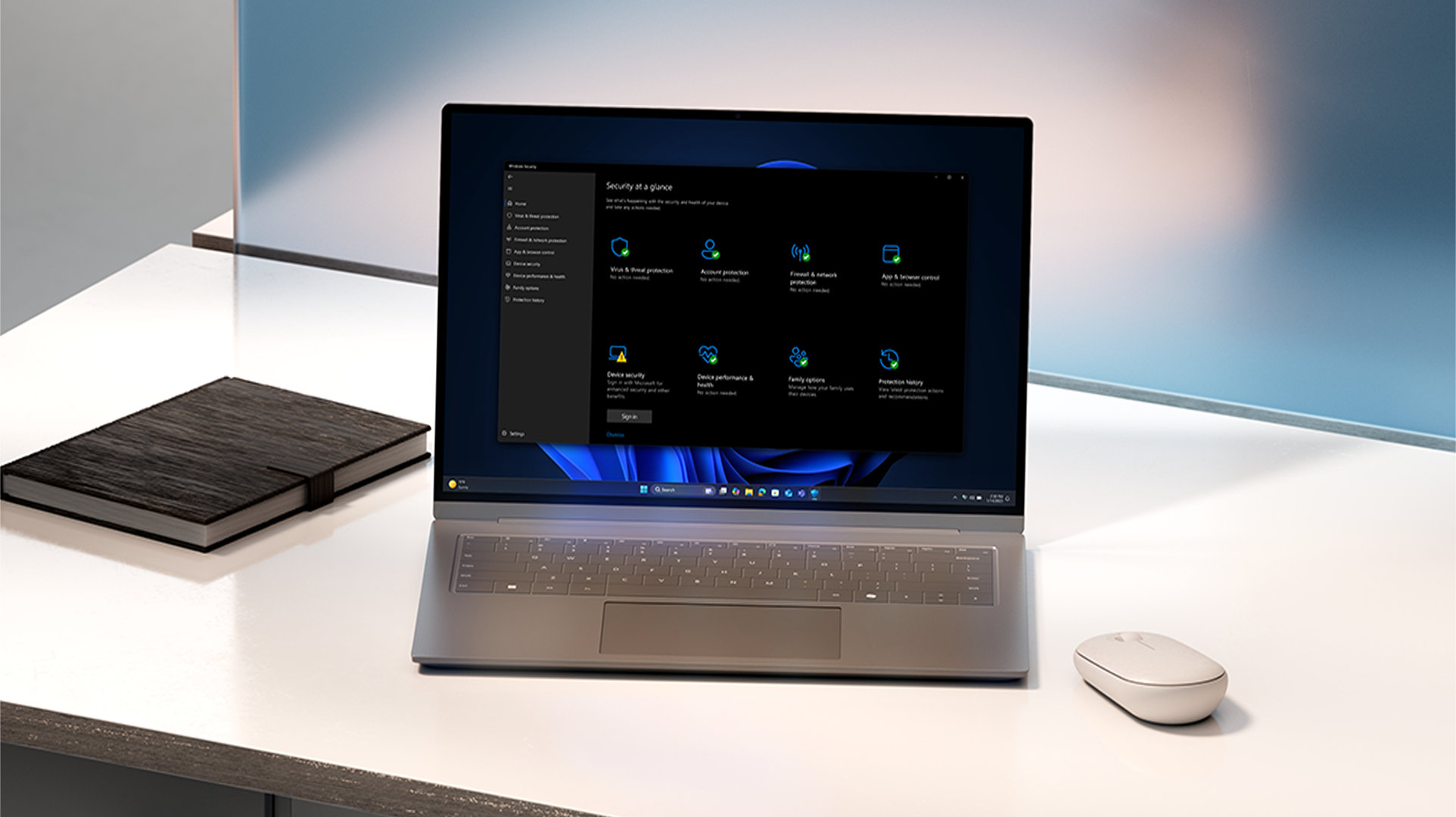
Windows 11 Pro devices powered by Intel vPro® keep your data protected with security that’s built in, not bolted on. Defend your organization against cyberthreats with proactive, hardware-backed protection and credential safeguards like passkeys and passwordless biometric sign-in with Windows Hello for Business. 1 Efficiently enforce security policies across all your endpoints, including PCs, apps, and new AI tools. Windows 11 Pro devices powered by Intel vPro® offer hardware-based protection from chip to cloud, enhanced privacy settings, and granular IT controls, aligned with Microsoft’s Secure Future Initiative and Intel’s industry-leading security assurance practices.
Copilot+ PCs 2 take protection even further with a powerful architecture for executing AI workloads locally. This enables proactive, context-aware AI experiences while keeping your data secure. These devices support deep learning, AI acceleration, and natural language processing, helping safeguard sensitive business information while improving performance and battery life. 3 With Copilot+ PCs, you get the most advanced Windows security for data and privacy, including Secured-core PC protection and Microsoft Pluton. 4


