
The corporate network perimeter has been completely redefined. Many IT leaders are adopting a Zero Trust security model where identities play a critical role in helping act as the foundation of their modern cybersecurity strategy. As a result, cybercriminals have shifted their focus and identities are increasingly under attack.
In this infographic, we explore how this shift is affecting IT leaders and how Microsoft can help apply threat protection to proactively prevent identity compromise and reduce alert fatigue.
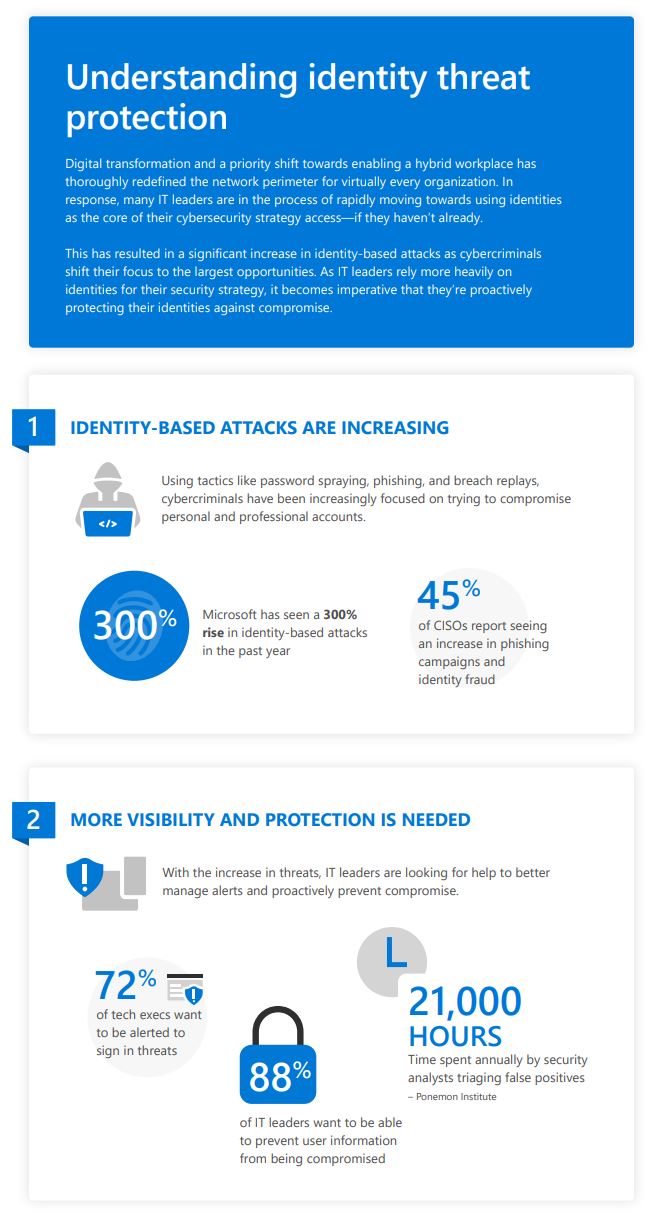
- There’s been a significant increase in identity-based attacks. As IT leaders rely more heavily on identity in their security strategies, cybercriminals have increased their efforts on this threat vector. And with the shift to remote work in response to COVID-19, we’ve seen a notable number of pandemic-related phishing attacks.
- IT leaders need more visibility and protection. With the increase in threats, security professionals and admins are being overwhelmed with alerts. IT leaders are looking for more effective ways to manage alerts and better tools to proactively prevent attackers from being able to compromise accounts.
- Preventing identity compromise is more critical than ever. As IT leaders evolve their security strategies, people increasingly working remotely, and the number of identity-based attacks are rising, it’s vital for organizations to implement real-time, AI-based protections that prevent identity compromise.
Check out the infographic for more details.
If you’re interested in how Microsoft can help, see how Azure Active Directory (Azure AD) Identity Protection and Microsoft 365 Defender use real-time, cloud-based AI to proactively prevent identity compromise. Also check out our Security Unlocked podcast with Data Scientist Lead for Microsoft’s Identity Security and Protection team, Maria Peurtas Calvo, to hear how AI is being used to protect identities inside Microsoft products and services.
Visit our Zero Trust page to stay up-to-date on how the latest Microsoft products, features, and resources that can help you implement Zero Trust principles in your organization.
To learn more about Microsoft Security solutions visit our website. Bookmark the Security blog to keep up with our expert coverage on security matters. Also, follow us at @MSFTSecurity for the latest news and updates on cybersecurity.