
This blog post is part of the Microsoft Intelligence Security Association guest blog series. To learn more about MISA, go here.
Barracuda’s CloudGen Firewall is tightly integrated with Microsoft Azure Virtual WAN, Azure Active Directory (Azure AD), Azure Security Center, and Azure Sentinel. Integrated into Azure, Barracuda’s networking and security capabilities enable customers’ secure infrastructure migrations and the use of public cloud for additional security solutions such as scalable remote access.
As I write this blog, people in many areas around the world continue to stay home due to lockdowns and shelter-in-place orders, while some countries and states are starting to gradually relax restrictions to get at least some businesses and operations re-opened. These are unprecedented times, and a lot of uncertainty remains. Will most people go back to commuting and working mostly from their offices? Or will the world substantially shift to working from home? How will our recent experiences affect key technology trends such as digital transformation and IT infrastructure migration to public cloud?
Accelerating digital transformation
Digital transformation is fundamentally changing today’s enterprises, making digital assets—data and applications—key to doing business. As more value shifts from physical to digital assets, businesses increasingly compete based on how quickly they can ramp up and manage their digital assets; in effect, they are becoming digital businesses. DevOps processes, agile methodologies, and the move to cloud help enterprises to develop and update their digital assets faster.
By their nature, in order to generate value, digital assets need to be networked and available. These assets need to be protected from threats that are continuously evolving and becoming more challenging. Hackers are getting more sophisticated and malware is constantly getting more advanced. So, security is a critical requirement for successful digital transformation.
In speaking with customers and partners, we at Barracuda are hearing one consistent theme: It appears that the crisis and the resulting changes in work patterns are accelerating digital transformation. In many parts of the world, for example, where working from home has not been common and the infrastructure was not built to support it, IT professionals are evaluating how to enable it. In places where electronic signatures have not yet gone mainstream, there is a strong push for wider acceptance. Industries and geographies relying on brick-and-mortar stores are quickly moving operations online.
Leveraging public cloud for remote access
Public cloud adoption and cloud connectivity are key long-term trends that are getting an additional boost from the latest crisis. As lockdowns and restrictions went into effect, we at Barracuda got a major increase in customer requests for scaling up remote access functionality. IT departments were asked to very quickly ramp up remote access capabilities.
This is one example where public cloud can be quickly leveraged to expand remote access capacity. While an on-premises firewall or VPN gateway may not be sized to provide remote access to the entire employee population now working from home, it may be a complicated and lengthy process to expand that capacity. A quicker option is to stand up a remote access service in public cloud and connect it back to the on-premises firewall. This solution can be acquired from the Microsoft Azure Marketplace on a pay-as-you-go basis, for example, and set up within hours. All remote workers are given a new website to connect, and VPN and security processing are offloaded to the cloud. The entire system can be quickly and easily scaled up when shelter-in-place restrictions go into effect and scaled down when employees go back to working in the office.
Public cloud and SD-WAN
Remote access is, of course, just one example of the fact that traditional network and security infrastructures are inflexible—they cannot effectively accommodate digital transformation requirements. The health crisis just brought this into the spotlight. The move to public cloud is already broadly under way, and networks need to catch up.
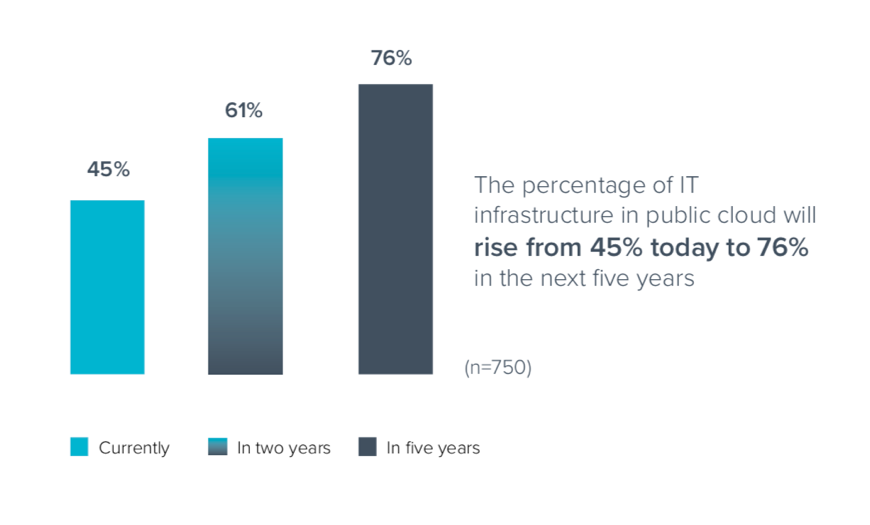
In the new report, Future shock: the cloud is the new network,* that was published in February, Barracuda surveyed 750 IT decision makers responsible for their organizations’ cloud infrastructure. We learned that organizations are well on their way to moving their infrastructure to public cloud, with 45 percent of IT infrastructure already running in the cloud today and rising to an estimated 76 percent in five years.
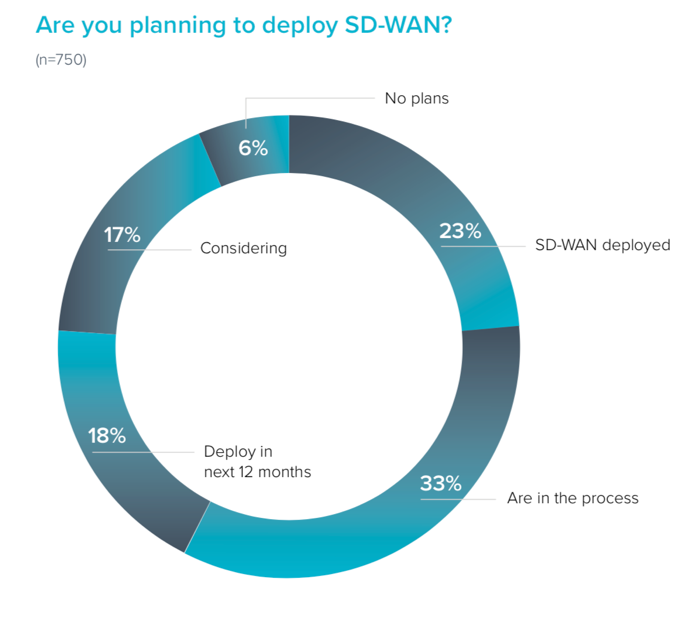
At the same time, companies need to re-evaluate their security strategies as they move to public cloud, with 70 percent of respondents indicating that security concerns restrict their organizations’ adoption of public cloud. And their solution of choice for optimizing and securing access to public cloud is a fully integrated secure SD-WAN, with 56 percent of respondents having already deployed or are in the process of deploying it.
About Barracuda
At Barracuda, we strive to make the world a safer place. We believe every business deserves access to cloud-enabled, enterprise-grade security solutions that are easy to buy, deploy, and use. We protect email, networks, data, and applications with innovative solutions that grow and adapt with our customers’ journey. More than 150,000 organizations worldwide trust Barracuda to protect them—in ways they may not even know they are at risk—so they can focus on taking their business to the next level. For more information, visit barracuda.com.
View our integration videos:
- Barracuda integrates with Azure Active Directory
- Barraduca Cloud Security Guardian integrates with Microsoft Graph Security API
For more information on Microsoft Security Solutions, visit our website. Bookmark the Security blog to keep up with our expert coverage on security matters. Also, follow us at @MSFTSecurity for the latest news and updates on cybersecurity.
*Future shock: the cloud is the new network, Barracuda, February 2020