The cost of non-compliance is more than twice that of compliance costs. Non-compliance with the ever-increasing and changing regulatory requirements can have a significant impact on your organization’s brand, reputation, and revenue. According to a study by the Ponemon Institute and Globalscape, being compliant will cost you less compared to business disruptions, loss of revenue, and hefty fines.
Data explosion and regulatory environment
As organizations go through digital transformation, they are generating and consuming much more data than in the past to help them gain an edge over their competitors. This data is necessary to continue to stay relevant by empowering employees, engaging customers, and optimizing operations. Managing this data and the variety of devices on which it is created can be complicated, especially when it comes to ensuring compliance.
Not only is the amount of data IT must manage exploding, regulations on how that data can and should be handled are also increasing. Collecting customer and citizen data is often an integral part of how public and private sector organizations function. While there has been progress over the last few years, the challenge of maintaining and protecting personal data continues. Regulations are creating a need for the responsible usage of personal data, and the stakes are high. Not complying with regulations can result in significant fines and reduced credibility with regulators, customers, and citizens.
Manage compliance challenges
According to a recent report about the cost of compliance, there were more than 215 regulation updates a day from over 1,000 regulatory bodies all over the world, a slight decrease from the previous year. For example, enforcement of the California Consumer Privacy Act (CCPA), Brazil’s Lei Geral de Proteção de Dados (LGPD), and Thailand’s Personal Data Protection Act (PDPA) began in 2020.
Organizations face all kinds of risks, including financial, legal, people, IT, and cybersecurity risks. Below are some of the challenges we are seeing due to the dynamic nature of the compliance landscape.
- Keeping up with constantly changing regulations is a struggle. With all the regulatory and standards bodies creating new or revising existing requirements and guidelines, keeping up to date is time and resource-intensive.
- Point-in-time assessments create a digital blind spot. Many organizations rely on point-in-time assessments, like annual audits. Unfortunately, they can go out of date quickly and expose the organization to potential risks until the next assessment is done. Organizations are looking for ways to improve integration and create near real-time assessments to control risks caused by digital assets.
- Inefficient collaboration and siloed knowledge lead to duplication of effort. Organizations are often challenged due to siloed knowledge concerning IT risk management. IT and security admins know the technology solutions but find regulations difficult to understand. Contrast that with compliance, privacy, and legal teams who tend to be familiar with the regulations but are not experts in the technology available to help them comply. In addition, many organizations start their compliance journey using general-purpose tools like Microsoft Excel and try to track compliance manually, but quickly outgrow this approach because of the complexities of managing compliance activities.
- Complexity across IT environments hinders adoption. Understanding how to integrate the many solutions available and configure each one to minimize compliance risks can be difficult. This is especially true in organizations with solutions sourced from multiple vendors that often have overlapping functionality. Decision-makers want simple step-by-step guidance on how to make the tools work for the industry standards and regulations they are subject to.
Simplify compliance with Microsoft Compliance Manager
Microsoft Compliance Manager is the end-to-end compliance management solution included in the Microsoft 365 compliance center. It empowers organizations to simplify compliance, reduce risk, and meet global, industry, and regional compliance regulations and standards. Compliance Manager translates complicated regulations, standards, company policies, and other desired control frameworks into simple language, maps regulatory controls and recommended improvement actions, and provides step-by-step guidance on how to implement those actions to meet regulatory requirements. Compliance Manager helps customers prioritize work by associating a score with each action, which accrues to an overall compliance score. Compliance Manager provides the following benefits:
- Pre-built assessments for common industry and regional standards and regulations, and custom assessments to meet your unique compliance needs. Assessments are available depending on your licensing agreement.
- Workflow functionality to help you efficiently complete risk assessments.
- Detailed guidance on actions you can take to improve your level of compliance with the standards and regulations most relevant for your organization.
- Risk-based compliance score to help you understand your compliance posture by measuring your progress completing improvement actions.
Shared responsibility
For organizations running their workloads only on-premises, they are 100 percent responsible for implementing the controls necessary to comply with standards and regulations. With cloud-based services, such as Microsoft 365, that responsibility becomes shared between your organization and the cloud provider, although is ultimately responsible for the security and compliance of their data.
Microsoft manages controls relating to physical infrastructure, security, and networking with a software as a service (SaaS) offering like Microsoft 365. Organizations no longer need to spend resources building datacenters or setting up network controls. With this model, organizations manage the risk for data classification and accountability. And risk management is shared in certain areas like identity and access management. The chart below is an example of how responsibility is shared between the cloud customer and cloud provider with various on-premises and online services models.
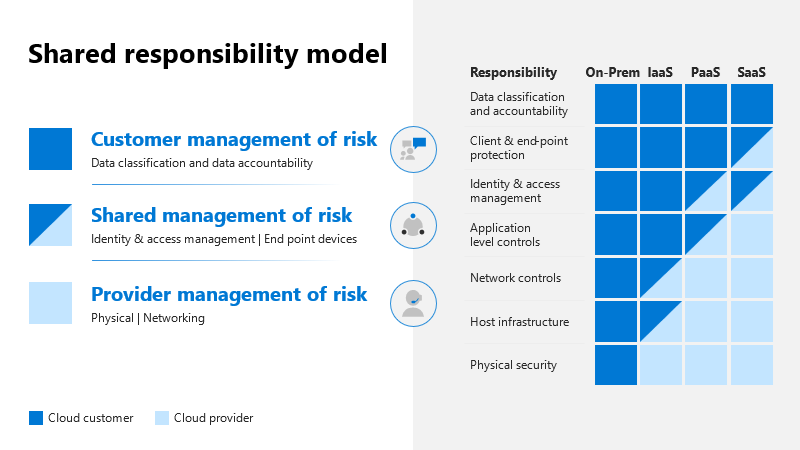
Figure 1: Shared responsibility model
Apply a shared responsibility model
Because responsibility is shared, transitioning your IT infrastructure from on-premises to a cloud-based service like Microsoft 365 significantly reduces your burden of complying with regulations. Take the United States National Institute of Standards and Technology’s NIST 800-53 regulation as an example. It is one of the largest and most stringent security and data protection control frameworks used by the United States government and large organizations. If your organization were adhering to this standard and using Microsoft 365, Microsoft would be responsible for managing more than 75 percent of the 500 plus controls. You would only need to focus on implementing and maintaining the controls not managed by Microsoft. Contrast that situation with one where your organization was running 100 percent on-premises. In that case, your organization would need to implement and maintain all the NIST 800-53 controls on your own. The time and cost savings managing your IT portfolio under the shared responsibility model can be substantial.
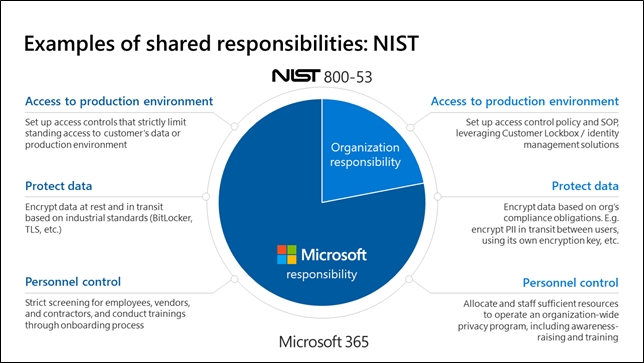
Figure 2: NIST examples of shared responsibilities
Assess your compliance with a compliance score
Compliance Manager helps you prioritize which actions to focus on to improve your overall compliance posture by calculating your compliance score. The extent to which an improvement action impacts your compliance score depends on the relative risk it represents. Points are awarded based on whether the action risk level has been identified as a combination of the following action characteristics:
- Mandatory or discretionary.
- Preventative, detective, or corrective.
Your compliance score measures your progress towards completing recommended actions that help reduce risks around data protection and regulatory standards. Your initial score is based on the Data Protection Baseline, which includes controls common to many industry regulations and standards. While the Data Protection Baseline is a good starting point for assessing your compliance posture, a compliance score becomes more valuable once you add assessments relevant to the specific requirements of your organization. You can also use filters to view the portion of your compliance score based on criteria that includes one or more solutions, assessments, and regulations. More on that later.
The image below is an example of the Overall compliance score section of the Compliance Manager dashboard. Notice that even though the number under Your points achieved is zero, the Compliance Score is 75 percent. This demonstrates the value of the shared responsibility model. Since Microsoft has already implemented all the actions it is responsible for, a substantial portion of what is recommended to achieve compliance is already complete even though you have yet to take any action.
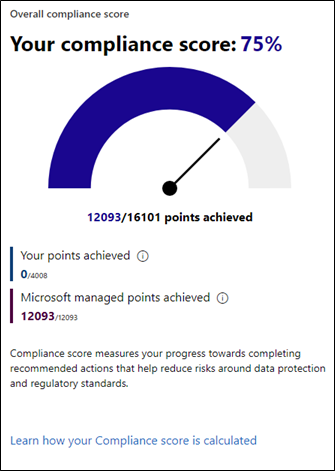
Figure 3: Compliance Score from Microsoft Compliance Manager
For more information on Microsoft Compliance Manager, please visit the Microsoft Compliance Manager documentation. To learn more about Microsoft Security solutions visit our website. Bookmark the Security blog to keep up with our expert coverage on security matters. Also, follow us at @MSFTSecurity for the latest news and updates on cybersecurity.