Pave the way for a sustainable future with data and smart mobility solutions
For businesses across the automotive, mobility, and transportation industry, sustainability is no longer a business priority—it is a responsibility.
Learn how industrial AI is reshaping the economics of manufacturing: where the ROI is real, what’s driving it, and how you can take the next step on your own AI journey.
For businesses across the automotive, mobility, and transportation industry, sustainability is no longer a business priority—it is a responsibility.
A few months ago I laid out the 5 manufacturing trends driving the need for an industry cloud including my passionate and research-substantiated belief that partnerships and ecosystems are more critical than ever to manufacturing a resilient and sustainable future.
In every industry around the world, the past several months have seen organizations adjust to challenges, pursue new business opportunities, and accelerate their digital capabilities in the face of the pandemic that has reshaped our world. Disruption demands the capacity to turn challenge into opportunity.
There is an abundance of transformation taking place across the automotive ecosystem. By 2030, fully 50 percent of the automotive industry’s projected $6.6 trillion in revenue will come from disruptive technology or business models1. Traditional industry players are being disrupted, fueling the shift to electric and digital.
Microsoft Ignite is where we showcase much of our technology innovation, but the technology intensity can be hard to navigate if you are a manufacturing executive trying to zero in on what will help you increase resilience and achieve sustainable growth, or build a hyperconnected business. Below are my top 5 takeaways from Ignite for manufacturers, and links to the most relevant blogs and sessions.
At the famed Indianapolis Motor Speedway, it’s certainly not unusual to see the sleek, aerodynamic shape of an Indy racecar exploring the limits of the track piloted by one of the world’s best and fastest drivers.
These last 18 months have been a time we will not soon forget. Filled with unimaginable change caused by the pandemic, the manufacturing industry has witnessed complete disruption in terms of business continuity, operational visibility, supply chains, remote work, employee safety, and the list goes on.
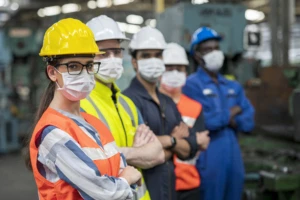
One of the clearest realizations made in the midst of industrial transformation triggered by the COVID-19 pandemic has been that global manufacturing is powered by the frontline workforce. The industry witnessed a sea of change: a significant disruption in terms of business continuity, operational visibility, remote work, employee safety, and the list goes on.
A few weeks ago I shared our insights on the 5 manufacturing trends driving the need for an industry cloud. However, many have reached out to me to say there’s an even more compelling reason to accelerate digitization of manufacturing data, and digitalization of manufacturing processes.
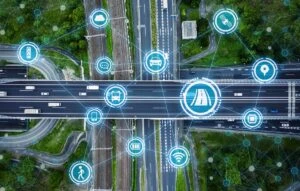
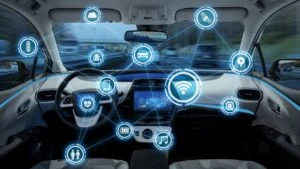
Driving is data. By 2030, virtually all new cars will be connected devices, datacenters on wheels. For drivers, those lights and gauges on the dashboard, images on the screen, and cameras mean it’s safer and more efficient than ever to get around the block or across the country.
2020 has been a year that we will not soon forget, filled with unimaginable change caused by the pandemic. The manufacturing industry witnessed a sea change: a significant disruption in terms of business continuity, operational visibility, remote work, employee safety, and the list goes on.
The past year has brought dramatic change to almost every facet of our lives. We have seen the same disruption play out across every industry, from retail to healthcare to financial services. Customer expectations are fundamentally altered, and it’s hard to imagine things going back to the way they once were.