

Innovation now for the Smart City of tomorrow
Barcelona may be one of the world’s major global centers for tourism, the economy, trade and culture but, starting today, it’s the apex for smart cities.

At HIMSS 2026, Microsoft Dragon Copilot advances unified AI workflows to help clinicians reduce complexity and stay focused on patients.

Barcelona may be one of the world’s major global centers for tourism, the economy, trade and culture but, starting today, it’s the apex for smart cities.

The term “smart city” is a simple phrase that encompasses a broad and complex set of digital transformation initiatives and programs. Such programs need to include modern citizen services, operational automation, intelligent management of infrastructure and utilities, and new capabilities to improve transportation and communication.

During the last 15 years of my career in the tech sector, I’ve focused on developing innovative customer experience solutions and overarching digital transformation for the retail industry—and I’ve never been more excited about the opportunities.

According to the United Nations, more than 55 percent of the world’s population now lives in urban areas—and by 2050, that number could jump to 68 percent.

This week, Microsoft joined C-level executives, renowned speakers, innovators, and disrupters from throughout the financial services industry at Money20/20 in Las Vegas to showcase how secure and compliant technology empowers employees, drives innovation in payments, and delights customers with differentiated experiences.

In healthcare and life sciences, advances in research and technology development are providing a deeper understanding of human health and leading to more effective ways to prevent and treat disease.

Gartner IT Symposium/Xpo in Orlando is a great venue for business leaders and IT professionals to discuss the extent to which innovation is driving unprecedented transformation, and the potential disruptions that poses for the market and society at large.
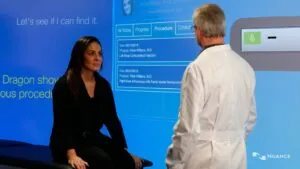
Working in healthcare is not for the faint of heart. It can be a chaotic place, and too often the systems are years behind. Healthcare organizations are carefully balancing how to enable a more personalized patient experience, improve outcomes across the care continuum, and reduce costs.

Just like all organizations, defense agencies have a lot to gain by moving from an on-premises environment to the cloud—including more effective communications with allies and partners.

Eighty percent of consumer goods CEOs think their operating model is at risk.1 Why is that? Simply put, given how fast consumer preferences and the retail landscape are evolving, consumer goods businesses are being challenged to keep pace like never before. Consumer motivations and expectations are rapidly evolving.
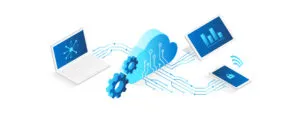
This blog is the fifth in a series highlighting our newest research, IoT Signals. Each week will feature a new top-of-mind topic to provide insights into the current state of IoT adoption across industries, how business leaders can develop their own IoT strategies, and why companies should use IoT to improve service to partners and customers.

Microsoft continues to work alongside researchers and industry partners to bring cloud-based genomics analytics tools and solutions to the market. These solutions are critical in deciphering the code embedded in our individual and collective genetic blueprint.