

How IoT solutions make a city safer, greener and easier to govern
We will focus on three common benefits of smart cities and offer insights into how officials can achieve positive results that are both manageable and scalable.

At HIMSS 2026, Microsoft Dragon Copilot advances unified AI workflows to help clinicians reduce complexity and stay focused on patients.

We will focus on three common benefits of smart cities and offer insights into how officials can achieve positive results that are both manageable and scalable.

Take a look at some typical manufacturing business functions and the role IoT is playing in helping them drive the bottom line.

Retail’s ongoing digital and cloud-first transformation was on full display at ShopTalk 2019, and the Microsoft Industry Experiences team was there. This is the third in a series (read part 1 and part 2) of three blogs where we delve a little deeper into five topics that were dominant in discussions.

In today’s retail environment, customers want more control of their experience.

COVID-19 has given governments a once-in-a-lifetime opportunity to reimagine the way they interact with businesses and serve people. Largely due to the pandemic, the technology needs and expectations of government agencies have grown exponentially. This has driven the need to virtually maintain operations while continuing to serve the community.
Recently I had the pleasure of hosting Microsoft’s most recent Telecommunications digital forum.

Retailers looking to increase customer satisfaction while decreasing costs are turning to artificial intelligence (AI) to transform operations. Retailers use AI in the cloud to process large volumes of data to deliver online product recommendations or to optimize demand forecasting.
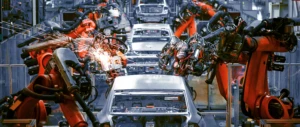
Through its four-decade partnership with leaders in the automotive industry, there’s one core learning that Microsoft continues to see: with challenge comes increased opportunity for innovation. For vehicle makers, this has meant turning the business model upside down, redefining an industry, and working at a blistering pace transforming from traditional manufacturers to mobility service providers.

In 2020 we saw retailers hard hit by the economic effects of the COVID-19 pandemic with dozens of retailers—Neiman Marcus, J.C. Penney, and Brooks Brothers to name a few— declaring bankruptcy. During the unprecedented chaos of lockdowns and social distancing, consumers accelerated their shift to online shopping. Retailers like Target and Best Buy saw online sales double while Amazon’s e–commerce sales grew 39 percent.

Banks have seen dramatic technology advancements across the business, particularly in payments.

Who doesn’t love the clean lines, the bold curves, the shiny finish of a new car? But just as exciting is what’s going on under the hood. The rise of EVs, cloud-connected technologies to help drivers avoid collisions, communications systems that become as integral to our lives as our phones—it’s all happening. Here. Now. Today.
In 1970 NASA faced a crisis: A ruptured propellant tank threatened the lives of three astronauts aboard Apollo 13. To save them, NASA engineers used a replica of Apollo 13 on earth, and used resources they knew were available to the astronauts to devise a safe method for getting them home.