

Empowering better care, everywhere, for everyone with Retail+Health
Over the past year, the pandemic fundamentally changed several industries and impacted the means of consumption and distribution for goods and services globally.

AI and digital twins are helping nuclear developers accelerate permitting, design, and operations. Discover how Microsoft and NVIDIA are enabling faster, safer delivery of carbon-free power with an AI-driven digital ecosystem on Azure.

Over the past year, the pandemic fundamentally changed several industries and impacted the means of consumption and distribution for goods and services globally.

Clouds are ever evolving. In technology terms, we generally think of it as a ‘hyperscale cloud’, built with near infinite scale and almost limitless possibilities. The pragmatic reality of adopting cloud, especially within government, is shades of grey in nature.
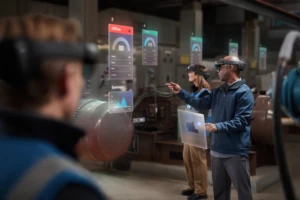
2020 has been a year that we will not soon forget, filled with unimaginable change caused by the pandemic. The manufacturing industry witnessed a sea change: a significant disruption in terms of business continuity, operational visibility, remote work, employee safety, and the list goes on.
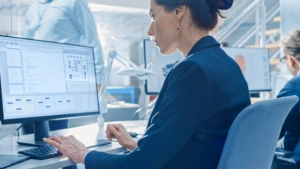
From the simple intimacy of a bedside conversation between a provider and a patient to the vast complexities of the global healthcare industry, data streams. A provider’s transcribed notes, statistics from clinical trials, genomics data sets, and imaging reports that shines light on the invisible, all of it, and more, flood the system with information.

In the 1960s, military strategist John Boyd developed the concept of OODA – Observe, Orient, Decide, Act. This combat philosophy emphasized agility over brute force: If you see more, understand better, decide faster, and react more quickly than an adversary, you likely win.

As Microsoft’s fiscal year 2021 comes to an end, I wanted to take the opportunity to thank our customers, our partners, and the media & entertainment and telecommunications communities at large for what has been an amazing journey over the last 12 months.

As governments worldwide consider how best to safely welcome a majority of their employees back to the workplace, a fair question is how much that in-person interaction adds to the digital collaboration that has taken place over the past year.

Mobility and transit are not only changing how people move around, they are key components of a changing urban landscape. Development of automated vehicles continued over the past year; electric vehicles are helping to tackle climate change; and a wealth of public and private mobility developments in cities have given residents more travel options than ever.

Every single day for me is a partner day. While most Microsoft employees wake up eager to serve our customers, myself and Microsoft partner managers aim to drive success with partners that lead to their growth and of course, our customers’ growth.

It is hard to believe summer is already here and I’m preparing for my BIG Ideas session at the upcoming virtual NRF Retail Converge event. Honestly, I can’t wait to talk more about ‘retail’s new clock speed’ and how we’re helping retailers unlock a new wave of cloud innovation.

Over a year into the pandemic one thing is certain, as Satya Nadella said in our third-quarter earnings call, “Digital adoption curves aren’t slowing down. They’re accelerating, and it’s just the beginning.

Over the next five years, more than 149 million tech jobs are expected to emerge in areas such as software development, cybersecurity, artificial intelligence (AI), and machine learning. Because of this, supporting global economic development lies in empowering workers with the skills they need to be successful and thrive in this digital economy.