Microsoft AI
Published
3 min read

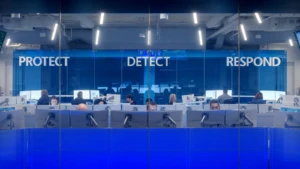
Helping state and local government agencies address cyber security 

Cyber-attacks against state and local governments are increasing and accelerating – even before COVID, two-thirds of attacks targeted state and local organizations. From January to May of 2020, there was a 350% increase in phishing attempts, with attackers taking advantage of the fear and uncertainty driven by COVID.

Published
3 min read

Digital transformation can improve clinical and financial outcomes 

The healthcare industry is in critical need of digital transformation as providers struggle with administrative burdens, fragmented care delivery, siloed data, and burnout. To effectively tackle these challenges, providers in value-based contracts need to quickly adapt to the digital transformation so they can improve care delivery and increase financial stability in the changing healthcare landscape.

Published
5 min read

The key to digital transformation in banking 

Banking organizations worldwide are rapidly scaling transformation efforts to help their organizations compete more effectively in an increasingly digital world. While the largest organizations have invested heavily in changing business processes, products, and the use of technologies for years, smaller organizations are playing catch-up, rushing to serve the digital needs of consumers unable or less likely to access branches during the pandemic.

Published
4 min read

Mapping the Cybersecurity Executive Order Milestones 

The recent Cybersecurity Executive Order lists July 11 as the first major deadline for all Federal civilian agencies to provide updated plans for adopting cloud technology and implementing a Zero Trust Architecture. To help agencies meet this immediate need and to accelerate their long-term journey towards secure cloud and Zero Trust, Microsoft has recently published our Zero Trust rapid modernization plan and Zero Trust Scenario Architectures. Based on insights from our own journey towards Zero Trust and decades of experience helping federal agencies, these resources present concrete next steps to help agencies meet aggressive EO timelines and improve their baseline cybersecurity posture so, together, we can answer the nation’s call to increased cyber resilience.

Published
4 min read

The Cybersecurity Executive Order: What’s Next for Federal Agencies? 

U.S. economic growth and prosperity hinges on our country’s ability to secure our most critical assets and invest with confidence in innovative technology that the American people can rely on. The Biden Administration’s Cybersecurity Executive Order (EO) emphasizes cybersecurity as a national priority, and represents a bold step in outlining concrete actions to strengthen security and address ever-evolving and increasingly sophisticated threats across federal agencies and the entire digital ecosystem.

Published
3 min read

The golden age of health informatics 

While the field of healthcare informatics is certainly not new, the opportunity to derive novel breakthrough insights from digitized health data is. Informaticists have produced meaningful impact for decades, especially in the clinical decision support domain, where analytics have substantially shaped care pathways to deliver better patient outcomes. We’ve seen steady progress in accessing and securely sharing health data to reduce readmission rates, prevent hospital-acquired infections, avoid emergency room overcrowding and more. The result: an enhanced standard of care.