Skip to main content Why Microsoft Security AI-powered cybersecurity Cloud security Data security & governance Identity & network access Privacy & risk management Security for AI Unified SecOps Zero Trust Microsoft Defender Microsoft Entra Microsoft Intune Microsoft Priva Microsoft Purview Microsoft Sentinel Microsoft Security Copilot Microsoft Entra ID (Azure Active Directory) Microsoft Entra Agent ID Microsoft Entra External ID Microsoft Entra ID Governance Microsoft Entra ID Protection Microsoft Entra Internet Access Microsoft Entra Private Access Microsoft Entra Permissions Management Microsoft Entra Verified ID Microsoft Entra Workload ID Microsoft Entra Domain Services Azure Key Vault Microsoft Sentinel Microsoft Defender for Cloud Microsoft Defender XDR Microsoft Defender for Endpoint Microsoft Defender for Office 365 Microsoft Defender for Identity Microsoft Defender for Cloud Apps Microsoft Security Exposure Management Microsoft Defender Vulnerability Management Microsoft Defender Threat Intelligence Microsoft Defender Suite for Business Premium Microsoft Defender for Cloud Microsoft Defender Cloud Security Posture Mgmt Microsoft Defender External Attack Surface Management Azure Firewall Azure Web App Firewall Azure DDoS Protection GitHub Advanced Security Microsoft Defender for Endpoint Microsoft Defender XDR Microsoft Defender for Business Microsoft Intune core capabilities Microsoft Defender for IoT Microsoft Defender Vulnerability Management Microsoft Intune Advanced Analytics Microsoft Intune Endpoint Privilege Management Microsoft Intune Enterprise Application Management Microsoft Intune Remote Help Microsoft Cloud PKI Microsoft Purview Communication Compliance Microsoft Purview Compliance Manager Microsoft Purview Data Lifecycle Management Microsoft Purview eDiscovery Microsoft Purview Audit Microsoft Priva Risk Management Microsoft Priva Subject Rights Requests Microsoft Purview Data Governance Microsoft Purview Suite for Business Premium Microsoft Purview data security capabilities Pricing Services Partners Cybersecurity awareness Customer stories Security 101 Product trials How we protect Microsoft Industry recognition Microsoft Security Insider Microsoft Digital Defense Report Security Response Center Microsoft Security Blog Microsoft Security Events Microsoft Tech Community Documentation Technical Content Library Training & certifications Compliance Program for Microsoft Cloud Microsoft Trust Center Security Engineering Portal Service Trust Portal Microsoft Secure Future Initiative Business Solutions Hub Contact Sales Start free trial Microsoft Security Azure Dynamics 365 Microsoft 365 Microsoft Teams Windows 365 Microsoft AI Azure Space Mixed reality Microsoft HoloLens Microsoft Viva Quantum computing Sustainability Education Automotive Financial services Government Healthcare Manufacturing Retail Find a partner Become a partner Partner Network Microsoft Marketplace Marketplace Rewards Software development companies Blog Microsoft Advertising Developer Center Documentation Events Licensing Microsoft Learn Microsoft Research View Sitemap
Black female developer wearing headphones; coding at her PC workspace in an enterprise office, using Visual Studio on a multi-monitor set up.
  • News
  • 2 min read

New cloud-native breadth threat protection capabilities in Azure Defender


As the world adapts to working remotely, the threat landscape is constantly evolving, and security teams struggle to protect workloads with multiple solutions that are often not well integrated nor comprehensive enough. This results in serious threats avoiding detection, as well as security teams suffering from alert fatigue.

Azure Defender helps security professionals with an integrated experience to meet your cloud workload protection needs spanning virtual machines, SQL, storage, containers, IoT, Azure network layer, Azure Key Vault, and more.

Today we are excited to announce we are adding two new protections with the preview of Azure Defender for Resource Manager and Azure Defender for DNS, cloud-native breadth threat protection solutions. These new protections continue to improve your resiliency against attacks from bad actors and increase the number of Azure resources protected by Azure Defender significantly.

Azure Defender for Resource Manager

Azure Resource Manager is the deployment and management service for Azure. It enables the creation and updating of all resources in your Azure account, with features, like access control, locks, and tags.

The cloud management layer is a crucial service-connected to all your cloud resources. Because of this, it is also a potential target for attackers. Consequently, we recommend security operations teams monitor the Resource Manager layer closely.

Azure Defender for Resource Manager will automatically monitor all resource management operations performed in your organization whether they are performed through the Azure portal, Azure REST APIs, Azure CLI, or other Azure programmatic clients. Defender runs advanced security analytics to detect threats and alert you when suspicious activity occurs.
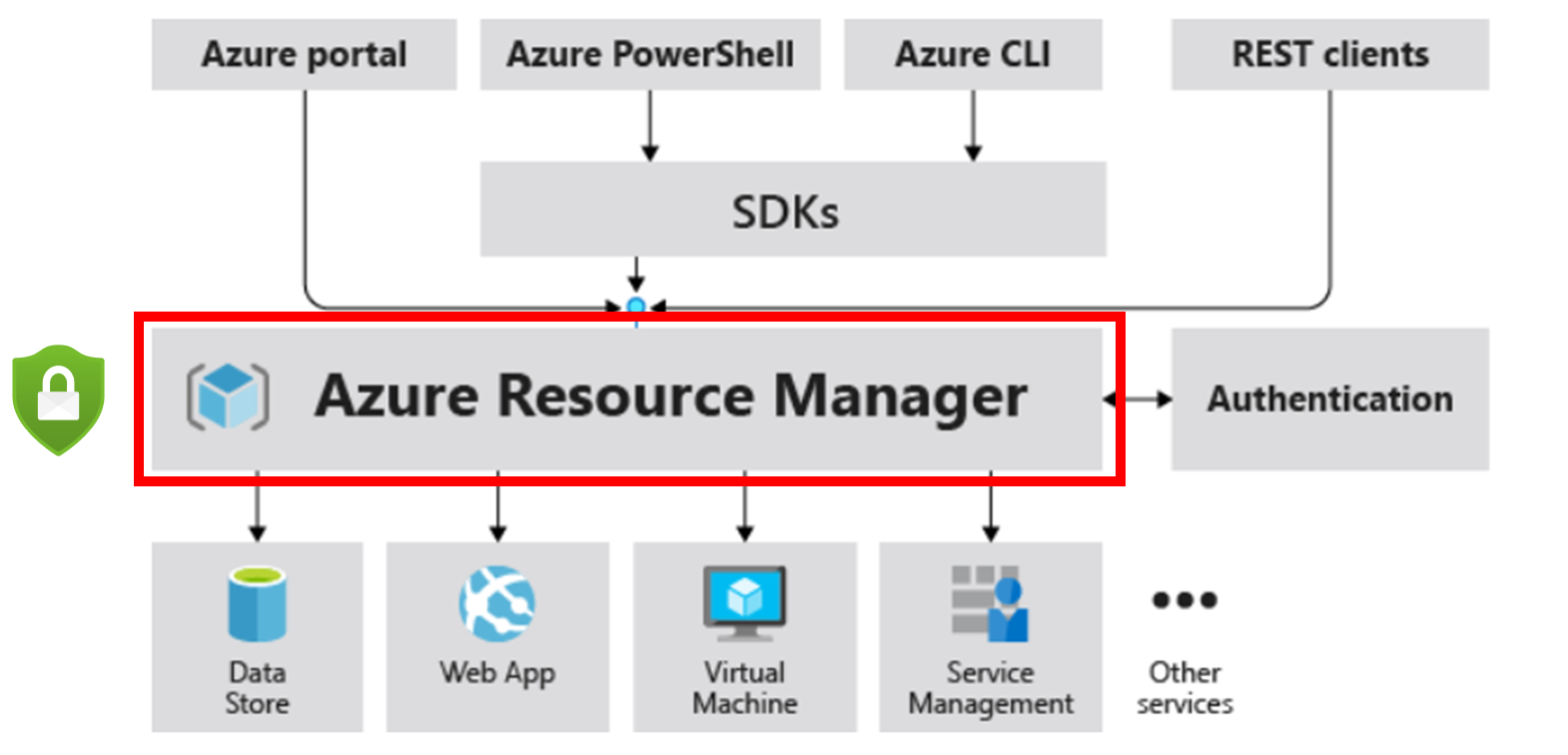
Azure Defender for Resource Manager monitors resource management operations to protect your Azure environment.

Figure 1: Azure Defender for Resource Manager monitors resource management operations to protect your Azure environment.

Azure Defender for Resource Manager protects against issues including:

  • Suspicious resource management operations, such as operations from suspicious IP addresses, disabling antimalware and suspicious scripts running in virtual machine extensions.
  • Use of exploitation toolkits like Microburst or PowerZure.
  • Lateral movement from the Azure management layer to the Azure resources data plane.

Learn more about Azure Defender for Resource Manager.

Azure Defender for DNS

Azure Defender for DNS provides an additional layer of protection for your cloud resources by continuously monitoring all DNS queries from your Azure resources and runs advanced security analytics to alert you when suspicious activity is detected.

Azure Defender for DNS protects against issues including:

  • Data exfiltration from your Azure resources using DNS tunneling.
  • Malware communicating with command and control server.
  • Communication with malicious domains as phishing and crypto mining.
  • DNS attacks—communication with malicious DNS resolvers.

Learn more about Azure Defender for DNS.

Get started for free today

Protect your entire Azure environment with a few clicks and enable Azure Defender for Resource Manager and Azure Defender for DNS. Both offerings are free during the preview period. Turn Azure Defender on now.

To learn more about Microsoft Security solutions and our Integrated Threat protection solution visit our website. Bookmark the Security blog to keep up with our expert coverage on security matters. Also, follow us at @MSFTSecurity for the latest news and updates on cybersecurity.

Related posts