
Threat intelligence
The Microsoft Threat Intelligence community is made up of world-class experts, security researchers, analysts, and threat hunters who analyze 100 trillion signals daily to discover threats and deliver timely and timely, relevant insight to protect customers. See our latest findings, insights, and guidance.
Refine results
Topic
Products and services
Publish date
-
BISMUTH, which has been running increasingly complex cyberespionage attacks as early as 2012, deployed Monero coin miners in campaigns from July to August 2020. -

EDR in block mode stops IcedID cold
Endpoint detection and response (EDR) in block mode in Microsoft Defender for Endpoint turns EDR detections into real-time blocking of threats. -
Widespread malware campaign seeks to silently inject ads into search results, affects multiple browsers
A persistent malware campaign has been actively distributing Adrozek, an evolved browser modifier malware at scale since at least May 2020. -
Ensuring customers are protected from Solorigate
UPDATE: Microsoft continues to work with partners and customers to expand our knowledge of the threat actor behind the nation-state cyberattacks that compromised the supply chain of SolarWinds and impacted multiple other organizations. -
Collaborative innovation on display in Microsoft’s insider risk management strategy
Partnering with organizations like Carnegie Mellon University allows us to bring their rich research and insights to our products and services, so customers can fully benefit from our breadth of signals. -
Analyzing Solorigate, the compromised DLL file that started a sophisticated cyberattack, and how Microsoft Defender helps protect customers
We, along with the security industry and our partners, continue to investigate the extent of the Solorigate attack. -
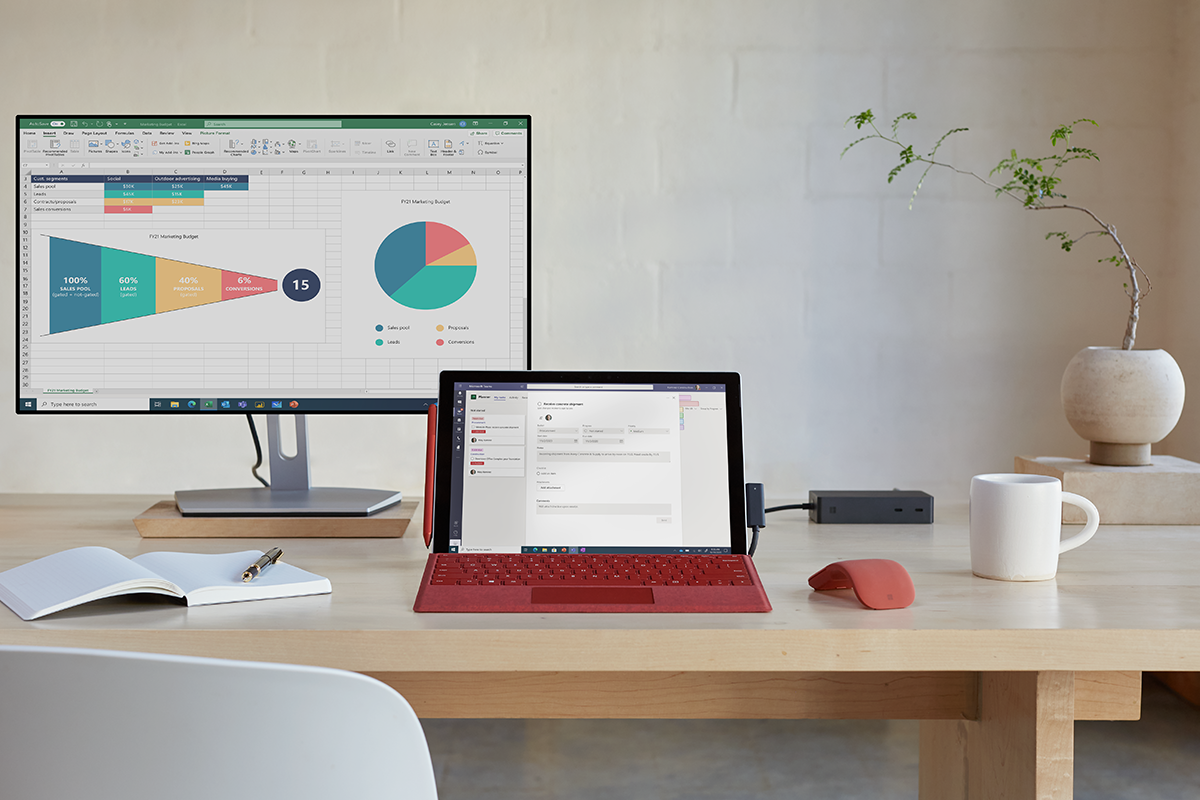
New Surface PCs enable virtualization-based security (VBS) by default to empower customers to do more, securely
The new Surface Pro 7+ for Business will ship with virtualization-based security (VBS) and Hypervisor-protected code integrity (HVCI, also commonly referred to as memory integrity) enabled out of the box to give customers even stronger security that is built-in and turned on by default. -
Deep dive into the Solorigate second-stage activation: From SUNBURST to TEARDROP and Raindrop
Our continued investigation into the Solorigate attack has uncovered new details about the handover from the Solorigate DLL backdoor (SUNBURST) to the Cobalt Strike loader (TEARDROP, Raindrop, and others). -
ZINC attacks against security researchers
In recent months, Microsoft has detected cyberattacks targeting security researchers by an actor we track as ZINC. -
What tracking an attacker email infrastructure tells us about persistent cybercriminal operations
Sweeping research into massive attacker infrastructures, as well as our real-time monitoring of malware campaigns and attacker activity, directly inform Microsoft security solutions, allowing us to build or improve protections that block malware campaigns and other email threats, both current and future, as well as provide enterprises with the tools for investigating and responding to email campaigns in real-time. -
Web shell attacks continue to rise
A year ago, we reported the steady increase in the use of web shells in attacks worldwide. -
Microsoft open sources CodeQL queries used to hunt for Solorigate activity
We are sharing the CodeQL queries that we used to analyze our source code at scale and rule out the presence of the code-level indicators of compromise (IoCs) and coding patterns associated with Solorigate so that other organizations may perform a similar analysis.