
By Suzanne Ross, Writer, Microsoft Research
Isaac Asimov, the famous science fiction writer, had a vision of a world called Gaia. Gaia was a world that was aware of its inhabitants — it could heal them and react to them. It was a part of them.
We’d have to wait a million years or so for this type of biological utopia. However, we can create a physical world that is more aware and helpful – and we won’t have to wait too long. Embedded computer networks, formed from small, self-contained devices such as sensors and actuators – each programmed for a particular purpose and working in concert with other devices, can be used in a multitude of helpful services.
Spotlight: Microsoft research newsletter

Microsoft Research Newsletter
Feng Zhao, the research manager of the new Networked Embedded Computing group at Microsoft Research is excited about the possibilities that embedded networks offer.
“Security might be the most pressing demand for this type of technology, but we’re also thinking about this for transportation. If we have sensors small enough to be sprayed on roads, we could create a mesh network of these that can connect to people’s cars. Then the cars could sense where other vehicles are and be able to warn you if you get too close to another car, and warn cars downstream that the cars ahead are slowing.
“In health-care, people often need to be monitored. It’s expensive to have care-givers around the clock. We could use sensors to monitor them and then connect to a doctor if needed.”
Zhao and his team are just beginning to develop the tools to make the vision of invisible computing a reality. They started with a testbed project in the Microsoft Research parking garage.
To set the scene: Microsoft parking garages are complex labyrinths, some more so than others. The garage at Zhao’s building is one of the worst. You have to drive down dead-end parking rows just to find out there are no parking spaces available. Then you have to execute an impossibly tight 3-point turnaround, or for the fearless, back out, risking crunching a co-worker.
Zhao and his team set up sensors in the garage that would monitor the parking spaces. The idea was to alert drivers to parking space availability without forcing them to drive down the row.
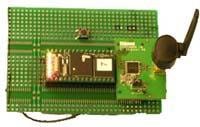 They used several different types of sensors that included on-board processing. The sensors could communicate wirelessly with a central PC. Break-beam sensors recorded vehicle or people movement, and a magnetometer recorded large metal objects passing by. A video camera captured images. Together they formed a sensor network, logging statistics on vehicle movement in the garage.
“What we are demonstrating is that a network of sensors like this, and this is just a small example, can be used to support a variety of interesting applications.
“The traffic engineering department might be very interested in knowing how the garage is being used. They may want to know when most of the cars come into the garage, whether the spaces are all taken, or which row got filled up first. It turns out that every single space in our parking garage costs over a thousand dollars to maintain every year. That’s a lot of money,” said Zhao.
The network of sensors could also be used for security. The building security team might be especially interested in what’s going on in the garage, especially in the off hours. A traditional camera system can record every single minute of the day, but that makes it hard to pinpoint unusual movement or activity. It’s a nightmare task to watch twenty-four hours of parking garage images if you’re trying to pinpoint the five minutes when something important happened. A sensor network, tuned to record only particular movements or unusual occurrences, can make detection easier and cheaper.
“The same network could be used to monitor the air quality in the garage. You could connect fans to the sensors and turn fans on and off depending on the air quality measured,” said Zhao.
The purpose of the project wasn’t necessarily focused on improving parking for workers. Zhao and his team wanted to begin developing a new platform and software that will support future embedded computer networks.
“The world is going to be covered with smart devices like wireless sensors. For them to be useful to people, we must bridge these two worlds — the existing PC platform and the emerging wireless platform. A really hard problem is how to develop tools to support the management and application development of a sensor network,” said Zhao.
One of the challenges in building the systems is the battery life of the sensor itself. “If you are not careful about how you manage the system, you can run out of power in your batteries in a day. If you’re careful about when to turn the sensor on and when to transmit, the sensor can last for months or even years. So how we manage the resources is really the hard software question that we’re addressing.”
Zhao also wants to think about how to build systems that can adapt to different user needs. “There are many different tasks that could be done by the same sensor networks. The network could be smart enough to reconfigure itself, manage itself and serve conflicting queries. The service-oriented software that we are developing will provide this kind of capability — to be able to dynamically reconfigure the hardware and the software,” said Zhao.
“We’re entering an age where devices such as wireless sensors are forming a new platform. Ten years ago these devices were shoebox sized. Now they’ve become smaller and cheaper.
“I think this is going to push desktop computing further into the physical world. We can search online for documents, but with these systems we’ll be able to search the physical world for information,” said Zhao.
 Hardware and devices
  Systems and networking