

Think Computer Science 2010
Location: West Road Concert Hall, Cambridge
 Getting from A to B: fast route-finding using slow computers
Simon Peyton-Jones, Microsoft Research
We all now take it for granted that online maps will rapidly display a fast route from A to B. But these maps are gigantic: a map of Europe has 20 million intersections and 40 million road segments. How can a computer find the shortest path in such a large map, without examining all those intersections and roads?
This is a classic graph problem, known as the Shortest Path problem, with solutions that date back to 1960. But in the last few years there has been significant progress (some of it at Microsoft Research) that dramatically speeds up the solution.
In this talk I’ll explain both the old solutions and the new cool ideas. I hope you’ll go away with a clear example of how some clever computer science can take a problem that previously required a big, fast computer, and make it fast enough to run on a slow, mobile device.
Simon is a Principal Researcher at Microsoft Research Cambridge. He spent 7 years as a lecturer at University College London, and 9 years as a professor at Glasgow University (where he is now a Visiting Professor), before moving to Microsoft Research in 1998.
His main research interest is in functional programming languages, their implementation, and their application. He was a key contributor to the design of the now-standard functional language Haskell, and is the lead designer of the widely-used Glasgow Haskell Compiler (GHC). Simon holds an MA from Trinity College Cambridge, is a Fellow of the British Computer Society and the Association for Computing Machinery and is a Chartered Engineer.
 Kinect for Xbox 360: How we made it work
Andrew Fitzgibbon, Microsoft Research
The Kinect sensor for the Xbox 360 is one of the most technologically advanced devices in existence today, and has the potential to introduce as great a change to entertainment as the invention of the original Atari game consoles. Its main ability—tracking the movements of the human body at 30 frames per second—was not possible, even in research labs, when project Natal (the original codename for Kinect) was started. The best tracking systems known back then were very slow, and very inaccurate. This lecture will be about the maths, engineering, and computer science that went into making project Natal a reality.
Andrew Fitzgibbon is a Principal Researcher at Microsoft Research, Cambridge.
His research interests are in the intersection of computer vision and computer graphics, with excursions into neuroscience.
He has twice received the IEEE’s Marr Prize, the highest in computer vision; and software based on his work won an Engineering Emmy Award in 2002 for significant contributions to the creation of complex visual effects.
 Human Memory in the Digital Age
Abigail Sellen, Microsoft Research
Can computers ever completely capture our past experiences? As more and more photos, videos, documents, texts, email and Facebook content is produced, how will we see ourselves and look back on our lives in the future? This talk will look at the fate of human memory in the Digital Age. It will look at new trends such as life-logging, in which wearable devices allow you to continuously record events in your everyday life. It will also discuss other issues such as: How do we manage these vast archives in the future? And, what happens to all of that data when someone dies? The focus is not just on the technology, but what all of this will mean into the future. It will also show how we need to design computer technology with people in mind, thinking about the social and even ethical issues this raises. Along the way, the talk will feature various new prototypes we have developed within the lab to help preserve, enrich, and be creative with our memories.
Abigail is a Principal Researcher at Microsoft Research Cambridge in Socio-Digital Systems, an interdisciplinary group with a focus on the human perspective in computing.
Abigail joined Microsoft in June 2004 from Hewlett Packard Labs, where her research ranged from appliance design to web use to mobile technologies. Prior to HP, she spent 7 years at Xerox’s research lab in Cambridge UK and was a Research Fellow at Darwin College, Cambridge.
Abigail has a doctorate in Cognitive Science from the University of California, San Diego. She also has an M.A.Sc. in Industrial Engineering from the University of Toronto, where she also did her undergraduate degree in Psychology.
 Changing the world, one mobile at a time
Professor Gary Marsden, University of Cape Town
Almost two thirds of the world’s population own a mobile phone. Many of these are first time users from the developing world, who have never owned any form of computing device before. This talk explores what people in Africa are doing with their handsets and how mobile phones are saving lives, educating people and changing how whole countries do business.
Gary is a Professor in the Computer Science Department at the University of Cape Town. His research interests are in mobile interaction design and ICT for development. He has co-authored a book, with Matt Jones titled “Mobile Interaction Design” which was published in 2006.
He is currently director of the UCT ICT4D research centre and the UCT-Hasso Plattner Research School. He won the 2007 ACM SIGCHI Social Responsiveness award for his research in using mobile technology in the developing world. Despite all of this, he still cannot use all the features on his mobile phone.
 Does your system behave as you expect? From bits and bytes to wet and sticky
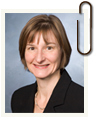
Professor Muffy Calder, University of Glasgow
Muffy is Professor of Formal Methods in the Department of Computing Science and Dean of Research for Science and Engineering at The University of Glasgow.
Her research is in modelling and reasoning about the behaviour of complex software and biochemical systems using computer science, mathematics and automated reasoning techniques. From her point of view there is little difference between telephone systems, wireless networks, cancer and cardiovascular disease: they all involve complex communication that sometimes goes wrong.
She has a PhD in Computational Science from the University of St. Andrews and a BSc in Computing Science from the University of Stirling. She has over 75 scientific publications and has been awarded 18 external research grants.