
Think Computer Science 2011
Location: Imperial War Museum Duxford
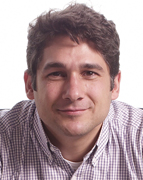 Thore Graepel
Microsoft Research Cambridge
Playing the Game of Research
Many of us love playing games. In our Research Games project, we develop games that help us investigate how people behave in strategic situations and how we can use peoples’ competitive drive, curiosity, and social impulses to accomplish useful tasks. The games we have people play range from a battle simulation in Project Waterloo to Prediction Square, an online challenge for people to predict their friends’ preferences. Members of the audience who have a Facebook account are invited to play our games and help us carry out our research.
 Jasmin Fisher
Microsoft Research Cambridge
Breathing Life into Computer Programs
The human body is the most amazing machine ever constructed. Understanding how it evolves from a single fertilised egg is one of the greatest mysteries in science. To shed light on this question, we build computer programs that mimic aspects of biological behaviours. By simulating and analysing these programs, we gain new insights into development, disease and life.
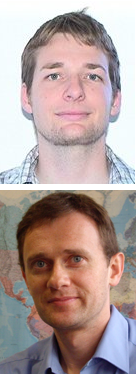
 Steven Johnston And AndrÁs SÓbester
University of Southampton
Atmospheric Science Through Robotic Aircraft (ASTRA)
Direct measurements of the physical properties of the upper atmosphere are essential for a better understanding of Earth’s climate, as well as for routine weather forecasting, the mapping of volcanic ash clouds, and so on. Flying scientific instruments to extreme altitudes (sometimes two or three times higher than the cruising altitudes of passenger airliners) has some interesting technical challenges. What is the most suitable air vehicle for such a mission? How do we track a small probe at such high altitudes and how do we recover it after the flight? How do we record the scientific data and how do we process it?
We will explore these questions in a talk that will include (weather permitting) a live demonstration of a high altitude balloon flight.
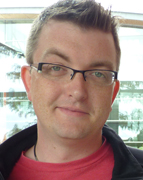 Robin Freeman
Microsoft Research Cambridge and University College London
Chasing Birds: tracking the behaviour of animals in the wild
From the amazing global migrations of seabirds to the local homing flights of pigeons, technological advances are helping change our understanding of the behaviour of animals in the wild. These technologies are helping us see not only where these journeys lead, but also how important they are for the animals themselves. In this talk, I’ll describe some of these astonishing journeys and some of the exciting technologies that are helping in our quest to understand these amazing animals.
 Samin Ishtiaq
Microsoft Research Cambridge
The Art of Computer Programming
Your shiny Xbox would have a dull hunk of metal inside it without the programs that give it life. Programs tell the metal what to do. Writing these programs ‘computer programming’ is one of the most creative and mathematical tasks that you can do. We’ll look at some classic programs like Shortest Path and Quicksort for inspiration. If you can write programs like these, programs that are correct, elegant and run fast, then respect, fame and fortune lie ahead of you!
 Tim Weyrich
University College London
What does reality look like? Connecting real and digital worlds…
When Buzz Lightyear’s helmet shines in the sun, or if Transformer Robots get scratches, it is maths and a number of computer algorithms that create each image pixel, computing how the different materials reflect light, thus conveying a life-like appearance of these materials. The field in computer science that models appearance digitally is called Computer Graphics. While the physics of light reflection are generally known, many everyday objects, such as skin, wood, cloth, or minerals, show a surprising complexity. Computer Graphics researchers are constantly striving to increase the degree of realism at which such materials can be modelled. Amongst other examples, this talk will look into the digital modelling of human skin, a particularly complex ‘material’ that is still very hard to get right. We will see, for instance, how researchers have built devices to measure reflectance properties of skin, allowing for more realistic digital faces. We will also learn how the process can be inverted: instead of creating a digital representation of real objects, we can create real objects whose reflectance is controlled digitally!