
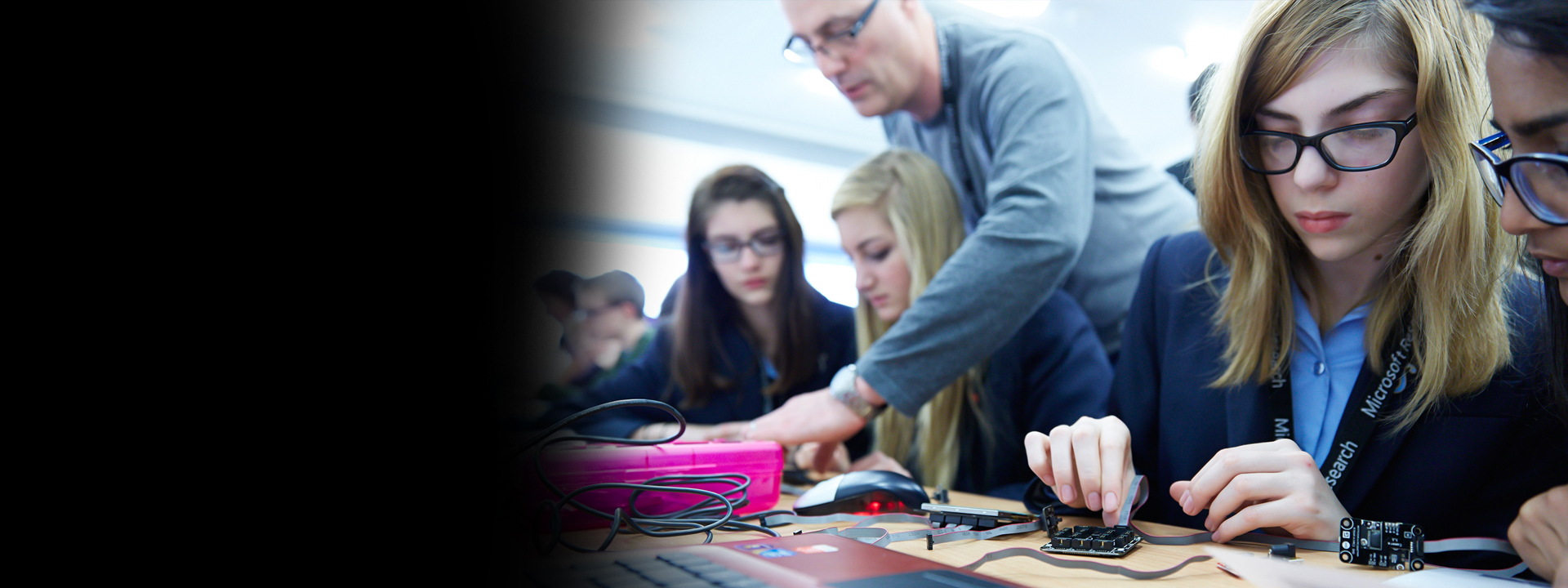
Think Computer Science 2013
Location: Imperial War Museum Duxford
 Computer Science to the Rescue!
Drew Purves
Senior Scientist, Microsoft Research
There are more people on Earth than ever, and they’re healthier, richer, and consuming more. This is good: more art, music, love and laughter. But can the Earth’s life support systems cope with this many people, doing and consuming so much? Climate change, human migrations, mass starvation, disease outbreaks – all possible threats to our civilisation. Who will we call upon to help overcome the greatest challenges that humanity has ever faced? Computer scientists to the rescue! We’ll need to put up new satellites, fly drones, sequence genomes, analyse huge amounts of data, simulate everything from plants to pandas – then somehow use all of that knowledge to develop new ways to farm, get energy, conserve water, and fight disease. Can it be done? We have to try. Right?
 Touchless Interaction in Surgery
Tom Carrell
Consultant Vascular Surgeon to Guy’s and St Thomas’ Hospitals
Surgery has changed dramatically over the last 10 years and the speed of change is increasing. Operations that used to be done through big cuts, with lots of blood loss, can now be done through tiny incisions using video or X-ray guidance.
Recently, we were faced with the problem that often we couldn’t clearly see where we were during X-ray guided surgery. The consequences of getting it wrong could be fatal. So, working with a team of imaging and computer scientists, we developed a new 3D roadmap system (a bit like satnav inside the body) and a new way for surgeons to interact with it during surgery. The key to solving the problem lay in gaming technology…

 Make Digital Physical!
Jon Rogers and Michael Shorter
Product Design Research Studio, University of Dundee
Ever wondered if you could wear jewellery that connected to far off stars and planets that might have life on them? What if a piece of paper could connect to the web and could read you a story? What if absolutely everything you had in your world could talk to everything else. What if the Internet was everywhere and in everything? What would you do?
Mike and Jon from the University of Dundee would like to talk to you about this future. They would love to show you some of the ideas that illustrate a future in a completely different direction to screens, phones, tablets, laptops and televisions. The future is not flat. The future is physical. And it’s yours.
 Building Triple-A Computer Games: The Science Behind Digital Play
Nick Burton
New Technology Lead Engineer, Rare Ltd
Today’s biggest computer games are huge engineering efforts that take a team of hundreds of people two or more years to complete. Why is this? What work is involved? What skills are required? How complex are the computational needs of a game? Here we look behind the scenes of Xbox One game development to answer these questions. We look at some of the technical and logistical challenges involved in making a game ready for public release as well as delving deeper into some of the R&D work done at the cutting edge of digital entertainment.