Breast cancer detection, language learning, sustainability: Can AI help humanity?
While some believe AI could steal jobs or even destroy humanity, others think the technology could improve quality of life for people across the planet.
Below please find an index of news and awards that recognize Microsoft researchers’ contribution to scientific research and commitment to advancing computer science.
While some believe AI could steal jobs or even destroy humanity, others think the technology could improve quality of life for people across the planet.
AI is emerging as a powerful tool to aid in addressing some of the world’s most complex challenges. Our new specialization, AI for Good, aims to expand the community of people who are equipped to…
Artificial intelligence (AI) is revolutionizing the world, driving digital innovation, promoting experimentation, boosting efficiency, and accelerating progress across numerous industries. Open data is a critical component of this revolution, providing access to vast amounts of…
CNME Editor Mark Forker was onsite at the Microsoft Innovation Campus in Redmond, Seattle, for a panel discussion that examined the impact Microsoft’s new AI integrations are going to have on reshaping our society. The…
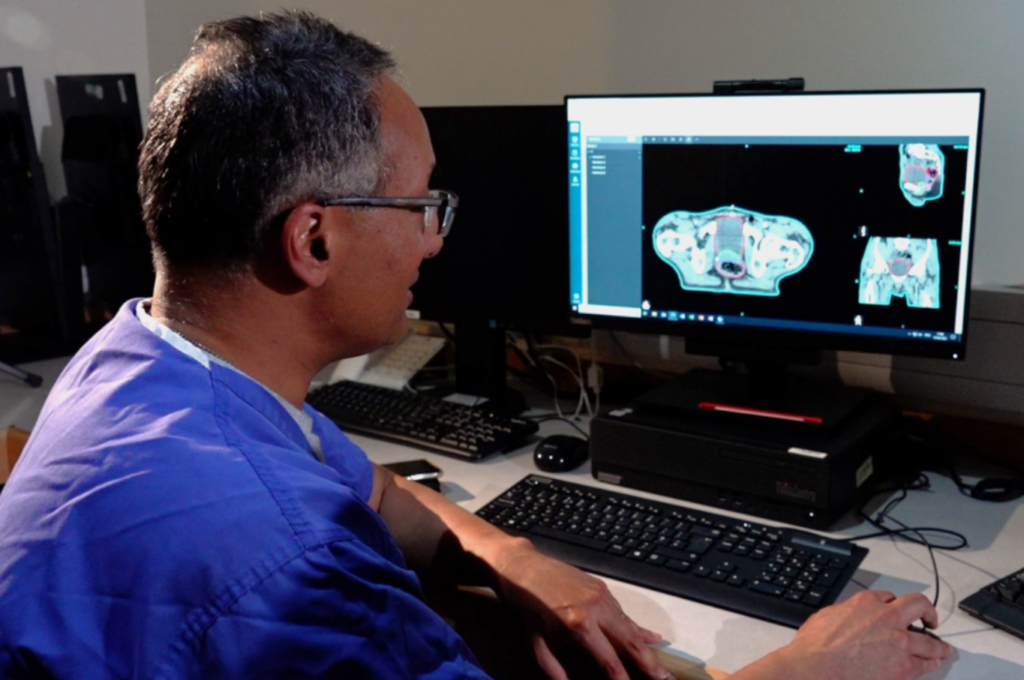
The National Health Service at Addenbrooke’s Hospital in Cambridge is now able to plan radiotherapy treatments faster than in the past, thanks to AI advances that are cutting wait times. As the NHS approaches its…
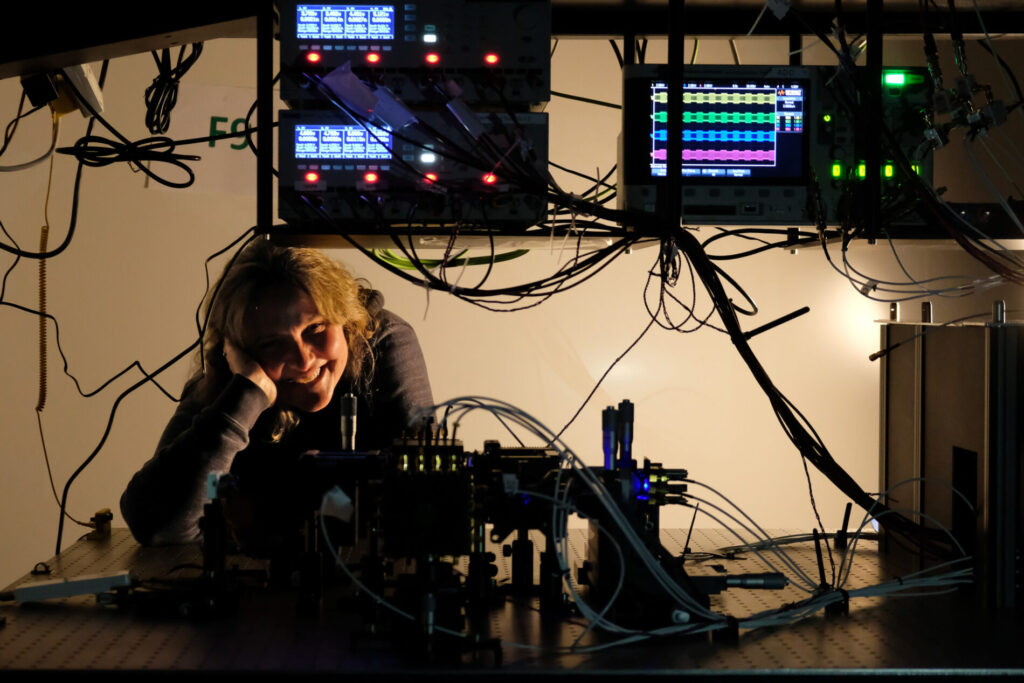
Microsoft has enlisted Barclays to help it test the world’s first analog optical computer that uses photons and electrons to process continuous value data.
There’s an old saying: When the only tool you have is a hammer, every problem looks like a nail. Sometimes referred to as “the law of the instrument,” that hammer-and-nail idea is a common pitfall…
A new type of artificial-intelligence technology that cuts the time cancer patients must wait before starting radiotherapy is to be offered at cost price to all NHS trusts in England. It helps doctors calculate where…
This American Life’s David Kestenbaum (NPR) interviewed Peter Lee, Sébastien Bubeck, Ece Kamar, and Ronen Eldan about their experiments with GPT-4 and the emerging capabilities of large language models, using examples from the “Sparks” paper.