


Stavros Volos
Principal Research Manager
About
Stavros Volos is a researcher at Azure Research, previously with Microsoft Research, where he develops approaches for securing cloud systems. He has played a pioneering role in establishing the architectural foundations for confidential accelerators through the Graviton project, the first system to demonstrate trusted execution for GPUs. This work established a blueprint for secure accelerator design and has since informed commercial implementations, including NVIDIA’s confidential computing features.
Before joining Microsoft, he was a research assistant at École Polytechnique Fédérale de Lausanne (EPFL), where he conducted his doctoral research under the supervision of Babak Falsafi, focusing on processor and memory system architectures for data‑centric computing. He served as one of the primary architects of CloudSuite, the influential open‑source benchmark suite for scale‑out cloud services, and contributed to early microarchitectural insights that shaped Cavium’s first‑generation ThunderX server processors.
He earned his Ph.D. in Computer and Communication Sciences from EPFL in 2015 and obtained his Dipl.-Ing. in Electrical and Computer Engineering from National Technical University of Athens (NTUA) in 2009.
Research Highlights
Preventing side-channels in the cloud
This blog post describes our research on preventing microarchitectural side-channels arising from cross-core resource sharing.
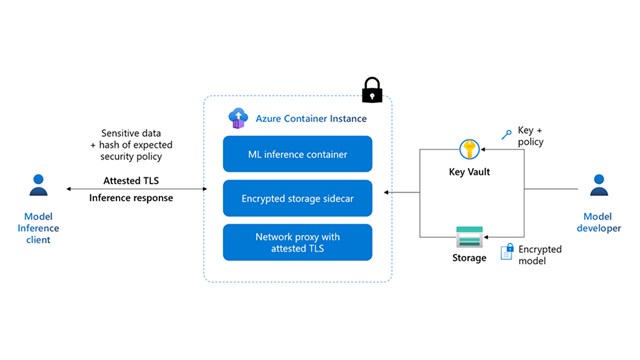
Confidential containers on Azure Container Instances
This blog post describes Confidential Azure Container Instances, which are powered by our work on Parma, a confidential container platform that provides lift-and-shift deployment of unmodified containers while providing strong security protection against a powerful attacker who controls the untrusted host and hypervisor.
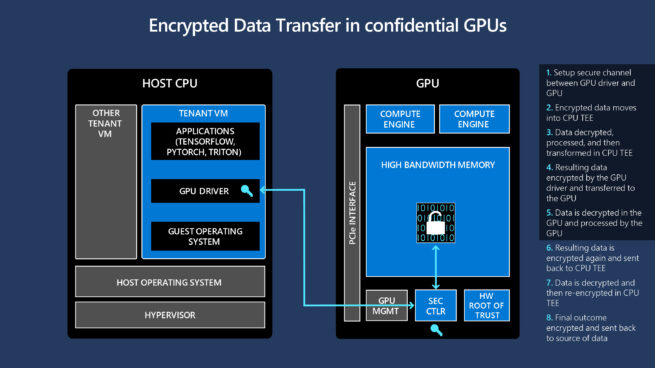
Powering the next generation of trustworthy AI in a confidential cloud using NVIDIA GPUs
This blog post describes our vision for Confidential AI based on confidential GPUs.
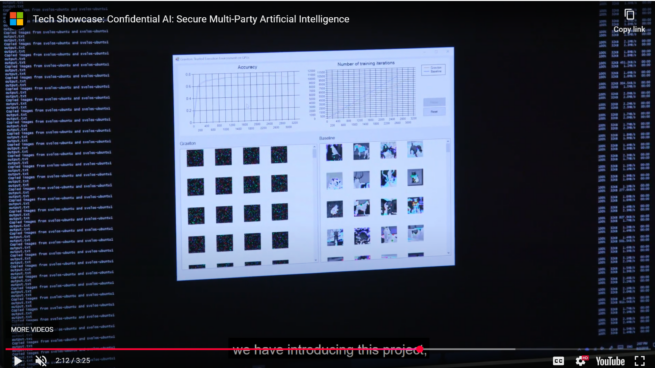
Trusted Execution Environments on GPUs
This video demonstrates our pioneering research on enabling confidential computing on AI accelerators.