
In 2025, AI moved beyond the lab and into daily life across the globe.
Innovation accelerated at an unprecedented rate. Abstract concepts quickly became practical tools that let scientists sculpt new materials, doctors decode complex proteins, workers amplify their skills and productivity, and communities acquire critical knowledge that can save or improve lives.
This year, Microsoft Research focused on turning ideas into action and achieving tangible benefits for humanity. Through that work, we’re accelerating materials discovery, replacing costly trial and error with precision and speed, and our efforts on protein structure prediction are helping researchers understand biological complexity in ways that pave the way for new medical treatments. And we’re building multilingual and culturally aware AI that serves real-world needs. In Kenya and India, we’re helping smallholder farmers access information and guidance that can improve crop yields and reduce food insecurity. In communities where low-resource languages dominate, we’re creating speech-first tools that deliver locally grounded, verifiable answers.
“The true value of AI…we haven’t yet imagined and it hasn’t been invented. And yet we are in a race to have the deployment infrastructure to deliver AI to the entire world.”
– Peter Lee, President, Microsoft Research
We’re also advancing creativity and multimodal intelligence. For example, our first generative AI model for gameplay ideation and our work on foundation models for multimodal AI agents demonstrate how AI can play a role in design and interaction across digital and physical realms—enabling technological leaders and creators to do more.
Through it all, responsible AI remains central to our mission. This year, we developed tools that strengthen trust by improving the fact-checking of LLM outputs and detecting hallucinations in complex workflows. In addition, our AI testing and evaluation work explored lessons from domains like cybersecurity and healthcare to help guide governance and ensure reliability.
Beyond AI, we pushed the boundaries of computing itself with the world’s first quantum processor powered by topological qubits and with a light-powered system that handles complex computational tasks with unprecedented speed and energy efficiency. We also explored metasurfaces for next-generation wireless sensing and communication and strengthened security by rewriting Microsoft’s cryptographic library and developing a conservative quantum-safe cryptographic algorithm designed for a post-quantum world.
None of this happens in isolation, of course. Like most technological and scientific breakthroughs, our progress continues to emerge through collaboration and collective insight. In 2025, we convened experts at our inaugural summit to explore how AI can accelerate clean-energy research. We also celebrated 20 years of Microsoft Research India and opened a new lab in Singapore, expanding our global network and reinforcing our commitment to partnerships and collaboration.
As this post clearly shows, Microsoft Research is harnessing the transformative power of AI not only to build the future but also to build it responsibly, collaboratively, and for the benefit of people everywhere.
Microsoft Research president Peter Lee at MIT Technology Review’s EmTech Conference: What’s Next?
The future of AI is full of untapped opportunities that lie just beyond the horizon.
Video credit: MIT Technology Review’s EmTech Conference
Photo credit: MIT Technology Review
Top videos of 2025
-
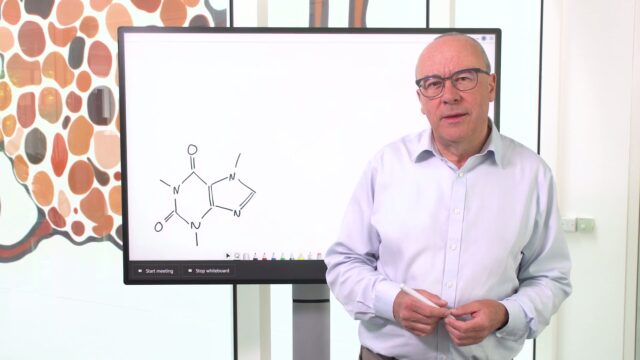
What is Density Functional Theory (DFT)?
Christopher Bishop, technical fellow and director of Microsoft Research AI for Science, explains how Microsoft researchers achieved a milestone in solving a grand challenge that has hampered scientists and slowed innovation for decades.
-
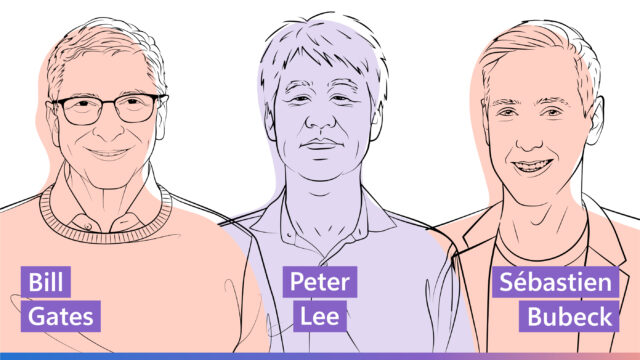
How AI is reshaping the future of healthcare and medical research
Bill Gates and Sébastien Bubeck discuss the state of generative AI in medicine, how access to “medical intelligence” might help empower people across healthcare, and how AI’s accelerating improvements are likely to affect both delivery and discovery.
-

Claimify: Extracting high-quality claims from language model outputs
A key step in fact-checking LLM outputs is decomposing them into simple, verifiable claims. Claimify is a new claim extraction method that outperforms prior solutions—ensuring claims are accurate, checkable, and preserve critical context.
Top social posts of 2025
-

MatterGen: Discovering new materials
A model that can discover new materials tailored to specific needs, advancing beyond trial-and-error experiments.
-
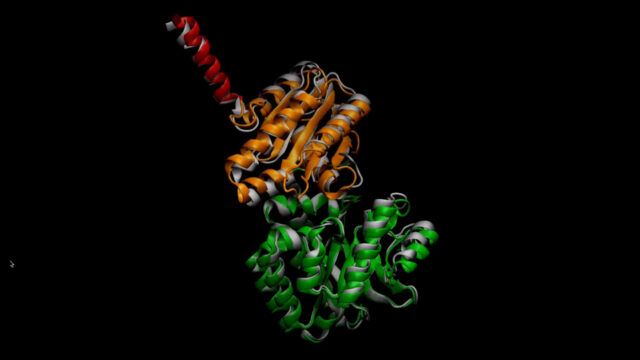
Meet BioEmu-1
A deep learning model that can generate thousands of protein structures per hour, unlocking new possibilities for protein scientists and drug discovery and research.
-

Opening of Microsoft Research Asia – Singapore
A major step in advancing AI, building industry partnerships, and nurturing talent across Southeast Asia.
Top stories of 2025
AI meets materials discovery: The vision behind MatterGen and MatterSim
MatterGen and MatterSim are cutting-edge tools reshaping how we design and innovate advanced materials. Explore the process from concept to creation behind these AI-powered technologies.
 News
Yasuyuki Matsushita named IEEE Fellow
News
Yasuyuki Matsushita named IEEE Fellow Microsoft Research congratulates Yasuyuki Matsushita on being named a 2025 IEEE Fellow for contributions to photometric 3D modeling and computational photography.
 BLOG
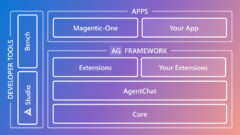
AutoGen v0.4: Reimagining the foundation of agentic AI for scale, extensibility, and robustness
BLOG
AutoGen v0.4: Reimagining the foundation of agentic AI for scale, extensibility, and robustness Extending their work on AutoGen, Microsoft researchers announce AutoGen v0.4. This milestone enhances the robustness and flexibility of the open-source framework, enabling developers to build multi-agent workflows that adapt to complex tasks and environments.
 NEWS
ACM Fellows 2025 announcement
NEWS
ACM Fellows 2025 announcement Microsoft Research celebrates new ACM Fellows recognized for outstanding contributions to computing. This honor reflects leadership in advancing AI, systems, and scientific innovation.
Introducing Muse: Our first generative AI model designed for gameplay ideation

Muse, the first World and Human Action Model (WHAM), can generate game visuals, controller actions, or both.
 Blog
ExACT: Improving AI agents' decision-making via test-time compute scaling
Blog
ExACT: Improving AI agents' decision-making via test-time compute scaling ExACT teaches AI agents to explore more effectively, gather and evaluate information, and then find the best decision-making strategies.
 ARTICLE
Microsoft Research India: Celebrating 20 years of innovation
ARTICLE
Microsoft Research India: Celebrating 20 years of innovation Since its opening in 2005, Microsoft Research India has achieved an extraordinary record of innovation—in areas ranging from health and education to agriculture and accessibility.
 PODCAST
Ideas: Quantum computing redefined with Chetan Nayak
PODCAST
Ideas: Quantum computing redefined with Chetan Nayak Microsoft is re-engineering the quantum computer with the world’s first topoconductor and first quantum processing unit (QPU) architecture with a topological core.
 BLOG
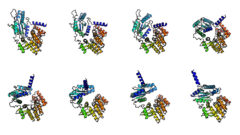
Exploring the structural changes driving protein function with BioEmu-1
BLOG
Exploring the structural changes driving protein function with BioEmu-1 Microsoft Research makes BioEmu-1 open source. The new deep learning model can generate thousands of protein structures per hour on a single GPU.
 BLOG
Magma: A foundation model for multimodal AI agents across digital and physical worlds
BLOG
Magma: A foundation model for multimodal AI agents across digital and physical worlds This new model takes a significant step toward AI agents that can serve as versatile, general-purpose assistants.
Semantic Telemetry: Understanding how users interact with AI systems

In the first of three blog posts, Microsoft researchers introduce a new data science approach to understanding human-AI interactions, which can be iterative and complex. The work is part of the Semantic Telemetry project.
 pODCAST
Ideas: Accelerating Foundation Models Research: AI for all
pODCAST
Ideas: Accelerating Foundation Models Research: AI for all Podcast guests discuss state-of-the-art foundation models as a source of creative inspiration and how the Accelerating Foundation Models Research initiative is partnering with Minority Serving Institutions.
 Blog
Advancing biomedical discovery: Overcoming data challenges in precision medicine
Blog
Advancing biomedical discovery: Overcoming data challenges in precision medicine A Microsoft Research study published in Nature Scientific Reports identifies pain points in the biomedical data life cycle and offers recommendations on secure data sharing, interoperability, and collaboration among researchers.
 Podcast
The reality of generative AI in the clinic
Podcast
The reality of generative AI in the clinic In this special Microsoft Research Podcast series, guests from across the healthcare ecosystem join Peter Lee, president of Microsoft Research, to discuss the current state and future of AI in medicine. This first episode examines how clinicians are using the technology.
The future of AI in knowledge work: Tools for Thought at CHI 2025

Can AI tools help us think better? At this year’s CHI conference on Human Factors in Computing Systems, Microsoft presented four papers and cohosted a workshop that dove into this intersection of AI and human cognition.
 Blog
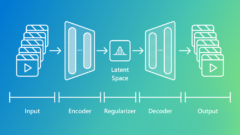
VidTok introduces compact, efficient tokenization to enhance AI video processing
Blog
VidTok introduces compact, efficient tokenization to enhance AI video processing A new approach makes visual data more compact and manageable, giving developers in visual world modeling a flexible and efficient new tool.
 Podcast
Real-world healthcare AI development and deployment—at scale
Podcast
Real-world healthcare AI development and deployment—at scale Host Peter Lee, Microsoft’s Dr. Matthew Lungren, and Epic’s Seth Hain discuss implementing AI in healthcare, from automating administrative tasks to integrating AI into electronic health records at global scale.
 Blog
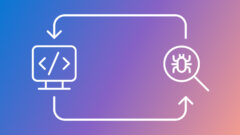
Debug-gym: An environment for AI coding tools to learn how to debug code like programmers
Blog
Debug-gym: An environment for AI coding tools to learn how to debug code like programmers Developers spend a lot of time debugging code instead of writing it. Debug-gym aims to maximize the potential time savings from AI tools by teaching them to debug code.
 News
Zinan Lin and collaborators take second place at AI Mathematical Olympiad
News
Zinan Lin and collaborators take second place at AI Mathematical Olympiad The competition is organized by leading mathematicians and computer scientists to encourage the development of AI models capable of mathematical reasoning and problem-solving.
Introducing Aurora: The first large-scale foundation model of the atmosphere

Work on Aurora, an AI model that redefines weather prediction with application to other environmental domains such as tropical cyclones, is published in Nature.
 Blog
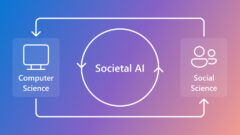
Societal AI: Building human-centered AI systems
Blog
Societal AI: Building human-centered AI systems A new position paper explores Societal AI, an interdisciplinary framework for guiding AI development that examines how AI intersects with social systems and public life.
 Blog
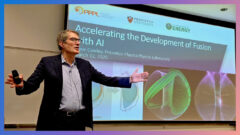
Microsoft Fusion Summit explores how AI can accelerate fusion research
Blog
Microsoft Fusion Summit explores how AI can accelerate fusion research The Fusion Summit brought together scientists and researchers to explore how AI can accelerate fusion energy research and help bring this energy source to the grid sooner.
 Blog
Magentic-UI, an experimental human-centered web agent
Blog
Magentic-UI, an experimental human-centered web agent This research prototype of a human-centered agent helps researchers study open questions on human-in-the-loop approaches and oversight mechanisms for AI agents.
 Blog
FrodoKEM: A conservative quantum-safe cryptographic algorithm
Blog
FrodoKEM: A conservative quantum-safe cryptographic algorithm This new key encapsulation mechanism is based on the Learning with Errors (LWE) problem, a cornerstone of lattice-based cryptography, and built on generic, unstructured lattices.
Breaking bonds, breaking ground: Advancing the accuracy of computational chemistry with deep learning
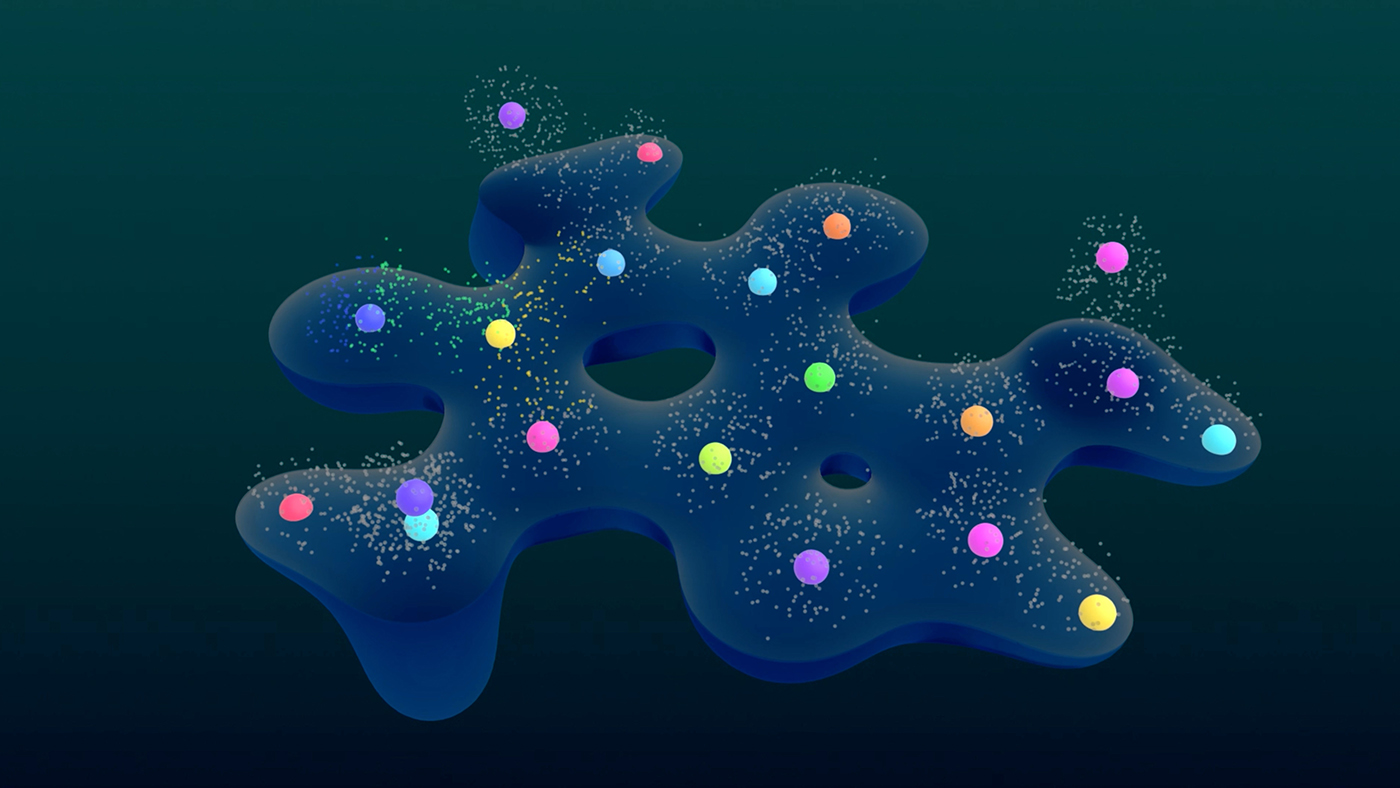
A new deep learning–based exchange-correlation functional, Skala, dramatically improves the accuracy of density functional theory (DFT) calculations, enabling more reliable computational chemistry and materials-design simulations.
 Story
How ASHABot empowers rural India’s frontline health workers
Story
How ASHABot empowers rural India’s frontline health workers ASHABot provides rural India’s frontline health workers with reliable, localized medical guidance, enabling them to better serve underserved communities more confidently and effectively.
 Podcast
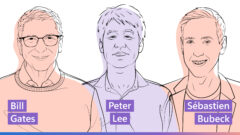
How AI is reshaping the future of healthcare and medical research
Podcast
How AI is reshaping the future of healthcare and medical research Bill Gates and Sébastien Bubeck discuss how advancing AI is already influencing clinical work, global health, and scientific discovery and what breakthroughs, risks, and shifts they expect to define the future of AI-enabled medicine.
 Blog
Learning from other domains to advance AI evaluation and testing
Blog
Learning from other domains to advance AI evaluation and testing Lessons from established sectors show that strengthening rigor, standardization, and interpretability are essential for building reliable AI evaluation frameworks.
 Blog
Rewriting SymCrypt in Rust to modernize Microsoft’s cryptographic library
Blog
Rewriting SymCrypt in Rust to modernize Microsoft’s cryptographic library A team at Microsoft Research is rewriting parts of the SymCrypt cryptographic library in Rust to improve memory safety, defend against side-channel attacks, and enable formal verification.
Science features BioEmu (opens in new tab)
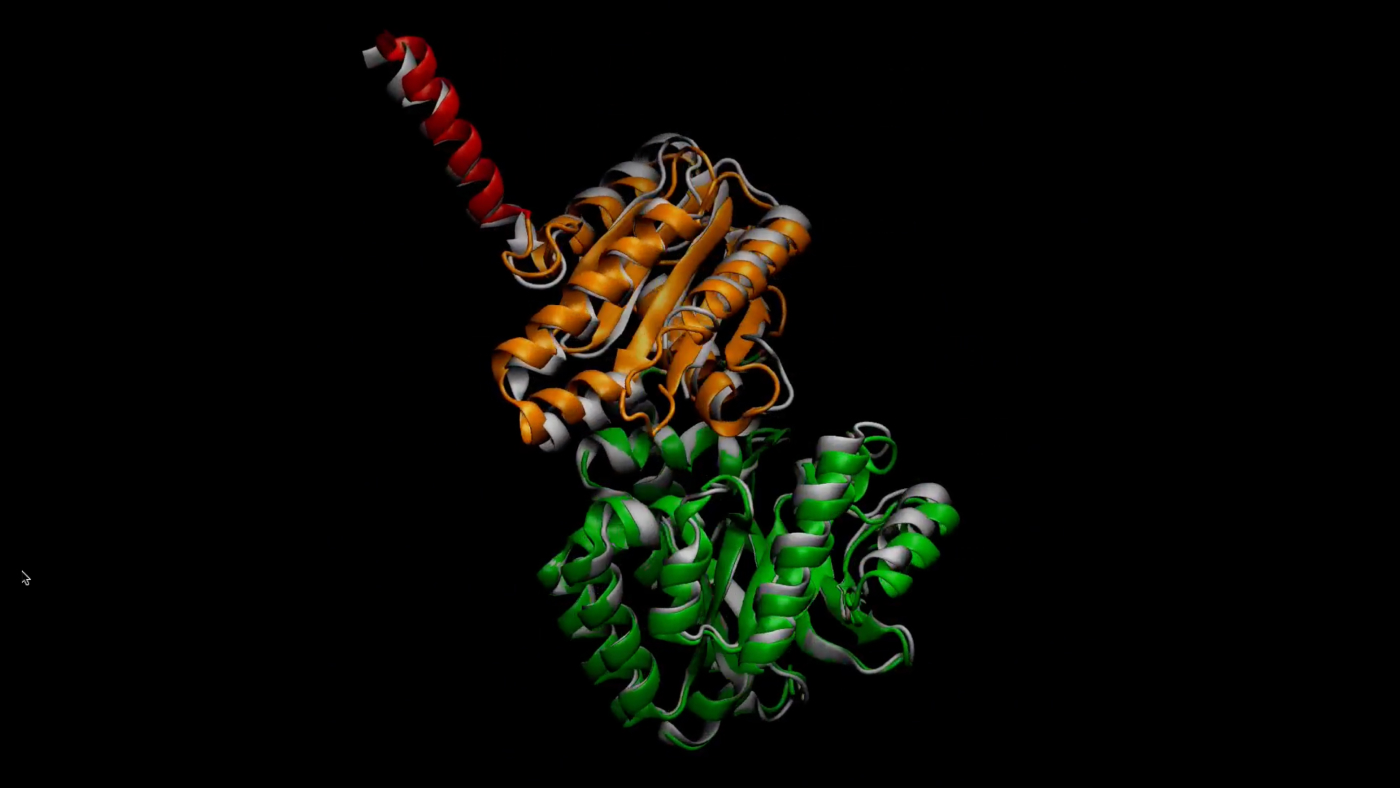
The journal Science publishes a paper on BioEmu, the deep learning model from Microsoft Research that can generate thousands of protein structures per hour, unlocking new possibilities for protein scientists and drug discovery and research.
 News
Microsoft researchers, collaborators receive OSDI Distinguished Artifact Award
News
Microsoft researchers, collaborators receive OSDI Distinguished Artifact Award The paper “PoWER Never Corrupts: Tool-Agnostic Verification of Crash Consistency and Corruption Detection” introduces two new techniques for verifying storage systems using only widely supported constructs, addressing a longstanding challenge in system design.
 Podcast
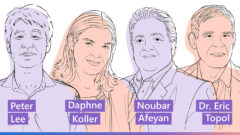
How AI will accelerate biomedical research and discovery
Podcast
How AI will accelerate biomedical research and discovery Daphne Koller, Noubar Afeyan, and Dr. Eric Topol—leaders in AI-driven medicine—examine how AI is accelerating drug discovery, transforming biotech research and development, and advancing disease prevention.
 Blog
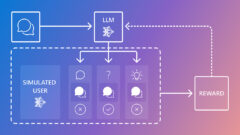
CollabLLM: Teaching LLMs to collaborate with users
Blog
CollabLLM: Teaching LLMs to collaborate with users Recipient of an ICML 2025 Outstanding Paper Award, CollabLLM improves how LLMs collaborate with users. Using reinforcement learning, it trains models to ask questions and adapt its tone to different situations.
 News
Microsoft Research Asia Launches Singapore Lab to Drive AI Innovation, Industrial Transformation, and Talent Development
News
Microsoft Research Asia Launches Singapore Lab to Drive AI Innovation, Industrial Transformation, and Talent Development The lab, Microsoft’s first in Southeast Asia, will drive innovation on intertwined goals: deploying industry-transforming AI, pursuing frontier breakthroughs in AI foundations, and advancing responsible, socially beneficial applications.
A research collaboration is developing a low-carbon cement alternative made from intact seaweed biomass. The work uses a machine learning–driven design process to rapidly test and refine blends and reduce development time from months to 28 days.
Dion: The distributed orthonormal update revolution is here

Dion, a new open-source optimizer for training AI models, enables anyone to train large models more efficiently at scale.
 Blog
Project Ire autonomously identifies malware at scale
Blog
Project Ire autonomously identifies malware at scale Project Ire is an autonomous AI agent that can analyze and classify software without assistance and even reverse engineer a software file with no clues about its origin or purpose—a big step forward in cybersecurity and malware detection.
 Blog
Self-adaptive reasoning for science
Blog
Self-adaptive reasoning for science Microsoft researchers demonstrate that an optimization-based, self-adaptive AI system developed without post-training reinforcement learning can rival post-trained models in domains where adaptability, explainability, and control matter most.
 Blog
MindJourney enables AI to explore simulated 3D worlds to improve spatial interpretation
Blog
MindJourney enables AI to explore simulated 3D worlds to improve spatial interpretation MindJourney helps AI agents explore 3D spaces they can’t directly detect by addressing a key limitation in vision-language models, which allow AI agents to interpret and describe visual scenes.
 Blog
Crescent library brings privacy to digital identity systems
Blog
Crescent library brings privacy to digital identity systems Crescent is a cryptographic library that helps people protect their personal privacy by preventing widely used identity formats from automatically linking their separate digital interactions and building a detailed user behavior profile.
RenderFormer: How neural networks are reshaping 3D rendering
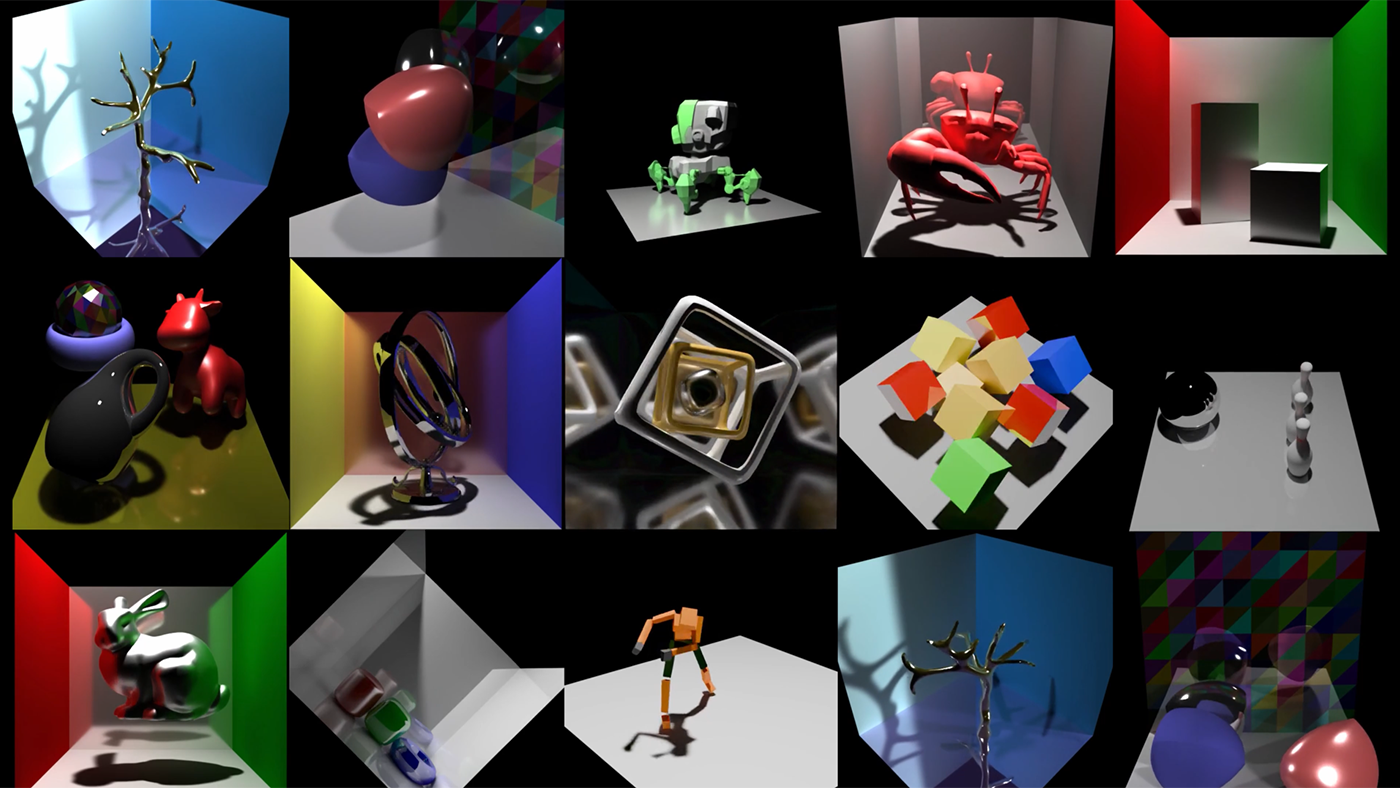
RenderFormer is a new neural architecture that uses machine learning rather than traditional physics-based techniques to support full-featured 3D rendering, a process widely used across gaming, film, virtual reality, and architectural visualization.
 Blog
Tool-space interference in the MCP era: Designing for agent compatibility at scale
Blog
Tool-space interference in the MCP era: Designing for agent compatibility at scale Model Context Protocol (MCP) and a growing society of tools promise to extend AI-agent capabilities through cross-provider horizontal integration. But the copresence of these cross-provider tools or agents could lead to failures. Microsoft Research offers steps to avoid that.
 Blog
Breaking the networking wall in AI infrastructure
Blog
Breaking the networking wall in AI infrastructure MOSAIC is a novel optical link technology that uses microLEDs and a wide-and-slow design to improve datacenter performance and GPU communication by simultaneously providing low power and cost, high reliability, and long reach.
 Blog
Using AI to assist in rare disease diagnosis
Blog
Using AI to assist in rare disease diagnosis Working with Drexel University and the Broad Institute, Microsoft Research developed strategies for using generative AI to help synthesize biomedical data, enabling AI-expert collaboration to increase the diagnoses of rare diseases.
 Article
Microsoft study shows AI assistants help with development for programmers who are blind or have low vision
Article
Microsoft study shows AI assistants help with development for programmers who are blind or have low vision Developers who are blind or have low vision are often limited to back-end programming. But with vibe coding, an AI-assisted software development technique that uses natural language, developers who use screen readers can now perform tasks like UI development.
The Analog Optical Computer: Using light to solve complex problems (opens in new tab)
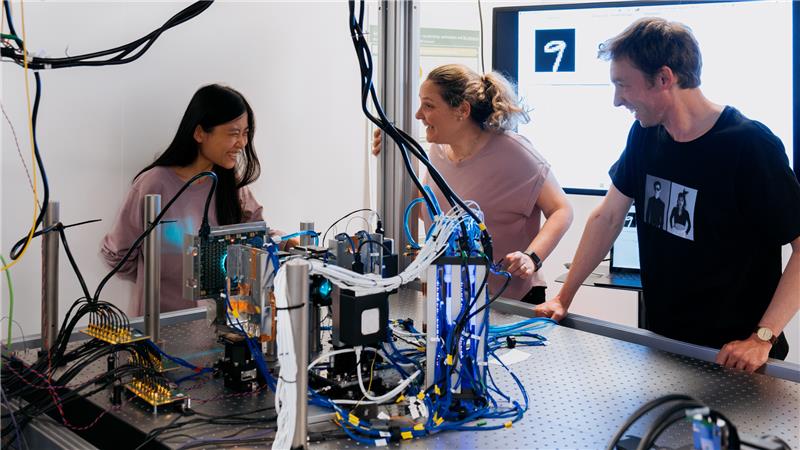
Microsoft Research Manager Francesca Parmigiani talks about the Analog Optical Computer her team developed and how they used light as a medium to create a durable, practical device that could be 100 times faster and 100 times more energy efficient than a binary digital computer in solving certain problems.
 Story
The Paraphrase Project: Designing defense for an era of synthetic biology
Story
The Paraphrase Project: Designing defense for an era of synthetic biology Concerned that open-source AI tools could be used to re-engineer toxins capable of evading existing biosecurity software, Microsoft Chief Scientific Officer Eric Horvitz initiated a project to show how AI could be used to strengthen biosecurity tools and prevent potentially deadly vulnerabilities.
 Blog
Tell me when: Building agents that can wait, monitor, and act
Blog
Tell me when: Building agents that can wait, monitor, and act SentinelStep, a new mechanism that enables AI agents to complete monitoring tasks over hours or days without getting sidetracked, is a first step toward practical, proactive, longer‑running agents.
 Video
The intersection of AI and scientific discovery
Video
The intersection of AI and scientific discovery In a wide-ranging interview with AI educator Harper Carroll, Bonnie Kruft, partner and deputy director of AI for Science at Microsoft Research, discusses how her team is using AI to address real-world problems from climate change to drug discovery.
Advancing AI to meet needs of the global majority

Project Gecko is designed to deliver vital expertise to the global majority, using local languages and culturally sensitive multimodal content, including text, voice, and video. It leverages MMCTAgent, which converts static multimodal tasks into dynamic workflows, analyzing complex queries in videos and image libraries with explainability and scalability.
 Blog
RedCodeAgent and BlueCodeAgent: Supporting more secure AI-generated code
Blog
RedCodeAgent and BlueCodeAgent: Supporting more secure AI-generated code RedCodeAgent is the first fully automated and adaptive agent for red-teaming LLM-based code agents to identify safety vulnerabilities. BlueCodeAgent is an end-to-end framework that strengthens code security by using automated red-teaming processes, data, and safety rules to guide LLM defenses.
 Blog
Magentic Marketplace: An open-source simulation environment for studying agentic markets
Blog
Magentic Marketplace: An open-source simulation environment for studying agentic markets Magentic Marketplace helps explore how AI agents impact the digital economy and how to guide them toward outcomes that serve the common good.
 Blog
When industry knowledge meets PIKE-RAG: The innovation behind Signify’s customer service boost
Blog
When industry knowledge meets PIKE-RAG: The innovation behind Signify’s customer service boost A collaboration between Microsoft Research and Signify—a leader in connected LED lighting products, systems, and services—improves the company’s enterprise knowledge systems, delivering faster, more reliable answers to customer questions.
 Video
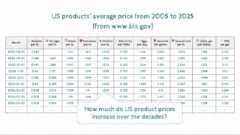
Data Formulator v0.5: Vibe with data, in control
Video
Data Formulator v0.5: Vibe with data, in control The newest version of Data Formulator takes data exploration to the next level with Agentic Mode. People can update charts, get recommendations, and create reports grounded in their explorations.
 News
Esha Choukse receives ACM SIGMICRO Early Career Award
News
Esha Choukse receives ACM SIGMICRO Early Career Award Microsoft Principal Researcher Esha Choukse is recognized for foundational contributions to hardware memory compression and sustainable and efficient datacenter systems.
 Blog
Fara-7B: An Efficient Agentic Model for Computer Use
Blog
Fara-7B: An Efficient Agentic Model for Computer Use This native agentic small language model from Microsoft Research makes it possible to run computer use models directly on devices at a fraction of the cost of larger competitors.
GigaTIME: Scaling tumor microenvironment modeling using virtual population generated by multimodal AI

A new multimodal AI model could accelerate discoveries and improve cancer treatment.
 Podcast
Ideas: Community building, machine learning, and the future of AI
Podcast
Ideas: Community building, machine learning, and the future of AI As the Women in Machine Learning Workshop (WiML) marks its 20th annual gathering, cofounders, friends, and collaborators Jenn Wortman Vaughan and Hanna Wallach reflect on WiML’s evolution, navigating the field of ML, and their work in responsible AI.
 Story
3D Telecommunications goes open source
Story
3D Telecommunications goes open source Microsoft Research releases its Holoportation™ 3D telecommunications technology under an open-source license to facilitate future development by external researchers and organizations.
 Article
10 scientific breakthroughs from Microsoft researchers
Article
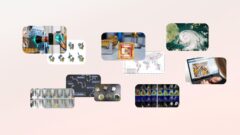
10 scientific breakthroughs from Microsoft researchers From designing new materials to mapping flood risks through clouds, Microsoft researchers are using AI to solve problems more quickly and effectively than ever before.
 Tool
TRELLIS.2: Native and compact structured latents for 3D generation
Tool
TRELLIS.2: Native and compact structured latents for 3D generation This cutting-edge generative model creates high-fidelity 3D assets from a single image with full PBR materials in seconds. It is powered by a highly-capable O-Voxel representation for complex geometry and rich textures.
Thank you for reading, watching, and listening
For nearly 35 years, Microsoft Research has helped shape the technology people use every day. By combining bold research with responsible deployment, we’re working to ensure AI serves humanity’s most pressing needs. To stay informed of the latest innovations, subscribe to our Research Focus (opens in new tab) newsletter and the Microsoft Research Podcast on Spotify (opens in new tab) and Apple Podcasts (opens in new tab). You may also follow us on Bluesky (opens in new tab), Facebook (opens in new tab), Instagram (opens in new tab), LinkedIn (opens in new tab), TikTok (opens in new tab), X (opens in new tab), and YouTube (opens in new tab).
Writers, Editors, and Producers: Kristina Dodge, Kate Forster, Alyssa Hughes, Gretchen Huizinga, Lindsay Kalter, Brenda Potts, Chris Stetkiewicz, Larry West
Media Producers: Jeremy Crawford, Chris Duryee, Ben Ericson, Jake Knapp, Jeremy Mashburn, Matthew McGinley, Wil Morrill, Joe Plummer, Craig Tuschhoff
Managing Editor, Research Publishing: Amber Tingle
Project Manager: Amanda Melfi
Social Media Manager: Ralph Chiarella
Microsoft Research Global Design Lead: Neeltje Berger
Graphic Designers: David Celis Garcia, Tetiana Buhinskaya
Director, Microsoft Research Creative Studio: Matt Corwine