
How a small, domain-specific model moved from research into real operations—and why that matters
For years, the production schedule at many factories has lived in an uneasy truce between critical planning and improvisation. An enterprise system spits out a plan, someone exports it to a spreadsheet, and then the inevitable hiccups occur: machines go down, raw materials arrive late, rush orders appear, a line runs slower than expected, and the whole thing starts to wobble.
The official job title may be scheduler, but on the plant floor, people tend to joke the job is actually “rescheduler.”
That is the chaotic, costly reality behind an interesting challenge in artificial intelligence. Despite all the thunder around general‑purpose models, what matters is whether AI can begin operating inside systems where constraints fluctuate and tradeoffs carry real consequences.
OptiMind, a specialized language model from Microsoft researchers, is built to tackle that reality. Released as an experimental model in Foundry (opens in new tab), it is designed to translate natural-language business problems into solver-ready mathematical formulations. It is, in other words, not built to just sound smart, but to offer domain expertise.
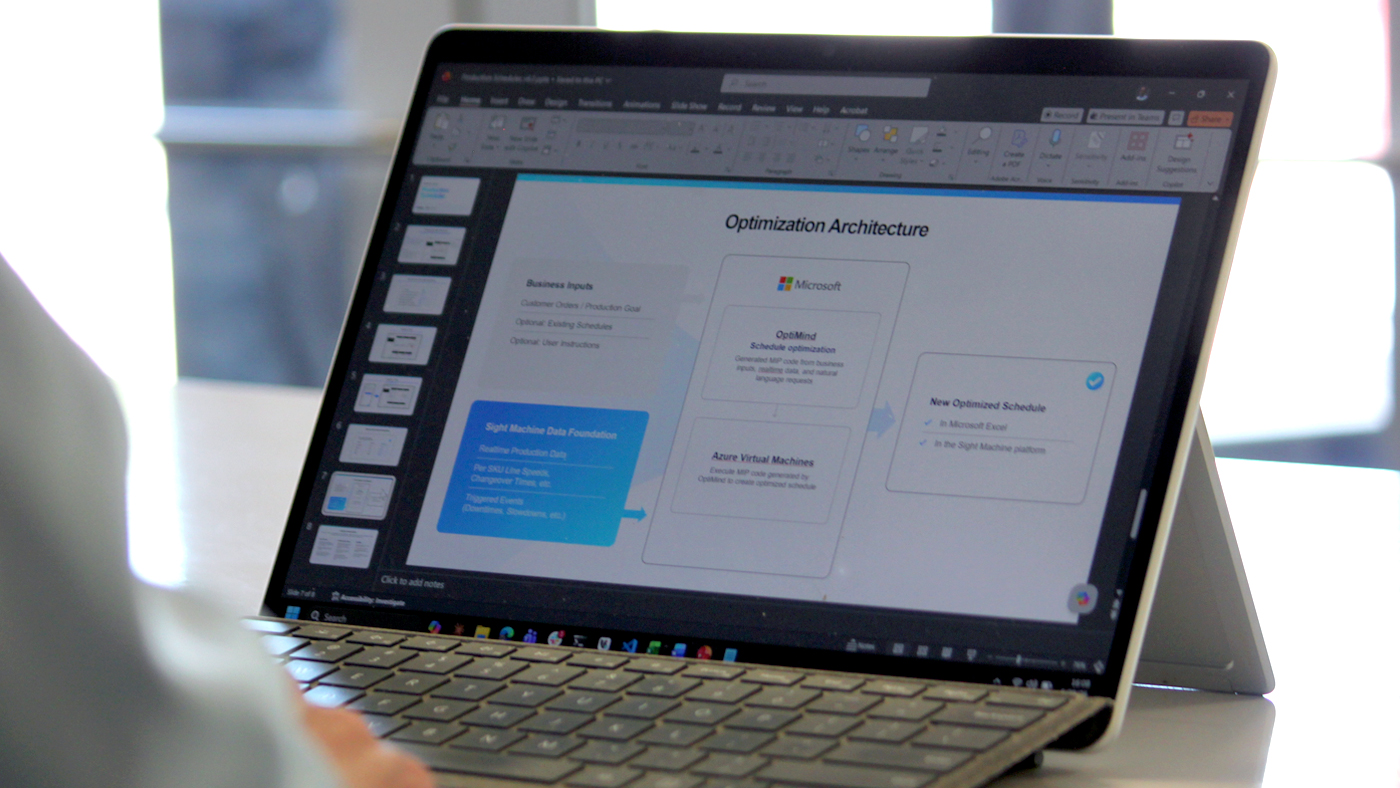
Three months ago, it was tested in the real world at a Midwestern beverage bottling plant, where shifts in the schedule measured in minutes could translate into significant financial loss.
How the use case took shape
The opportunity to apply OptiMind in a real-world setting first caught the attention of Saumil Shrivastava (opens in new tab), a principal product manager at Microsoft who leads Foundry Labs. Shrivastava’s job is to look at Microsoft Research projects and ask a question that is sometimes more complicated than the research query: Where, exactly, could this become real?
“What stood out about OptiMind was that it wasn’t just another generative AI model. It was solving a fundamentally different class of problem around optimization and decision-making under real-world operational constraints.”
– Saumil Shrivastava (opens in new tab), Principal Product Manager, Microsoft Foundry
Once he saw what it could do, he said, he began thinking “less about it as a standalone research demo, and more about where this could fit inside real operational workflows.”
The move from demo to workflow is where many promising AI projects stall. Models can look impressive in clean environments and still fall apart in the real world. The people using these systems are rarely researchers. In this case, they are schedulers, plant managers, and engineers who need reliable, practical solutions.
Shrivastava had seen enough manufacturing environments through prior work with Sight Machine, a company focused on applying AI to industrial operations, to recognize a plausible proving ground. Bottling plants in particular run on a dense tangle of “what-ifs,” where even small improvements reverberate through the system in visible ways.
An idea finds a customer
The use case took shape through Kurt DeMaagd (opens in new tab), chief AI officer and co-founder of Sight Machine. He had a long-running relationship with a major food and beverage company.
The idea came up on a call, almost in passing, before anything like a pilot had been proposed. A senior leader at the plant didn’t need much convincing. He said he had spent the previous week complaining about how poorly their current scheduling system was working.
In a fixed-cost business, even flecks of change can ripple outward. “We’re talking tens of millions of dollars of value for them,” DeMaagd said.
The problem was already in plain view. And clearly, so was the appetite to try something new.
Why general AI wasn’t enough
Scheduling had long been on DeMaagd’s mind. It is one of those persistent industrial problems that many teams avoid precisely because it is so difficult to generalize. Historically, solving it required deep expertise in specialized optimization techniques. That made solutions expensive to build and hard to scale.
The pilot was structured as a set of recurring scenarios. The team started with a core formulation of how the plant operated, then used it to explore a handful of situations that came up repeatedly: demand shifting, a machine going down, small changes that cascade through the schedule. Each variation traced back to the same underlying model, rather than requiring a new system each time.
DeMaagd approached the model with skepticism. Many AI systems perform well on familiar prompts but degrade quickly outside them.
“I was really impressed,” he said. “I was half expecting maybe it would handle a few standard questions, but beyond that it would fall apart.”
Instead, he saw something different. When he compared outputs to general-purpose models, the contrast was clear.
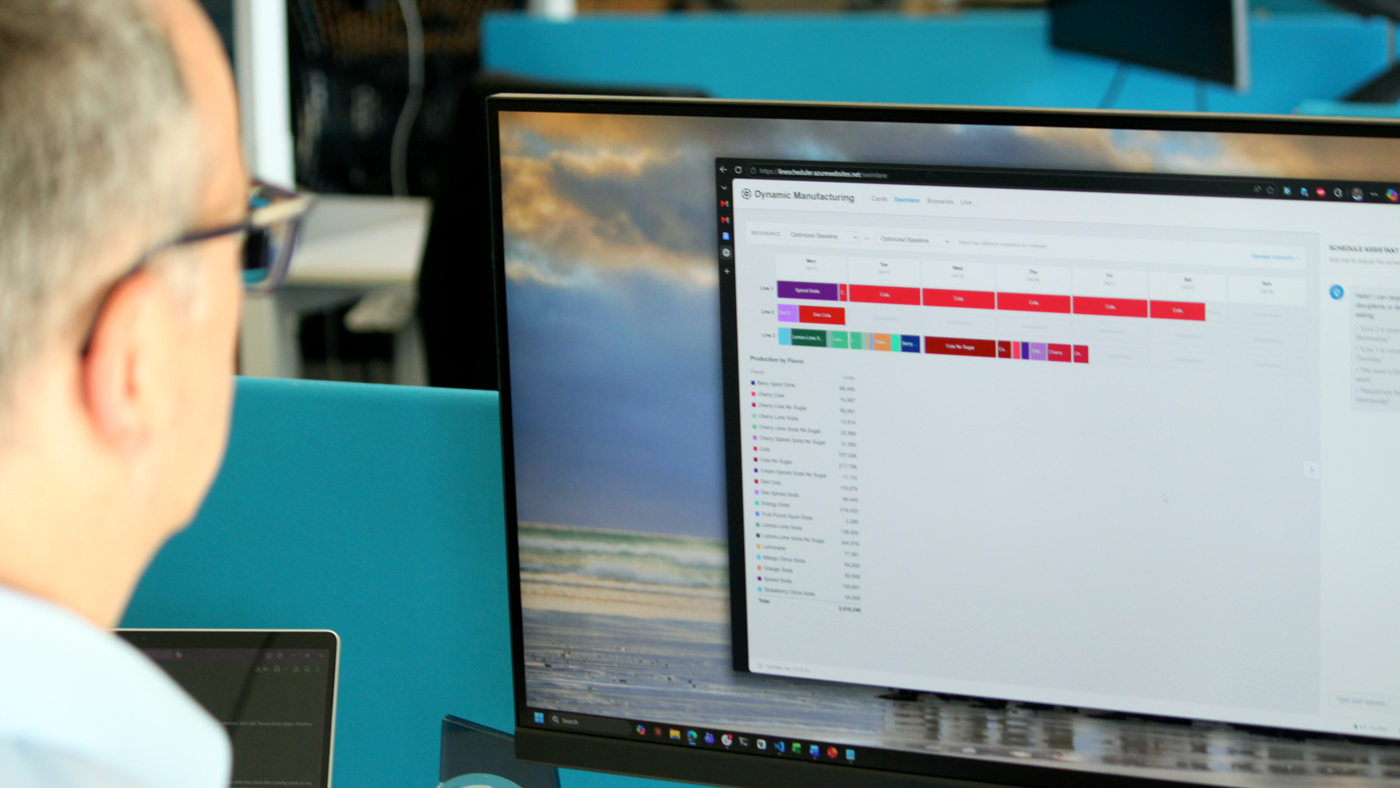
“Because OptiMind is specifically tuned as an optimization tool, I got faster and more reliable responses where it was actually doing the mathematical optimization,” he said. “About half the time with general-purpose models, it would go off and I didn’t know what heuristics it was applying.”
The OptiMind answers came back quickly, usually within 30 to 90 seconds, fast enough to feel usable in the flow of a real scheduling decision.
From answers to interactions
In theory, scheduling is a problem you solve once. In reality, it is something you revisit constantly. Conditions change and decisions have to keep up, functioning as an ongoing conversation.
That turned out to be one of the most important lessons during this pilot, according to Sirui Li, a senior researcher in Microsoft Research’s Machine Learning and Optimization group. She said the team quickly realized that “optimization at scale can’t be achieved as a one-shot experience.”
Instead of rebuilding schedules from scratch, users were asking iterative questions: What changes if demand shifts? What happens if a machine is unavailable?
To support that, the team built what Li describes as an agentic workflow around OptiMind—one that maintained a core formulation while allowing the system to answer successive questions.
“With an agentic workflow around it, we were able to scale OptiMind and optimize a formulation that is flexible enough to accommodate what-if questions,” she said.
The research itself was led by Ishai Menache, a partner research manager at Microsoft Research, whose group focuses on optimization and large-scale decision systems.
The result is a different way of thinking about AI. It becomes part of an ongoing decision process, adjusting as conditions change.
The invisible work that made it real
“The biggest challenge we had was doing the plumbing and piping,” said Anson Ho, a senior program manager.
That meant connecting systems, aligning data, and ensuring that everything worked outside controlled environments. This is the part of AI that rarely makes headlines but determines whether anything actually ships.
Those results mattered because they existed inside a real system, with all its imperfections.
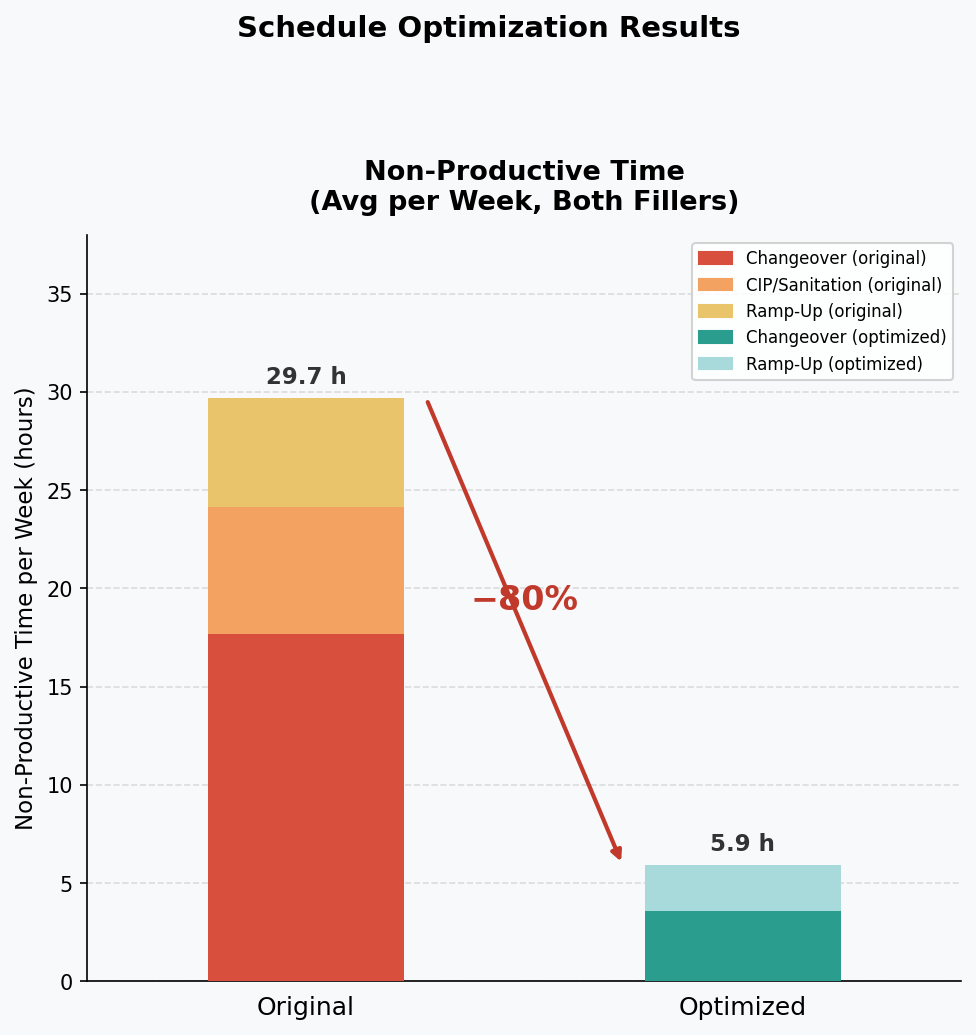
The bottling plant is not an obvious symbol of the AI future, which is why it works as a proving ground. Not glamorous, but complex and expensive to run.
From general intelligence to useful systems
The pilot itself was a success, but Shrivastava sees the project as a broader shift.
“The goal was not simply to showcase impressive AI,” he said, “but to demonstrate how advanced Microsoft Research innovation could evolve toward repeatable enterprise value.”
That may be the least flashy idea in the story, but the one that carries the most weight.
Generating the formulation was never the hardest part. The real test came later, once it entered the systems it was meant to serve, where the answer must hold even when the data is partial and the constraints don’t sit still.
In factories, schedules are never finished. They are revised, negotiated, and revised again.
AI may be headed in the same direction. Systems are being designed to stay with a problem, working through it as conditions change, rather than attempting to account for everything at once.
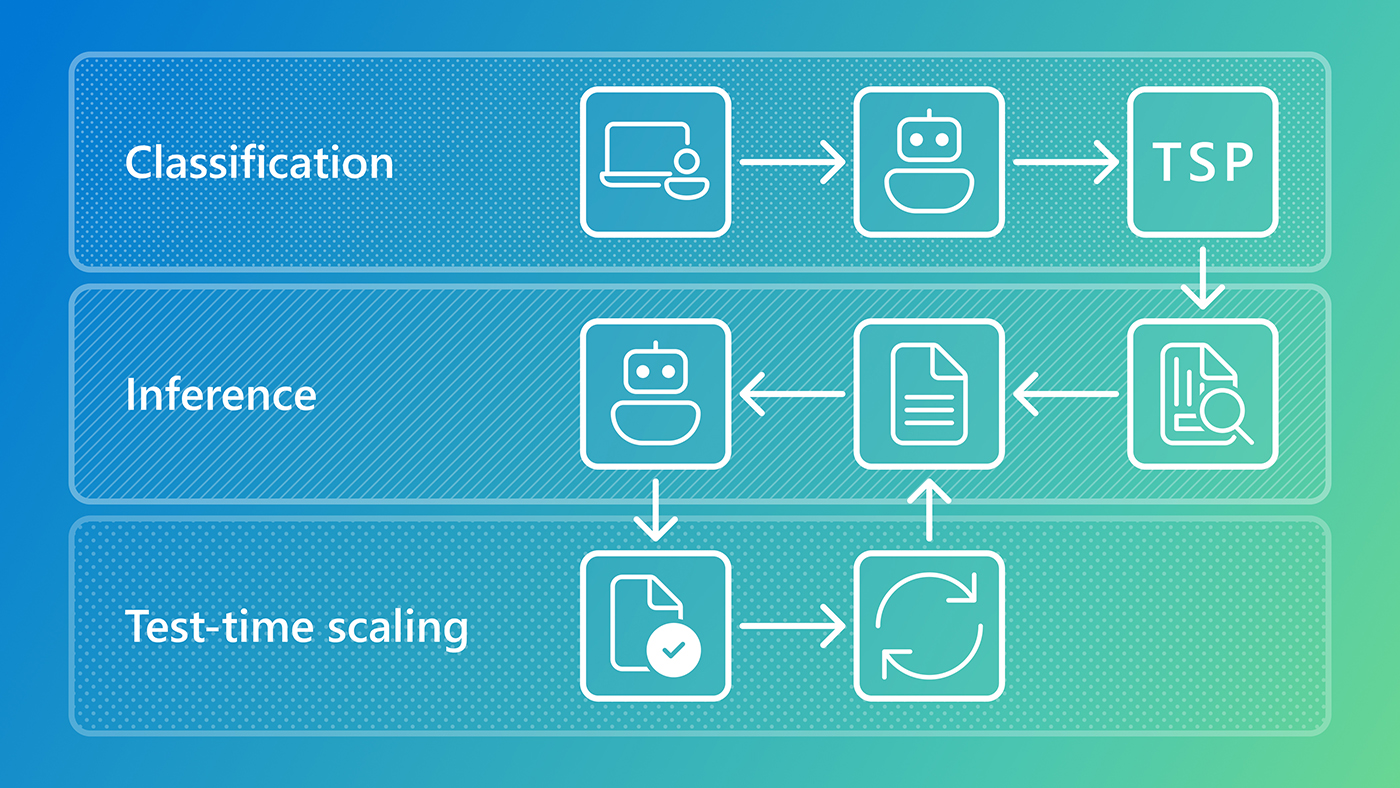
OptiMind is a small language model that converts business operation challenges, described naturally, into mathematical formulations that optimization software can solve. It reduces formulation time & errors & enables fast, privacy-preserving local use.
OptiMind: A small language model with optimization expertise
Story contributors: Amanda Black, David Celis Garcia, Alyssa Hughes, Lindsay Kalter, Brenda Potts, Amber Tingle, Shauna Whooley