
Scalable Semantic Code Search for High-Quality Program Repair
- Claire Le Goues | Carnegie Mellon University
Bugs in programs remain a pernicious problem. Research techniques in automated program improvement and repair are typically classified as either heuristic—searching over a set of syntactic changes, often drawn from an existing body of code—or semantic—leveraging symbolic analysis or synthesis to construct program-improving changes with respect to an inferred specification. In this talk, I will outline our recent advances in techniques that lie squarely in the middle, drawing on the best of both worlds: We reason about desired program behavior semantically, and use that characterization to scalably identify and adapt pre-existing code to fix bugs automatically. I will particularly emphasize the potential these approaches have to construct high quality patches, tackling a key outstanding challenge in the state-of-the-art in automated patching.
-
-

Tom Zimmermann
Sr. Principal Researcher
-
-
Series: Microsoft Research Talks
-

Decoding the Human Brain – A Neurosurgeon’s Experience
- Dr. Pascal O. Zinn
-
-
-
-
-
-

Challenges in Evolving a Successful Database Product (SQL Server) to a Cloud Service (SQL Azure)
- Hanuma Kodavalla,
- Phil Bernstein
-

Improving text prediction accuracy using neurophysiology
- Sophia Mehdizadeh
-

Tongue-Gesture Recognition in Head-Mounted Displays
- Tan Gemicioglu
-

DIABLo: a Deep Individual-Agnostic Binaural Localizer
- Shoken Kaneko
-
-
-
-

Audio-based Toxic Language Detection
- Midia Yousefi
-
-
From SqueezeNet to SqueezeBERT: Developing Efficient Deep Neural Networks
- Forrest Iandola,
- Sujeeth Bharadwaj
-

Hope Speech and Help Speech: Surfacing Positivity Amidst Hate
- Ashique Khudabukhsh
-
-
-

Towards Mainstream Brain-Computer Interfaces (BCIs)
- Brendan Allison
-
-
-
-
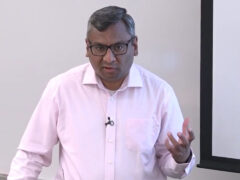
Learning Structured Models for Safe Robot Control
- Subramanian Ramamoorthy
-


